“Four are currently offline or waiting to enter maintenance availabilities.”
Why USS George Washington left Yokosuka for the CENTCOM region
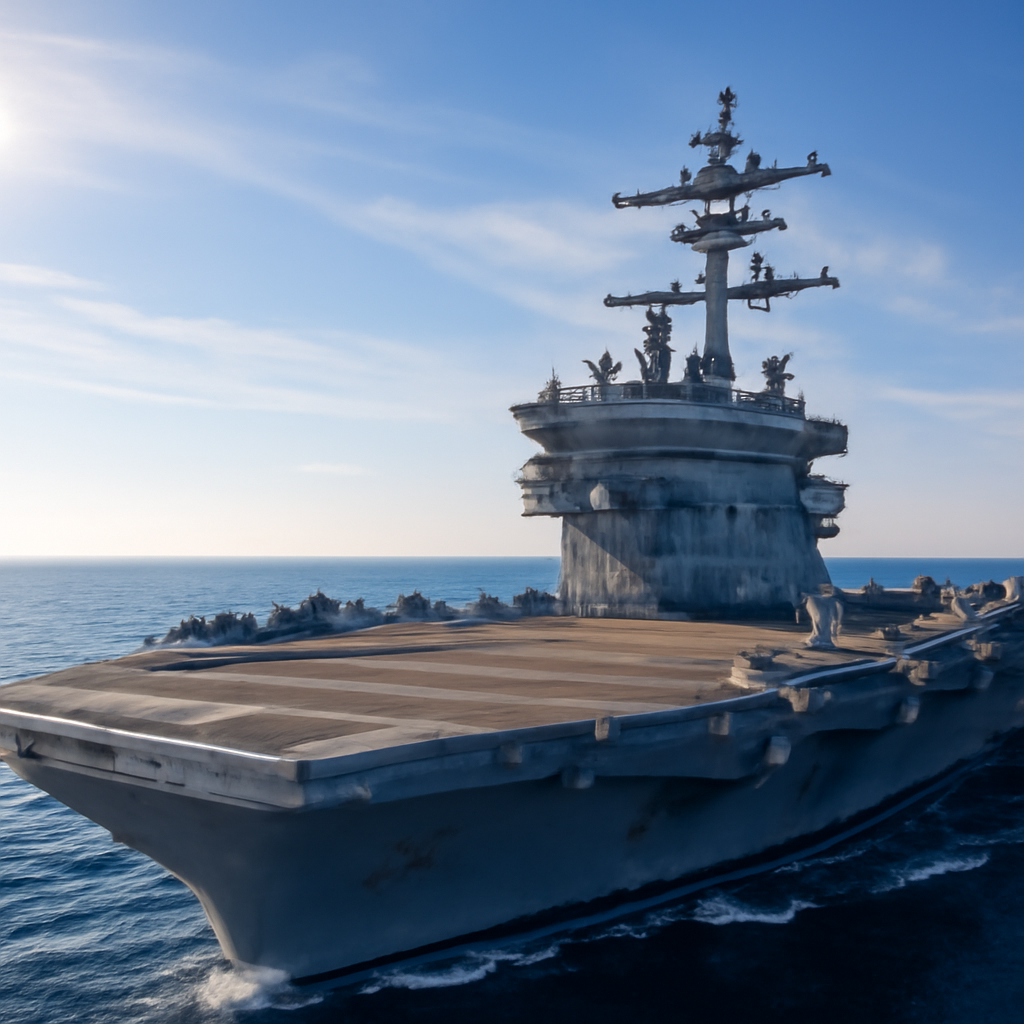
The USS George Washington transited the Arabian Sea on Aug. 20 after arriving in the U.S. Central Command (CENTCOM) region the previous day, the command announced via X. The redeployment was intended to relieve the overworked USS Abraham Lincoln, which had conducted round‑the‑clock operations and, according to reporting cited in the source, went without any liberty port calls since deploying last year. With the Lincoln departing the theater for home, the George Washington’s arrival brings the count to two carriers currently in the Middle East; the USS George H.W. Bush arrived there on April 23.
How the deployments tie to the Iran standoff and maritime flow
The U.S. continues to maintain a naval blockade of Iranian ports amid ongoing tensions with Tehran. The contest over control of the Strait of Hormuz has left both Washington and Tehran claiming authority there, and negotiations to end hostilities have broken down. CENTCOM is routing millions of barrels of oil through a preferred southern corridor close to Oman, and the command continues to rely on carrier aviation and escort ships’ strike and defensive missile capabilities for contingency operations, deterrence and pressure on Iran to meet U.S. demands.

The cyber insurance questionnaire just landed. Now what?
SOC 2, HIPAA, insurance renewals - someone has to own security strategy. Nubivance provides fractional CISO leadership without the full-time salary.
Get a security leadPacific deterrence: Adm. Samuel Paparo and a temporary carrier gap
The redeployment left Adm. Samuel Paparo, commander of U.S. Pacific Command (PACOM), without carrier coverage in theater. Carrier gaps in the Pacific were rare until 2024; the extended presence of several carriers in the CENTCOM region, combined with maintenance and production shortfalls, created a temporary absence of flattops in Asia. The source notes China as the United States’ top pacing threat and North Korea as unpredictable and dangerous—factors that make sustained carrier presence in the Pacific a high priority for many in the national security apparatus.
Maintenance bottlenecks, delayed yard work, and cascading effects
Extended deployments do not only strain crews; they also cascade into maintenance backlogs. Typical carrier deployments last about six to seven months to preserve ship readiness and crew health. Longer deployments increase the scope of post‑deployment maintenance: extra days at sea can translate into extra weeks or months in the yard. The USS Gerald R. Ford returned from an 11‑month deployment and transited to Pier 5N at Norfolk Naval Shipyard in July to begin its first post‑deployment Planned Incremental Availability (PIA). The Ford’s laundry‑room fire, which the source says raged for more than 30 hours, will require an additional concurrent availability and extend its dry‑dock time. The Ford’s early departure from the CENTCOM region in March during the Iran war left just one carrier on station at that time—the Abraham Lincoln.
Production delays and program changes affecting carrier availability
Construction and production delays are compounding the readiness squeeze. The future Ford‑class USS John F. Kennedy completed Acceptance Trials on Aug. 15, but delivery is now scheduled for March 2027—five years later than the Navy originally planned in 2022—“to support completion of Advanced Arresting Gear (AAG) certification and continued Advanced Weapons Elevator (AWE) work,” according to the Navy’s Fiscal Year 2026 budget request cited by the source. The Ford class program has run years behind schedule and the Navy is reportedly evaluating design changes—including moving the island forward and abandoning the Electromagnetic Aircraft Launch System (EMALS) and Advanced Weapons Elevators on later Ford‑class ships, starting with the future USS Doris Miller—which could add further delays.
What this means for PACOM, CENTCOM, and naval shipyards
- PACOM: The temporary absence of a carrier in the western Pacific places operational pressure on the command’s ability to deter or counter potential PRC or DPRK aggression, according to the source.
- CENTCOM: The immediate problem is operational—sustaining aviation and escort capabilities to enforce the blockade, protect oil flows near Oman, and provide contingency response—hence the redeployment of the George Washington to relieve Abraham Lincoln.
- Shipyards and maintenance planners: Extended cruises are increasing demand for deep maintenance windows—RCOH, PIA and DPIA work—while yard capacity and specialized labor remain constrained. Examples in the source include the John C. Stennis’s RCOH at Newport News (moved in May 2021 with expected completion slipping beyond October 2025) and the Navy’s intent to rethink overhaul approaches beginning with USS Harry S. Truman.
Where things stand: four carriers are offline or awaiting maintenance availabilities, USS Ronald Reagan remains in dry dock at Puget Sound following a hull swap with George Washington in mid‑2025, and three carriers—USS Theodore Roosevelt, USS Carl Vinson and USS Dwight D. Eisenhower—are the most likely candidates to surge toward the Pacific if needed. Theodore Roosevelt completed COMPTUEX in May and participated in RIMPAC 2026 and is expected to deploy in the very near term; Carl Vinson was underway training off the West Coast as of August 10; Eisenhower completed a 16‑month PIA, sea trials in April, and returned home July 27 after an ammo onload with USNS Medgar Evers. Abraham Lincoln is heading home to San Diego and has a DPIA scheduled in the Fiscal Year 2027 budget documents, though the timing is unclear.
The immediate redeployment of USS George Washington resolves an operational gap in CENTCOM but highlights a wider problem: stretched deployments, yard bottlenecks and production delays are squeezing carrier availability in multiple theaters. The net effect is cyclical—longer deployments force longer maintenance periods, which in turn tighten the window for surge capacity exactly when geopolitical pressures demand it.
https://www.twz.com/sea/uss-george-washingtons-mideast-arrival-highlights-strain-on-carrier-force