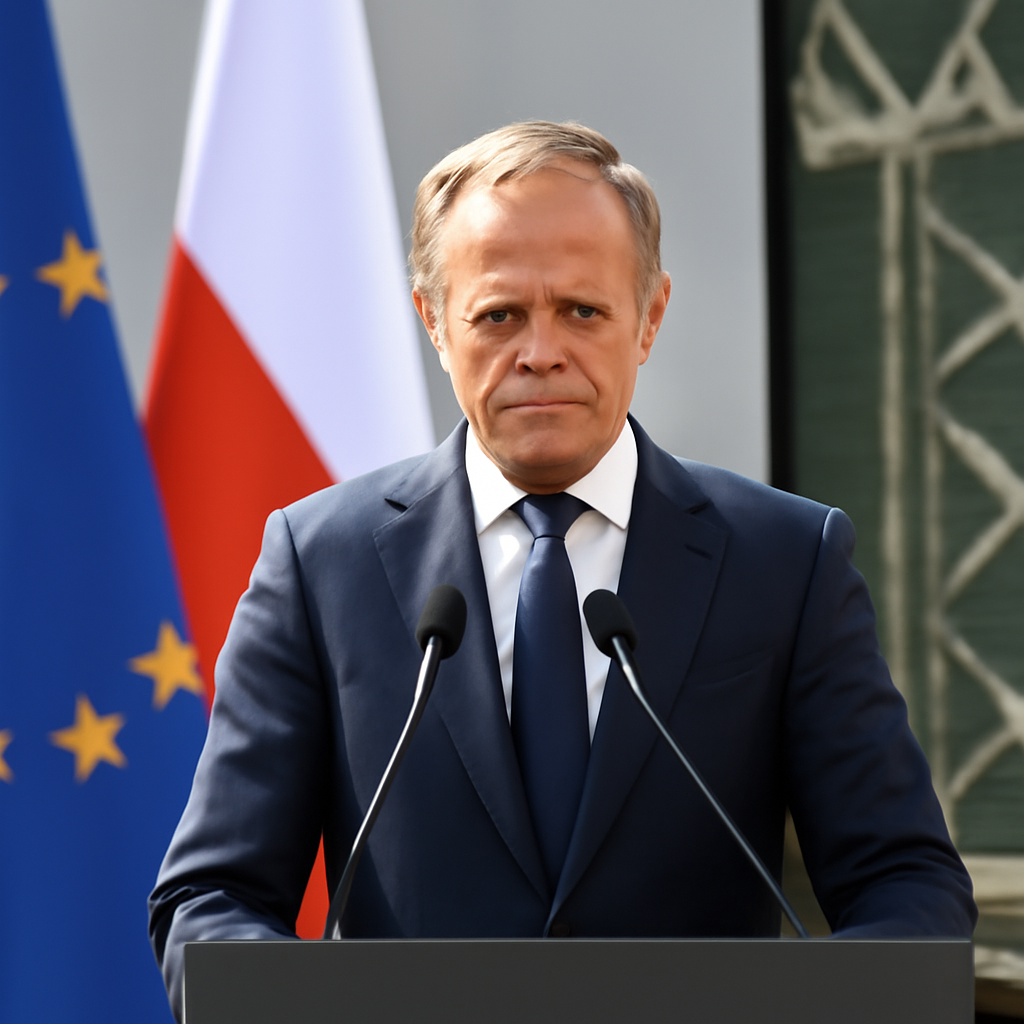
"No one wants escalation or war. We all dream of peace," Donald Tusk said, as he used a keynote address in Warsaw to urge Europe to confront what he called a "real threat" from Russia.
Donald Tusk's appeal to Europe: stop the aggressor with "all available means"
Speaking at a security conference in Warsaw, the prime minister of Poland framed his message bluntly: the path to peace "does not lie through weakness." Tusk told an audience of European political, military and defense industry figures that the remedy was to "stop the aggressor with all available means and forces." He warned that Russia would "not stop" with Ukraine and would seek opportunities, if allowed, to "reshape Poland’s security architecture" and to "dismantle the security architecture in Europe so that Russian dominance returns to the state it was before 1989. We have no doubt about this."
He said he would travel to Brussels to press European capitals to "increase pressure on Europe and toughen sanctions targeting Moscow," and called for a clear, repeated message across capitals: "Ukraine will not be broken or intimidated. Poland will not be broken or intimidated. Europe, NATO, and the entire free world will not be broken or intimidated. That message must go out today from every capital—from Warsaw to Washington."
Gen. Alexus Grynkewich and NATO's "theory of victory"
Tusk tied his appeal to ideas being voiced in allied military circles, citing a separate speech given the same day by Supreme Allied Commander Europe Gen. Alexus Grynkewich. Grynkewich's presentation of a new NATO "theory of victory" left Tusk "filled with optimism." Tusk said he found in Grynkewich "a partner who also harbors no illusions, no miconceptions, regarding Russia’s intentions toward Ukraine, as well as toward Europe and the entire world."
The prime minister’s public alignment with a senior NATO commander underscored his message that deterrence and readiness are central to preventing further aggression.

Audit-ready is a season. It shouldn't be.
Evidence in spreadsheets, controls drifting between audits, frameworks multiplying on flat headcount. Nubivance runs continuous compliance on Rapid7 Cyber GRC - SOC 2, HIPAA, ISO 27001, PCI, CMMC.
End the scrambleVolodymyr Zelenskyy's virtual address: energy targets, data centers, and a plea to the US
Immediately after Tusk, Ukrainian President Volodymyr Zelenskyy delivered a virtual address to the same audience, asserting that Moscow had launched attacks on Ukrainian cities despite, he said, a claim by US President Donald Trump that both sides had agreed not to strike energy targets. Zelenskyy framed Ukraine’s long-range strikes on Russian oil infrastructure as conditional: "If Russia wants us to stop our long-range strikes against its oil refineries and oil exports, then Russia must stop its strikes against our energy system and critical infrastructure and stop killing our people."
Zelenskyy also said recent Ukrainian strikes on Russian data centers had reduced the flow of disinformation online, suggesting those centers had been used by "Russian online provocateurs." Speaking a day after what the source described as a controversial oil deal announced by President Trump, Zelenskyy implored the United States not to give "concessions" but to put "real pressure" on Moscow.
On the relationship with Poland, he called Warsaw and Kyiv "natural allies." "And when we stand together, Russia has no chance," he said. "We need to end Russia's war. We need to guarantee security. We need to stand together, Europe and the United States."
What this means for Poland, NATO, and the United States
- Poland: The prime minister is taking an active diplomatic next step — traveling to Brussels — to press European partners for tougher sanctions and sustained pressure on Moscow, framing Poland’s security as directly at stake.
- NATO: With Gen. Alexus Grynkewich's "theory of victory" presented publicly and endorsed in tone by Tusk, NATO military leadership and allied capitals will be watching whether military concepts translate into policy and capability decisions.
- The United States: Zelenskyy’s direct response to a recent, controversial oil deal announced by President Donald Trump put a new emphasis on US policy choices; Zelenskyy urged Washington not to offer concessions and to apply "real pressure" on Moscow.
Tusk left Warsaw bound for Brussels with a clear next step in hand: to seek renewed European unity behind sanctions and pressure on Moscow. Zelenskyy, speaking virtually minutes later, pushed a parallel case to the United States and to Poland — tying Kyiv’s operations on Russian oil and data infrastructure to Moscow’s attacks on Ukrainian cities and civilian infrastructure. The two addresses at the same forum presented a coordinated diplomatic posture: firmness in sanctions and allied military thinking on one side, and conditional restraint tied to Russian actions on the other. Whether European capitals and Washington follow with the measures both leaders urged is the immediate test their speeches set in motion.