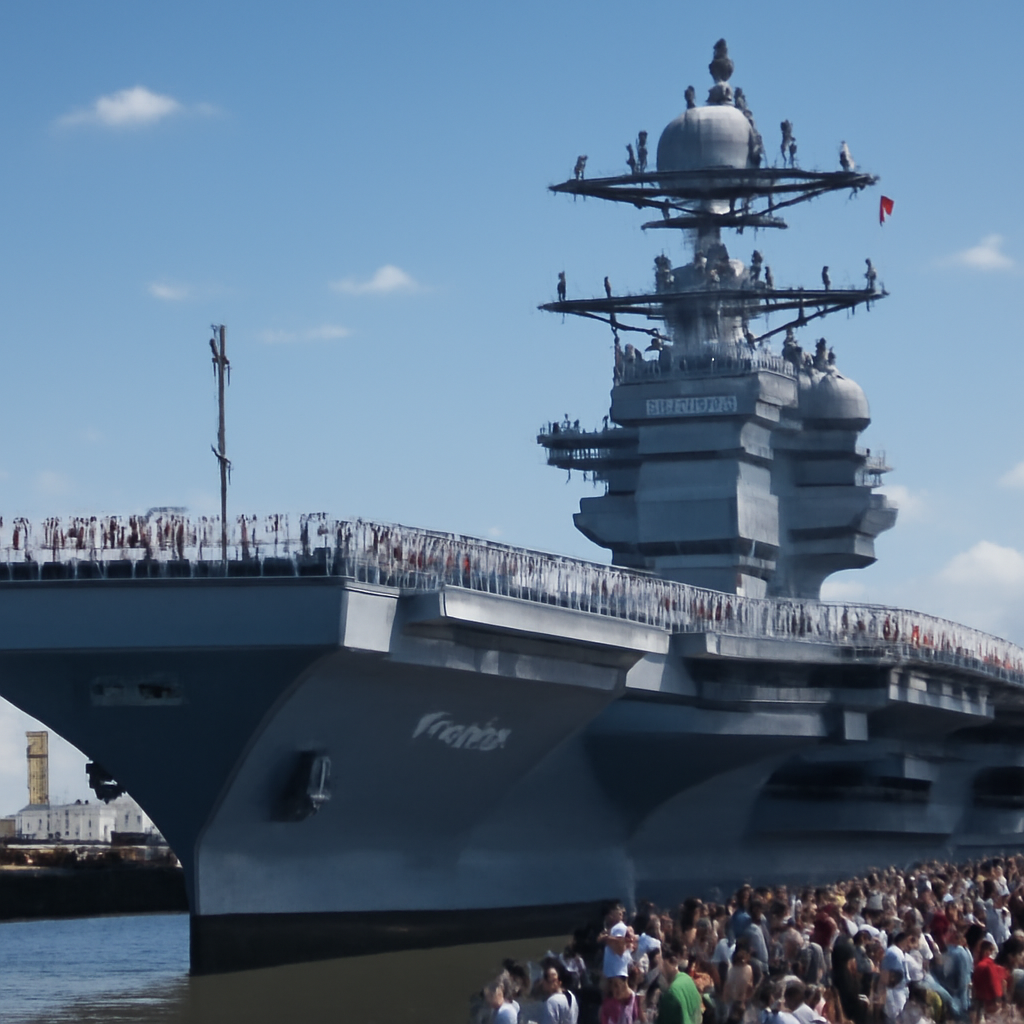
The supercarrier, with nearly 4,500 Sailors aboard, pulled into Naval Station Norfolk on Saturday, greeted by hundreds of families and friends after completing a grueling 326‑day combat deployment.
USS Gerald R. Ford returns to Norfolk after 326 days at sea
USS Gerald R. Ford (CVN 78) completed what the source describes as the longest deployment in more than five decades when Carrier Strike Group 12 arrived in Norfolk. The ship sailed more than 57,000 nautical miles, logged over 5,700 flight hours, and conducted 12,000+ aircraft launches across the deployment, which lasted roughly 11 months and was extended multiple times to support operations across two continents and combatant commands. Upon arrival, Carrier Strike Group 12 was presented with the Presidential Unit Citation, the highest honor a military unit can receive, a recognition flagged publicly by Acting Secretary of the Navy Hung Cao.
Operations that extended a routine Europe patrol into global missions
The Ford departed Virginia almost a year ago for what was at the time a routine deployment to Europe. That deployment was redirected in November to the Caribbean ahead of Operation Absolute Resolve and included the extraction of President Nicolas Maduro out of Venezuela. Despite "pushback from top Navy brass to come home," the carrier strike group subsequently crossed the Atlantic again to operate in the eastern Mediterranean and northern Red Sea as part of Operation Epic Fury against Iran. Those shifts in tasking help explain both the deployment’s duration and the carrier’s extensive operational metrics.

Audit-ready is a season. It shouldn't be.
Evidence in spreadsheets, controls drifting between audits, frameworks multiplying on flat headcount. Nubivance runs continuous compliance on Rapid7 Cyber GRC - SOC 2, HIPAA, ISO 27001, PCI, CMMC.
End the scrambleThree other carriers return to homeports while training continues
Over the same week, three other carriers returned to their respective homeports after routine operations and work‑ups. USS George Washington completed a weeklong shakedown cruise following a brief pierside availability and is preparing for an upcoming WESTPAC patrol; the carrier pulled into Yokosuka. USS Dwight D. Eisenhower returned to Norfolk, and USS Theodore Roosevelt pulled into San Diego. A George Washington spokesperson told TWZ that "U.S. Navy’s forward‑deployed aircraft carrier conducts short maintenance availabilities between patrols to service critical systems and conduct repairs" and that the ship was recently "underway conducting routine operations to sharpen our Sailors’ warfighting edge."
CENTCOM area: multiple strike groups, an ARG nearby, and active blockade enforcement
The U.S. retains a considerable naval presence in the Middle East. The source reports two Carrier Strike Groups and one Amphibious Ready Group—more than 20 warships in total—continuing operations in the U.S. Central Command (CENTCOM) area of responsibility. Another ARG, led by USS Boxer, was operating in the Indian Ocean under U.S. Indo‑Pacific Command (INDOPACOM) as of May 16 and could enter CENTCOM at any time. CENTCOM’s latest press release, cited in the report, says U.S. forces have redirected 81 commercial vessels and disabled four attempting to run the blockade to date. The report also notes U.S. forces afloat, such as USS Abraham Lincoln (CVN 72), continue flight operations in the Arabian Sea.
What this means for the U.S. Navy, CENTCOM, and commercial shipping
- Navy leaders and crews: The Ford’s return closes an extended, high‑tempo combat deployment that involved cross‑theater tasking and repeated extensions. The award of the Presidential Unit Citation underscores the claim of sustained operational intensity across multiple theaters.
- CENTCOM and regional partners: Ongoing CENTCOM operations—two CSGs and an ARG plus nearby INDOPACOM forces—reflect a posture focused on blockade enforcement and maritime interdiction. The reported redirection of 81 commercial vessels and disabling of four underscores active enforcement measures in the theater.
- Commercial shipping and mariners: The CENTCOM figures cited in the report represent concrete operational impacts on commercial traffic in the region; operators and insurers will watch continued enforcement actions closely as they plan transits and risk mitigation.
The Gerald R. Ford’s homecoming ends a deployment that was exceptional in length and breadth, but it arrives against a backdrop of sustained U.S. naval activity: multiple carriers rotating through work‑ups and forward presence, an amphibious force positioned nearby, and CENTCOM’s ongoing blockade enforcement that has already affected commercial traffic. The immediate next chapter, according to the facts presented here, is a continued, high‑tempo maritime posture in and around the CENTCOM AOR even as individual ships return to homeport.