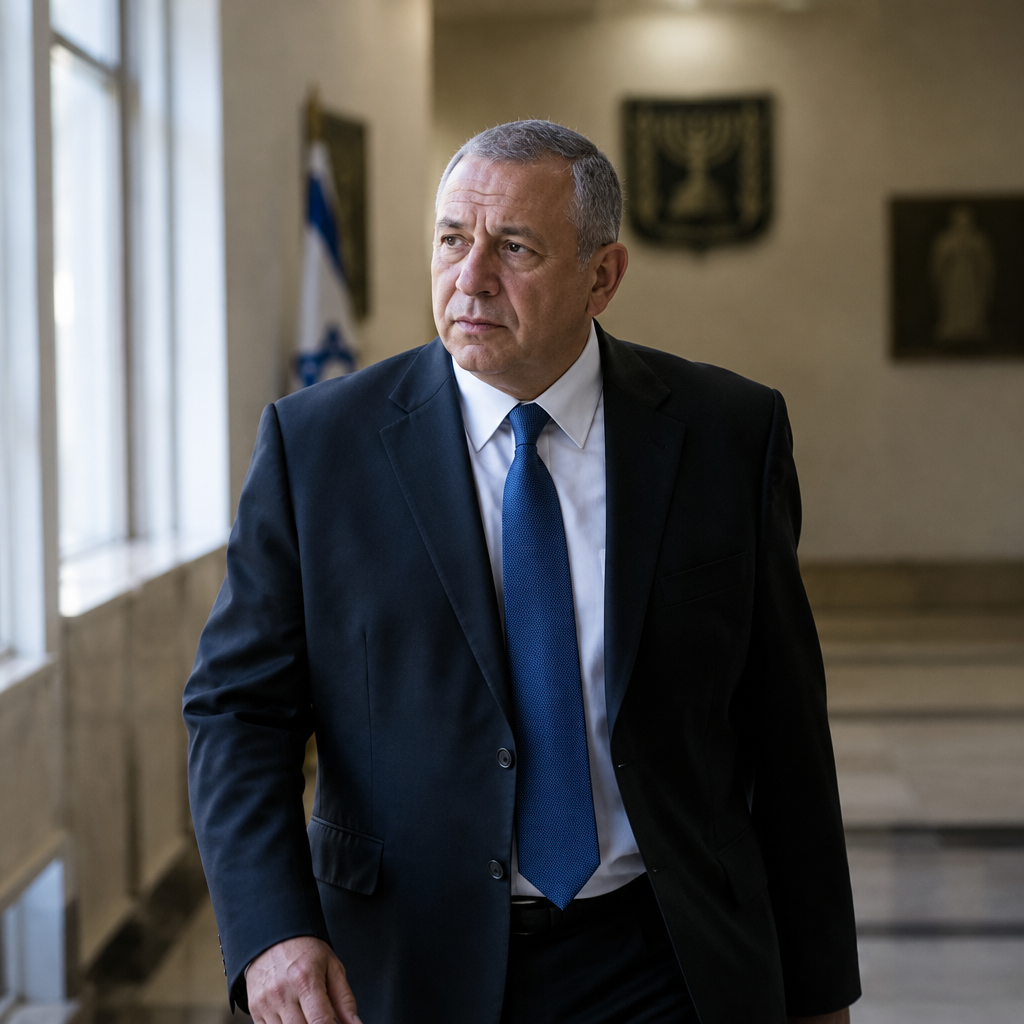
"The fact that the security establishment, along with Israeli citizens, is learning about a change in the strategic relationship framework through the media highlights just how much Benjamin Netanyahu’s conduct poses a genuine danger," said Gadi Eisenkot, the former IDF chief of staff and the leading contender to replace Prime Minister Benjamin Netanyahu.
What the funding is and where it comes from
Israel currently receives $4 billion annually in Foreign Military Financing (FMF) from the United States, funds that are gifted but must be reinvested in American weapons. That assistance is embedded in a ten-year memorandum of understanding reached during the Obama administration and is due to expire next year. U.S. President Donald Trump announced on election day that he would be ending aid to Israel by the end of 2026 — a statement that has prompted confusion in Jerusalem about what precisely would change and how any cutoff would be executed.
Immediate procurement implications: helicopters, fighters, tanking timelines
Analysts told Breaking Defense that an abrupt cutoff would complicate Israel’s ability to approve and procure systems quickly. Yaakov Katz, a fellow at the Jewish People Policy Institute, said that when the FMF money is on the table and must be spent in America, "you have an additional pressure point to be able to get approval for those arms sales to go through." Katz warned that without that leverage "you are like every other country that comes to ask to buy weapons."
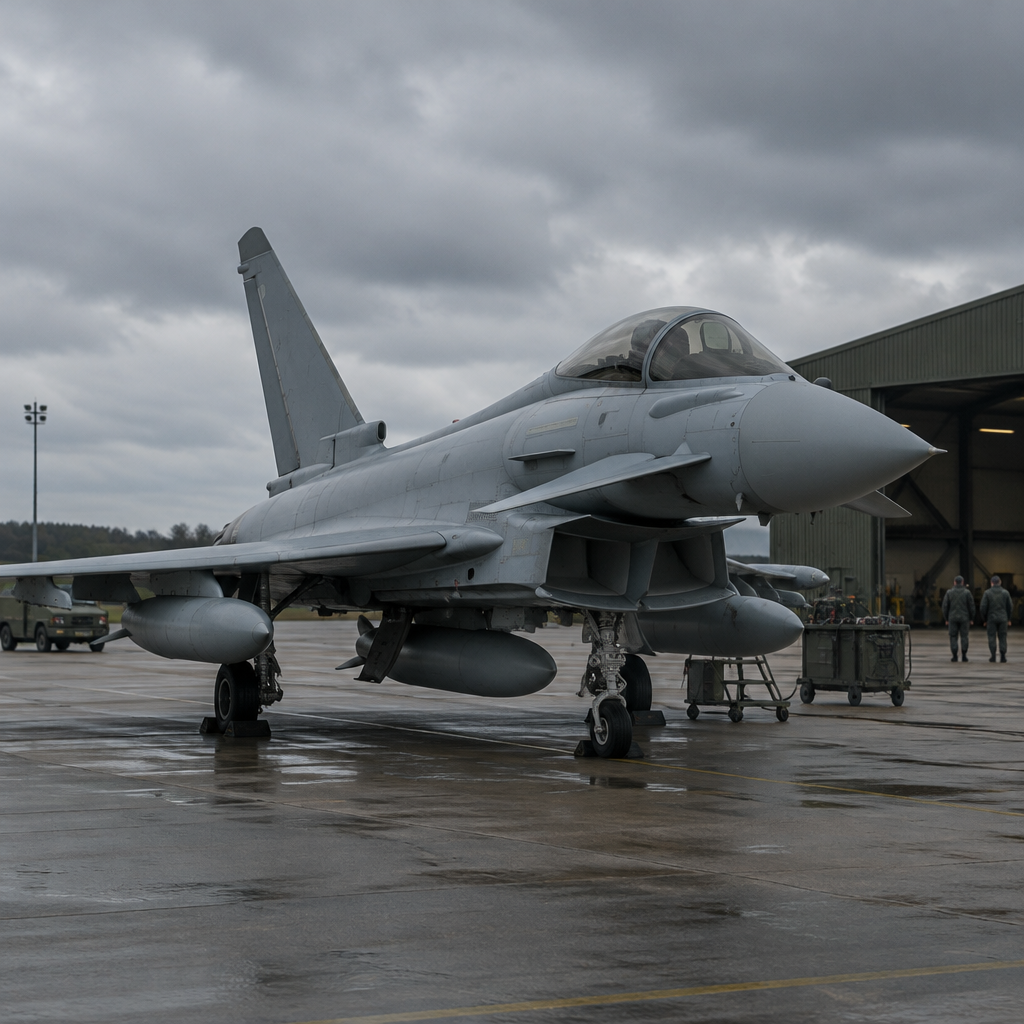
Israel is actively pursuing multiple high-end acquisitions that analysts say would be affected. The country is scrambling to ensure a deal for more Apache helicopters goes through and is in the midst of acquiring more F-15s, F-35s, refuelers, heavy-lift helicopters and numerous munitions. Jacob Nagel, a senior fellow at the Foundation for Defense of Democracies who has been closely involved in Israel’s procurement program, told Breaking Defense that cutting military aid will have a "big impact" for Jerusalem and warned that losing the funding "will come at the expense of important issues."

Audit-ready is a season. It shouldn't be.
Evidence in spreadsheets, controls drifting between audits, frameworks multiplying on flat headcount. Nubivance runs continuous compliance on Rapid7 Cyber GRC - SOC 2, HIPAA, ISO 27001, PCI, CMMC.
End the scrambleBudget pressure and the Qualitative Military Edge (QME)
Israel’s economy is described in the reporting as "strong," and the FMF represents less than one percent of Israel’s $600 billion GDP. Still, Nagel said Israel’s recent, record-breaking defense budget leaves the country "stretched to the end." The issue of maintaining Israel’s Qualitative Military Edge (QME) has been under the spotlight as the country seeks more advanced systems. Eran Lerman, vice president of the Jerusalem Institute for Strategy and Security, noted that Israel has weathered aid changes before and observed: "Ultimately it is not difficult for a nation with a GDP of $600 billion to find 0.6% from other sources — such as coalition handouts — as long as the commitment to Israel’s QME [Qualitative Military Edge]."
How Jerusalem’s defense planners, procurement teams, and coalition negotiators are responding
- Defense planners: Worried about the suddenness of the announcement and the potential loss of a U.S. leverage point that has eased approvals for American-made systems.
- Procurement teams: Actively pushing to finalize near-term deals — notably the Apache helicopter contract — while assessing how loss of FMF will affect longer-term buys of F-15s, F-35s, refuelers, heavy-lift helicopters and munitions.
- Coalition negotiators and budget officials: Considering domestic offsets and budget reshuffling. As Eran Lerman put it, alternative funding might be found "such as coalition handouts," but that depends on political willingness and preserving the QME.
Politics in Washington and Jerusalem will shape the outcome
The announcement landed amid fraught politics on both sides of the Atlantic. In Israel, the statement came while Prime Minister Benjamin Netanyahu is trying to form a government after the Oct. 27 election, and opposition leaders quickly criticized him in the wake of the U.S. statement. In the United States, reporting notes "a growing anti-Israel sentiment in the United States on both sides of the political aisle" and that Vice President JD Vance had recently "pointed to the need to change the US relationship with Israel as an issue."
Whether President Trump will follow through on ending the aid early, whether Congress would allow such a move, and whether a new memorandum of understanding will be negotiated remain open questions. The reporting says these issues "will be sorted out in the coming weeks — one way or another." Jacob Nagel urged action to preserve the alliance, writing that "signing a new MOU adapted to changing realities will require a focused, uncompromising effort by all relevant parties. It will preserve the strategic alliance and cooperation with the United States and reaffirm America’s long-standing commitment to Israel, despite the changes taking place in the relationship."
The immediate effect is clear in Jerusalem: procurement timelines and leverage are under strain, political leaders are reeling from an announcement learned through the media, and the coming weeks will test whether diplomacy, budgets or domestic politics resolve a dispute that touches both national security and alliance politics.