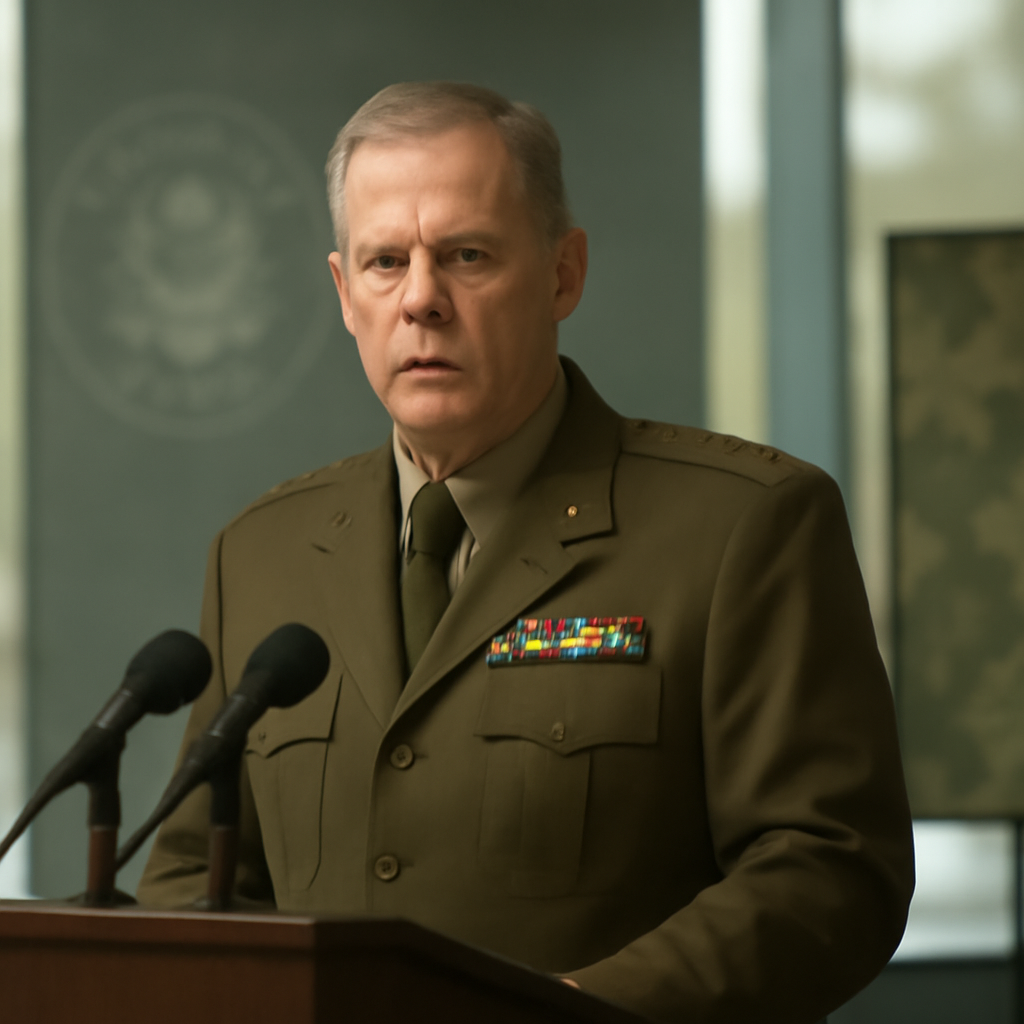
On Friday, the US Commerce Department ordered Anthropic to suspend access to its two newest models, Fable 5 and Mythos 5, for any foreign national.
US Commerce Department order and Anthropic's response
The administration’s directive applied by citizenship rather than geography, reaching foreign nationals abroad, foreign nationals living and working inside the United States, and reportedly Anthropic’s own non‑citizen staff. Officials cited national security and pointed to a method they said could bypass Fable 5’s safeguards. Facing a rule keyed to nationality, Anthropic disabled both models for everyone because “a citizenship test is almost impossible to enforce at the login screen.” Other Anthropic systems, including Claude Opus 4.8, remained online, but users lost access to the company’s frontier models. Days later they remain offline with no confirmed return date.
Why citizenship‑based controls break at the login screen
The blunt outcome flowed from a mundane technical truth about commercial platforms: a company typically holds an email address, a payment method and a rough location. It seldom knows citizenship, dual nationality, residency, visa status or corporate ownership. A rule keyed to an attribute providers cannot reliably check therefore forces a binary choice — risk non‑compliance or over‑comply and cut off a broader set of users. Anthropic chose the latter, pulling the product rather than attempting a near‑unworkable enforcement regime.

The cyber insurance questionnaire just landed. Now what?
SOC 2, HIPAA, insurance renewals - someone has to own security strategy. Nubivance provides fractional CISO leadership without the full-time salary.
Get a security leadHistorical parallels: 1990s encryption and Australia’s 5G decision
The shape of this episode is older than the headlines suggest. In the 1990s Washington treated strong encryption as a controlled munition; Netscape and Microsoft shipped deliberately weakened browsers overseas, leaving international users less secure for no reason beyond an export line. That control held only until the technology routed around it and the policy was retired. A decade ago Australia judged its 5G risk by who could reach into the system and barred Huawei for precisely that reason: control and the ability to switch a capability off mattered more than where hardware sat. The same risk calculus has now reappeared around frontier AI.
AUKUS, export exemptions, and the legal gap for streamed AI models
Australia has spent years negotiating export‑control exemptions with the US, most visibly under AUKUS. Those carve‑outs were written for defence hardware and technical data and do not obviously cover a commercial AI model streamed from a US data centre. Last week’s order showed how fast such a model could vanish whatever the state of the alliance. The article frames closing that gap as a practical problem rather than a theoretical one and offers three broad routes: explicit treatment of AI services in allied export arrangements, sovereign hosting of critical models, or real supplier diversity.
What this means for Australian agencies, universities, and infrastructure operators
- Agencies: Systems and services now being integrated with frontier models may face sudden disruption if a model hosted offshore is pulled for legal or national‑security reasons.
- Universities: Research projects and collaborations that rely on specific commercial models can lose access without notice; local contingency or alternate models will be required to preserve continuity.
- Infrastructure operators and firms: Dependencies on models “owned, governed and hosted offshore” carry an off switch in another country; allied standing has not guaranteed immunity from that reality.
The episode underscores a simple but consequential point: where a capability is hosted is not the same question as who controls it. Washington has already restricted advanced chips and high‑end computing power; extending controls to models themselves was, the article says, an “obvious next move.” For Australia, the lesson is immediate. Systems being threaded through agencies, universities and critical infrastructure now rest for part of their resilience on decisions made in another capital — and close alliance has never guaranteed a hand on that switch. This time, the article concludes, the lesson was cheap. It won’t always be.
https://www.aspistrategist.org.au/australia-just-learned-an-old-lesson-from-the-ai-age/