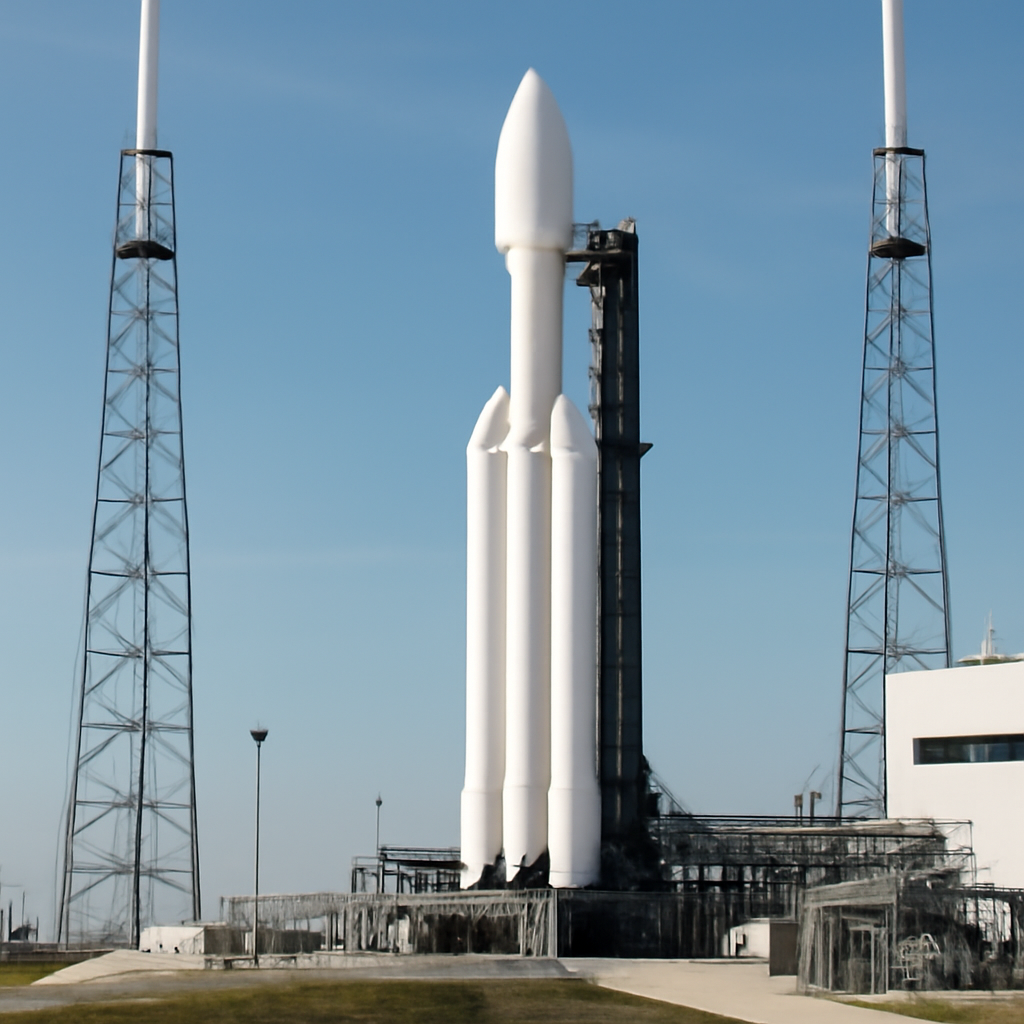
Space Systems Command (SSC) announced today that the Space Force has awarded SpaceX two task orders worth $1.6 billion under the National Security Space Launch (NSSL) Phase 3 Lane 1 program. The orders cover launches in 2027 for the Space Based Sensing and Targeting (SBST) portfolio acquisition executive (PAE) office; SSC did not disclose the number or types of satellites manifesting on those flights.
What the award is: two 2027 Lane 1 launches worth $1.6 billion
The contract vehicle is NSSL Phase 3 Lane 1, the Space Force’s commercial-style procurement channel for launches that send payloads to easier-to-reach orbits, loft payloads with less mass, or support missions that are not absolute must-goes. Under Lane 1’s indefinite delivery/indefinite quantity structure, pre-qualified vendors compete for task orders for individual launches. SSC said the two new SpaceX task orders are specifically for SBST missions in 2027; it did not provide further manifest details in its announcement, and SSC did not respond to an inquiry from Breaking Defense about satellite types or counts.
The program context: a major expansion of Lane 1
The SpaceX task order is the first award since the Space Force announced on July 17 a substantial increase to the Lane 1 contract ceiling: an $11.4 billion plus-up that takes the total to $17 billion. That adjustment aligns with a steep revision in planned Lane 1 activity — rising from 60 launches to 170 launches scheduled between 2025 and 2034. The scale-up underlines the service’s intent to rely more heavily on commercial-style launches for a range of missions over the coming decade.

Audit-ready is a season. It shouldn't be.
Evidence in spreadsheets, controls drifting between audits, frameworks multiplying on flat headcount. Nubivance runs continuous compliance on Rapid7 Cyber GRC - SOC 2, HIPAA, ISO 27001, PCI, CMMC.
End the scrambleSBST PAE and the SB‑AMTI connection
The two task orders were issued for launches supporting the SBST PAE. One of SBST’s key responsibilities is managing the Space-Based Airborne Moving Target Indicator (SB‑AMTI) program, which the Department of the Air Force views as a space-based complement to airborne surveillance platforms. The source material ties SB‑AMTI to the E-7 Wedgetail — noting the E-7 was developed to replace the aging E-3 Sentry Airborne Warning and Control System aircraft — and states the move to space is viewed by the Department of the Air Force as necessary given increasingly sophisticated anti-access/area-denial capabilities available to potential adversaries.
Prior SB‑AMTI procurements and competition
The SBST PAE previously issued a $4.16 billion task order to SpaceX on May 29 to "accelerate" the SB‑AMTI program, and said more awards were expected. SpaceX is one of nine firms selected to compete for SB‑AMTI orders under an Other Transaction Authority contract vehicle. The service has declined to reveal the overall value of that OTA contract or to name the other companies competing for SB‑AMTI work.
What this means for the Space Force, SpaceX, and other launch competitors
- For the Space Force: The two task orders and the expanded Lane 1 ceiling signal reliance on commercial launch services to field sensing and targeting capabilities in space at a faster pace and larger scale; the service is consolidating a manifest that now runs to 170 planned Lane 1 launches between 2025–2034.
- For SpaceX: The award continues SpaceX’s role as a significant provider on Lane 1. The announcement notes launches in 2027, and the reporting adds that SpaceX’s Falcon 9 often carries numerous satellites to low Earth orbit, which may be relevant to SBST manifesting strategies.
- For the other eight SB‑AMTI competitors: SpaceX’s May 29 $4.16 billion task order and these new Lane 1 awards show an active procurement pace. The service has so far declined to disclose the overall OTA contract value or the names of the other firms, leaving those competitors positioned to vie for future task orders under the OTA and Lane 1 mechanisms.
The concrete facts in hand are straightforward: SSC has ordered two SpaceX launches in 2027 for SBST work at a price of $1.6 billion, coming after an $11.4 billion increase to Lane 1’s ceiling that lifted the total to $17 billion and expanded planned launches from 60 to 170 over 2025–2034. Immediate open questions the record leaves — which SSC declined to answer to Breaking Defense — are the specific satellites bound for those 2027 launches and how the remaining build of SB‑AMTI and other SBST capabilities will be distributed among the nine firms on the OTA. Those are the details that will determine how rapidly the Space Force moves sensing and targeting functions into orbit and which industrial players reap the next tranche of task orders.
Original reporting: Breaking Defense