$53.86 billion — that is the size of the undefined contract action (UCA) modification the Army and Lockheed Martin announced today for PAC-3 Missile Segment Enhancement (MSE) interceptors, bringing the seven‑year agreement’s total value to $58.62 billion.
UCA modification: scope, status, and totals
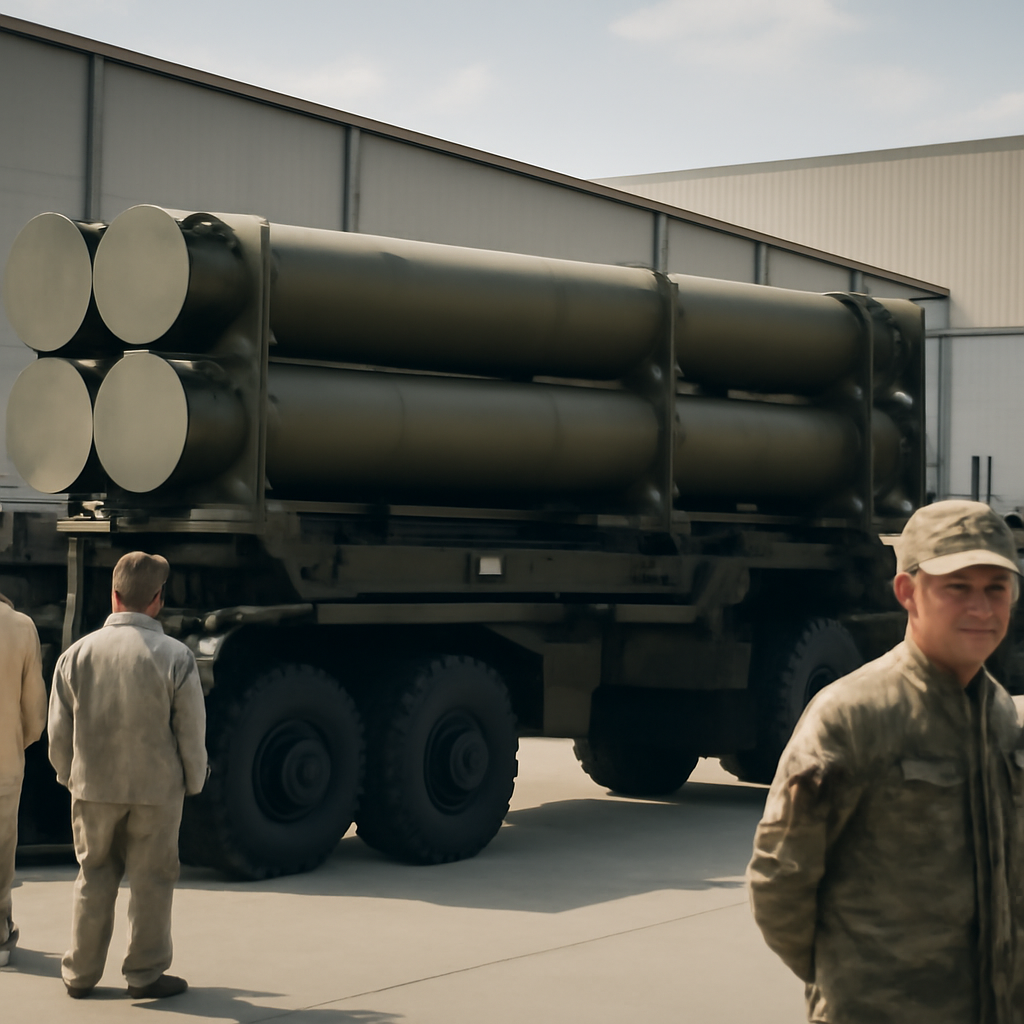
The Army awarded Lockheed Martin an undefined contract action (UCA) modification worth $53.86 billion for PAC‑3 MSE interceptors, the company and the Army announced today. The modification increases a seven‑year contract to a total of $58.62 billion. The contract is undefinitized, meaning dollar values and quantities could change as negotiations continue.
Lockheed Martin had previously received an initial $4.7 billion UCA for PAC‑3 interceptors in April; the current modification follows that earlier award and accumulates into the multiyear vehicle now reported as $58.62 billion.
What the Department of Defense says: demand signals and supply‑chain aims
Michael Duffey, the Defense Department’s undersecretary of war for acquisition and sustainment, framed the announcement as a supply‑chain and production milestone. “Today’s announcement turns concept into reality, providing industry with the long‑term demand signals it needs to build a resilient supply chain, scale production, and deliver critical capabilities to our Warfighters at the speed of relevance,” Duffey said in a Lockheed Martin press release.
The Army described the UCA as enabling “a highly resilient, ‘warm’ production line capable of rapidly scaling the delivery of critical PAC‑3 MSE interceptors to U.S. and allied forces when and where they are needed most.”

The cyber insurance questionnaire just landed. Now what?
SOC 2, HIPAA, insurance renewals - someone has to own security strategy. Nubivance provides fractional CISO leadership without the full-time salary.
Get a security leadLockheed Martin’s production targets: “supercharge” and triple capacity by 2030
Lockheed Martin stated the additional UCA funding will “supercharge” PAC‑3 MSE production and triple capacity by the end of 2030. The company had earlier agreed with the Department of Defense in January to increase production capacity for PAC‑3 interceptors, which led to the April $4.7 billion UCA.
The modification therefore aims both to expand immediate output and to create a production baseline that can be scaled further if required during the seven‑year contract term.
Related agreements: PrSM, THAAD and the focus on solid rocket motors
The PAC‑3 modification arrives amid a string of large, multiyear contracting actions. Lockheed Martin signed a separate deal with the Pentagon in March to ramp up production for the Precision Strike Missile (PrSM). Late last month the company signed another UCA for nearly $35 billion to increase production of Terminal High Altitude Area Defense (THAAD) interceptors over a seven‑year period.
Breaking Defense also noted that L3Harris reached a seven‑year framework agreement with the Pentagon to ramp up solid rocket motor production for PAC‑3 missiles and THAAD interceptors. Those deals, Breaking Defense reported Monday, are the first to center around solid rocket motors — a technology the reporting identifies as a long‑standing bottleneck for missile production because of a fractured industrial base.
How the Army, Lockheed Martin, allied forces, and Congress are affected
- The Army: Gains a contractual vehicle intended to secure a “warm” production line and faster deliveries of PAC‑3 MSE interceptors to U.S. and allied forces, even as final quantities and prices remain under negotiation.
- Lockheed Martin: Receives the long‑term demand signal the company says will permit scaling production, with a stated goal of tripling PAC‑3 MSE capacity by the end of 2030 and continuing parallel increases for PrSM and THAAD.
- Allied forces and U.S. Warfighters: Stand to receive more interceptors more quickly, according to the Army’s statement that the UCA enables rapid scaling “when and where they are needed most.”
- Congress and appropriations watchers: Face a contract vehicle that lets the Pentagon begin production ahead of finalized funding details; the Pentagon’s use of UCAs can proceed even if there are roadblocks in the congressional appropriations process, a point the reporting highlights as notable given that the path forward for key munitions funding “is currently unclear on the Hill.”
These actions, taken together, map a deliberate push to expand missile and interceptor production capacity across multiple programs while leaving key price and quantity details to be settled in ongoing negotiations. The immediate practical effect is to let manufacturers begin work and expand lines, but the longer arc—how quickly quantities are definitized, how supply‑chain chokepoints such as solid rocket motors are cleared, and how congressional funding is resolved—remains to be determined.
Original reporting: Breaking Defense — Army adds $54B to Lockheed PAC‑3 agreement, totaling $59B