"That's pretty cool," President Donald Trump told President Volodymyr Zelensky after offering Kyiv a license to build Patriot surface-to-air missile interceptors, adding: "We haven't informed the company of that yet, but that'll work out all right."
What the White House pledge actually was
At the NATO Summit in Ankara, Turkey, President Trump told President Zelensky he would provide Ukraine with a license to build Patriot interceptors and later said he would also provide an undisclosed number of additional interceptors from existing U.S. stocks. The exchange was captured in a tweet quoted by Defense of Ukraine: "We're gonna give a license to you to make Patriots." RTX (Raytheon's parent company) told the author it had "no immediate comment on the president's announcement" while noting RTX "has a long history of co-producing critical defense systems in Europe."
Industrial realities: lead times and chokepoints for PAC-3 MSE
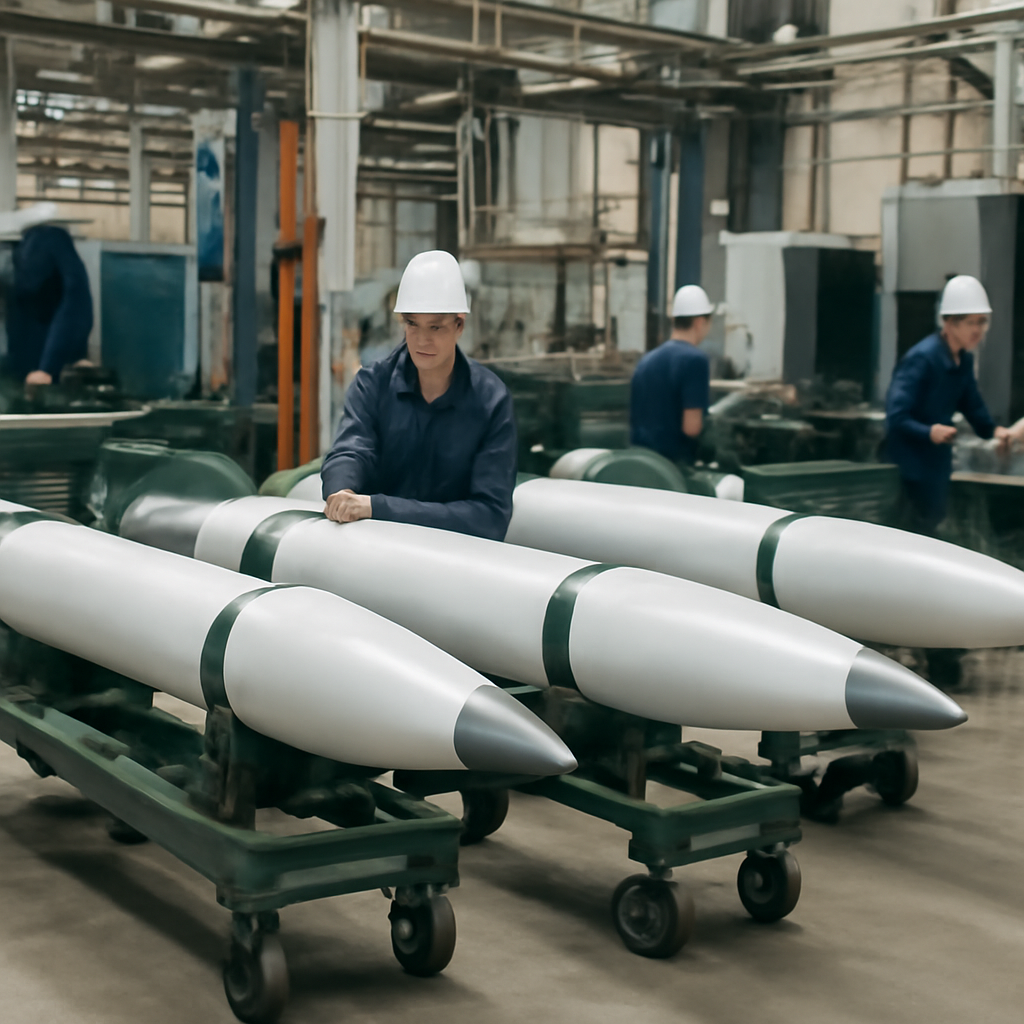
Turning a license into fielded missiles is not simply a matter of approval. Lockheed Martin currently produces about 650 PAC-3 MSE interceptors a year, the article reported, and under a January contract with the Pentagon is committed to boosting annual production to 2,000 over time. The Foreign Policy Research Institute (FPRI) detailed production lead times: "Every PAC-3 MSE interceptor carries a production lead time of 24 months for the missile and 30 months for the solid rocket motor." FPRI highlighted sub-tier bottlenecks: Boeing produces the active radar seeker for every PAC-3 MSE from a single facility in Huntsville, Alabama, delivering around 650–700 seekers in 2025. Recognizing that chokepoint, the Pentagon signed a framework in April 2026 to triple seeker production. The missile's solid rocket motor is manufactured by L3Harris's Aerojet Rocketdyne, another long-lead component.

This site is the portfolio.
OSINTSights runs on Cloudflare Workers, D1, R2, and Vectorize, with an AI pipeline on Hetzner ARM. Nubivance designed, built, and operates it. We do the same for clients.
See what we buildUkraine's own program: Fire Point and the FP-7 effort
Ukraine is already pursuing a domestic interceptor project. Fire Point, a Ukrainian company that makes drones and the FP-5 Flamingo cruise missile, is developing an "anti-ballistic shield" centered on the FP-7.x interceptor. Fire Point demonstrated tests of the weapon in February; the system is "aerodynamically ready, but still not combat-capable without full integration," the Kyiv Post reported. Chief designer Denys Shtilerman said the system "depends on radars, command centers, a secure data link, and a European-developed seeker head," and the company is working with partners to combine those elements into a functioning missile-defense network.
Supply and demand: why even U.S. stocks are strained
Global demand for Patriot interceptors is high. The article noted that U.S. usage in recent Middle East conflicts, sustained consumption by Ukraine, and commitments to nearly 20 other nations have strained inventories. Orders have been rationed and, at times, diverted to replenish U.S. stocks — a practice that, the piece says, predates the current administration. Japan has a contract to produce about 30 Patriot interceptors per year, though a 2024 attempt to boost that output hit supply-chain snags, Reuters reported. Separately, an MBDA-Raytheon facility in Europe to make GEM-T Patriot missiles is due to open later this year, and plans announced at the NATO Summit would build a European PAC-3 maintenance facility.
How Ukraine, U.S. defense firms, and European partners will respond
- Ukraine: Kyiv will need to secure specialized components, find secure production sites and integrate radars, command centers and seeker technology — challenges Fire Point already acknowledges for the FP-7. A large, concentrated facility could become a prime target in a country facing constant missile and drone barrages, the article notes.
- U.S. defense firms (Lockheed Martin, Boeing, L3Harris/Aerojet Rocketdyne, RTX): Companies face long lead times and sub-tier chokepoints such as the Huntsville seeker line and solid rocket motor production. RTX said it has experience co-producing in Europe; Lockheed is under contract to expand output, and the Pentagon has sought to increase seeker production through a framework signed in April 2026.
- European partners: The article suggests Europe may help fund any Ukrainian production effort and is already expanding regional capacity with a GEM-T facility and a proposed PAC-3 maintenance facility highlighted at the NATO Summit.
Experts cited in the reporting emphasize that the technical transfer and supply chain will drive the timeline. Retired Army Colonel David Shank warned about security risks in sharing information and hardware inside a country at war: "From my perspective, I am absolutely 100% concerned about the Ukrainians and anyone they let in those facilities," adding that the "intricate components, chips, and circuit cards could slow the process."
The upshot: a U.S. license would be consequential for Ukraine's long-term industrial and strategic position, but the article concludes that it will be many months — likely longer — before Kyiv could turn that license into fielded Patriot interceptors. Meanwhile, Russian production plans cited by Ukraine's Defense Intelligence Directorate (GUR) complicate the calculus: GUR reported Russia plans to deliver up to 700 9M723 Iskander missiles in 2026 at monthly rates of 55–60, and has more than doubled production of RM-48U missiles for S-300PM and S-400 use, with over 480 planned in 2026 and current monthly rates up to 50. Those rates exceed current high-end Patriot interceptor production and underscore the mismatch between demand and supply.
Link to original story: https://www.twz.com/land/ukraine-built-patriot-missiles-wont-be-defending-the-countrys-skies-anytime-soon