"This is about isolating Taiwan," the State of the Strait project concluded — and in 2026 Beijing's tactics have widened from formal exclusion to persistent, everyday obstruction that raises the political and practical costs of engagement with Taipei.
From WTO ministerial snafu to WHO exclusion
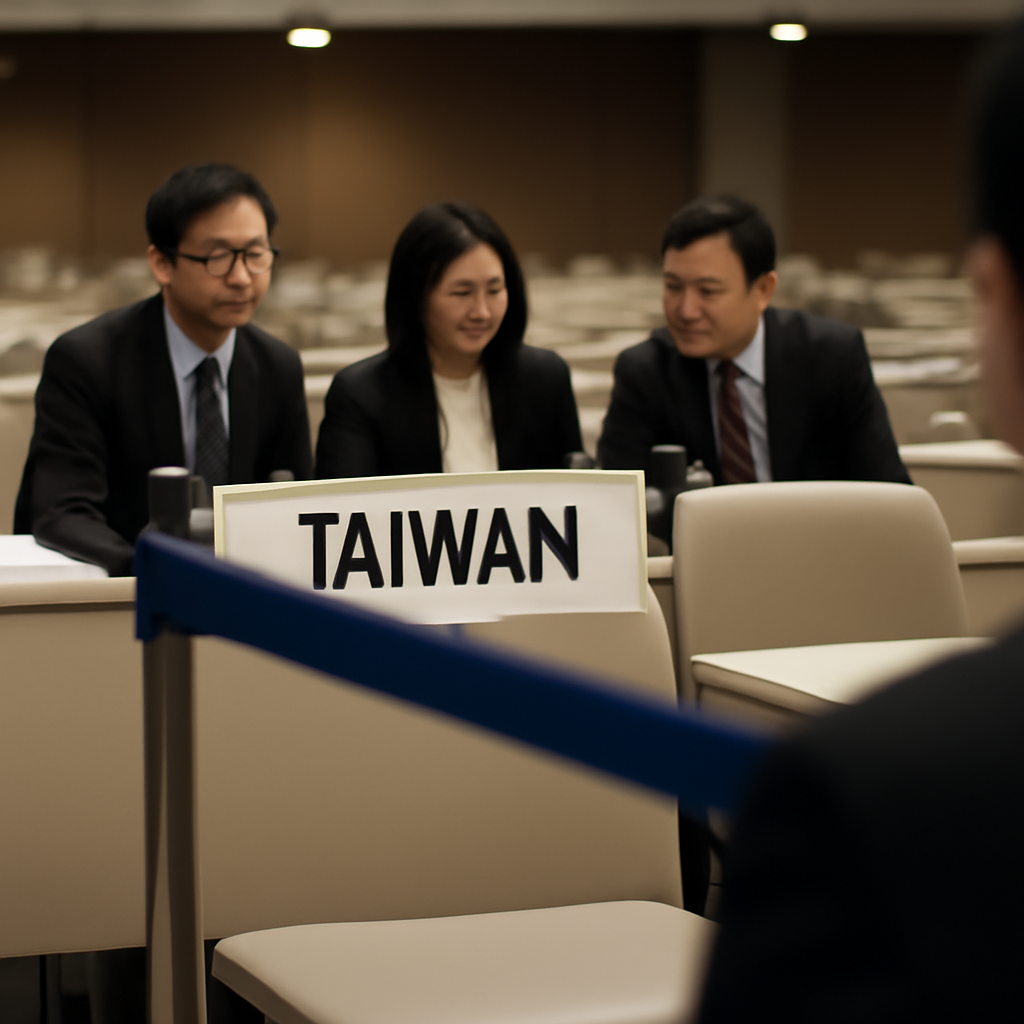
In March, Taiwan missed a World Trade Organization ministerial in Cameroon after documentation referred to it as "Taiwan, Province of China" and replacement visas reportedly contained serious errors. That incident prefaced a second high-profile exclusion in May, when Taiwan was again left out of the World Health Assembly. Taken together, the WTO and WHO cases illustrate a shift from contesting formal recognition to intervening in the administrative and procedural spaces where Taiwan normally participates.
Overflight denials and a postponed presidential trip
In April, Taiwanese President Lai Ching-te postponed a visit to Eswatini after Seychelles, Mauritius and Madagascar revoked overflight permissions — a move Taipei attributed to Chinese pressure. Lai ultimately made the trip along a circuitous route. The episode shows how flight routes and overflight approvals have become levers that can reshape, delay or deter high-level exchanges.

This site is the portfolio.
OSINTSights runs on Cloudflare Workers, D1, R2, and Vectorize, with an AI pipeline on Hetzner ARM. Nubivance designed, built, and operates it. We do the same for clients.
See what we buildConference access and civil-society pressure: RightsCon and Our Ocean
Two conference episodes in May and June demonstrate the breadth of pressure. RightsCon, a major human-rights and technology conference scheduled for Zambia in May, was cancelled after its organiser, Access Now, said Chinese diplomats had pressured Lusaka over planned Taiwanese civil-society participation. In June, Taiwanese scholars were blocked from attending the Our Ocean Conference in Kenya; Taiwan says their passports and phones were confiscated and they were detained for more than 20 hours. These incidents target technical, scientific and civil-society avenues of engagement — precisely the low-politics spaces many countries treat as routine.
Visa measures and targeted sanctions: New Zealand MPs
Also in June, China imposed one-year entry bans on four New Zealand members of parliament after their visit to Taiwan. That step demonstrates Beijing's willingness to sanction third-party officials who maintain ties with Taipei, converting parliamentary travel into a potential personal and diplomatic cost.
What this means for Australia, New Zealand, and Kenya
- Australia: The source argues Australia should treat these incidents as matters of regional order rather than protocol. It recommends Australia continue supporting parliamentary visits, technical exchanges and Taiwan's meaningful participation in international forums where statehood is not a prerequisite, and continue adding its voice to joint statements in support of peace and stability across the Taiwan Strait.
- New Zealand: The imposition of one-year entry bans on four MPs signals a concrete personal cost for parliamentary engagement with Taiwan; New Zealand officials and legislators are therefore confronted with a choice about whether to absorb such costs when maintaining routine ties.
- Kenya and conference hosts: The Our Ocean incident, involving detention and confiscation of passports and phones, underscores the vulnerability of conference organisers and host countries to diplomatic pressure — and the potential consequences for civil-society and technical participants from Taiwan.
The catalogue of measures described — visas, passports, accreditation, flight routes, conference access, naming conventions and entry bans — creates friction across modes of contact that democracies typically treat as noncontroversial. The source frames this as part of a long-term Chinese strategy: while military pressure remains important, diplomatic coercion is "the more persistent instrument," operating daily and beneath thresholds that trigger major international responses.
The timing of the campaign matters in this account. With "President Donald Trump’s rhetoric injecting doubt into US commitments," the source says Beijing is testing whether Washington's partners in the Indo-Pacific will be willing to absorb political, administrative or personal costs to keep routine ties with Taiwan. The calculation for Beijing, as the source puts it, is whether the island will appear "tradable" in a broader bargain with Chinese President Xi Jinping — and whether democracies will treat incidents as isolated irritants or coordinate and push back.
Concluding with a direct admonition from the source: governments should make routine engagement with Taiwan normal, more resilient and harder for Beijing to disrupt. "Beijing is testing whether Taiwan’s partners will stay engaged when pressure rises. Those partners should make the answer clear." The incidents of 2026 — ministerial documentation errors, overflight revocations, cancelled conferences, WHO exclusion, entry bans, and detentions at a scientific conference — form a pattern. Individually they can be managed; collectively they are designed to chill engagement. How countries respond to this pattern will determine whether those channels remain open or steadily narrow.
https://www.aspistrategist.org.au/beijing-is-testing-who-will-stand-by-taiwan/