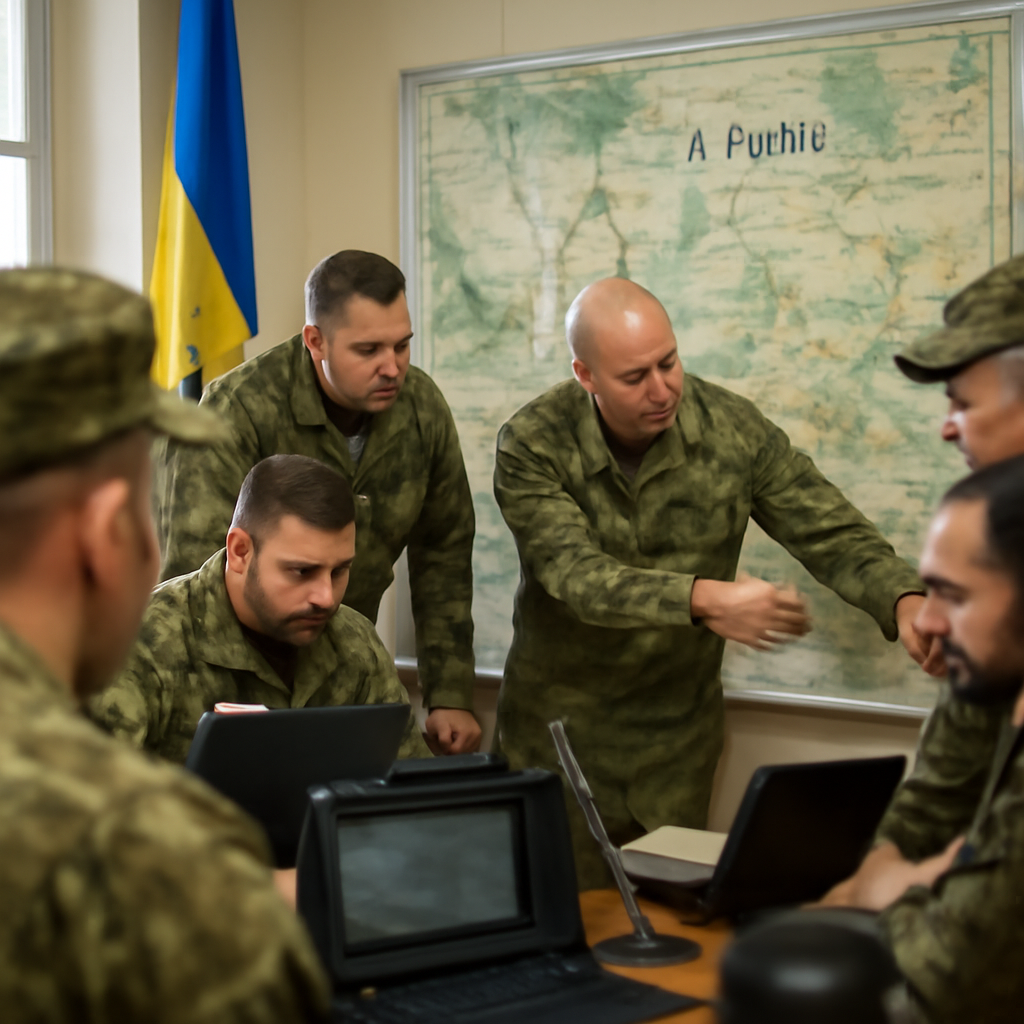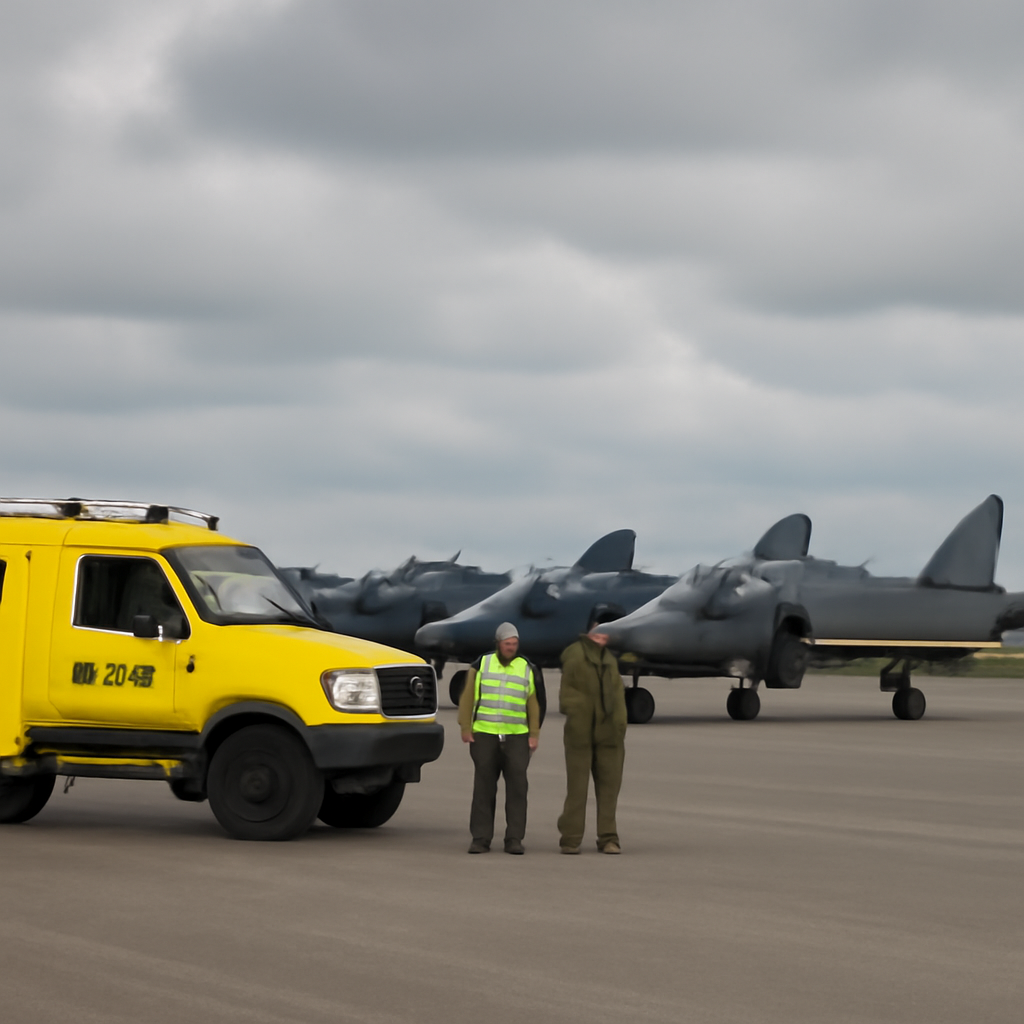
"We started with the intention to win the war and destroy the Russian Empire," Fire Point CEO Iryna Terekh told TWZ, pausing an interview to dive for shelter when Russian ballistic missiles approached. The remark framed a conversation that ranges from garage-born FP-1 drones to prototype turbojets, new solid-propellant casting plants and a home-grown ballistic missile the company hopes to flight‑test this autumn.
From FP-1 garage project to a distributed production ecosystem
Terekh traces Fire Point’s origin to two early design impulses: build a Shahed-analog and reuse rumored stocks of Soviet Fab 50 bombs. The Fab 50 stockpile turned out to be a rumor, but the initial FP-1 design endured. Scaling forced Fire Point to create "satellite productions" across the country to overcome bottlenecks; Terekh says the company now counts some 90 dispersed "factories"—an ecosystem of duplicated critical components, warehouses and hidden logistics rather than single-site manufacturing.
Flamingo cruise missile: claimed range, engines, and production limits
Fire Point’s Flamingo ground‑launched cruise missile has been publicly claimed to have a range of about 1,800 miles. Early flights used the Ivchenko AI‑25 turbofan but Terekh said Flamingo was designed to accept "five different engines" to widen the pool of used powerplants. Fire Point is also developing its own turbojet with the original design bureau and is assembling the first ten prototypes; the goal is to finish testing and improvements by the end of the year and move to mass production next year.
The company built what it calls a maximum production capacity that could reach a daily rate of at least seven Flamingo missiles by October; Terekh says that capacity is not yet realized because orders stalled while Ukraine awaited funds from an EU loan. She expects a ramp to named numbers "probably by the end of this year or beginning next year" depending on contract flow.
On operations, Terekh described Flamingo as a "drone category" weapon in terms of mission flow: Ukrainian armed forces perform mission planning, and Fire Point conducts detailed after‑action reviews to refine software and counter‑electronic‑warfare measures. She said Flamingo’s navigation solution is "completely resistant towards electronic warfare, jamming, spoofing" and that the principal remaining threat is aviation.

Audit-ready is a season. It shouldn't be.
Evidence in spreadsheets, controls drifting between audits, frameworks multiplying on flat headcount. Nubivance runs continuous compliance on Rapid7 Cyber GRC - SOC 2, HIPAA, ISO 27001, PCI, CMMC.
End the scrambleFP-9 ballistic missile and the logistics of large solid motors
The FP-9 ballistic missile, Terekh said, is intended to reach Moscow with a range of 850 kilometers. Its engine requires 4.6 tons of solid rocket propellant—compared with about one ton for the FP-7—prompting construction of new casting and post‑curing facilities. Ukraine’s Pavlograd factory was noted as both existing infrastructure and a vulnerability because it is "under constant attack" and uses somewhat different technology, so Fire Point built multiple factories in Ukraine and one in Denmark to diversify production.
Terekh reported that engines are being cast now and that navigation and other systems are ready; the company is preparing for a first flight test and is aiming for autumn, while cautioning that dates may slip.
Project Freya and the FP-7.x interceptor: seekers, cost and production goals
Under Project Freya, Fire Point is developing the FP-7.x interceptor to offer a cheaper, more plentiful alternative to high‑end interceptors. The firm is working with "two European and one Ukrainian company" on seeker integration; at least one public option is a Diehl Defense imaging‑infrared seeker that Fire Point is integrating. Terekh said the program’s final goal is to make the interceptor cheaper than 1 million euros in serial production and that the initial iteration is expected to use blast interception similar to a Patriot PAC‑2 analogue, with hit‑to‑kill a later objective.
On production scale, Fire Point says it can "make almost an infinite amount" of interceptors and targets at least 2,000 a year as a starter, but noted seeker availability and technical integration remain the main bottlenecks.
AI, Sea of Azov operations, rockets, satcom and export caution
Terekh described Fire Point’s AI use as focused on visual map‑matching for final targeting and on collecting precise data for inertial platforms; she emphasized humans retain the final decision and that the company uses both man‑in‑the‑loop and man‑on‑the‑loop modes. She credited FP‑2’s success against Russian ships in the Sea of Azov to manual control augmented by AI assistance, which lets operators engage dynamic targets and pick vulnerable points.
Fire Point also arms FP platforms with side‑quest payloads: Terekh said FP‑1/FP‑2 can carry uncontrolled 57mm S‑5 rockets—up to eight—and that platforms can release rockets to counter mobile interceptor groups and continue on to primary missions. Beyond weapons, the firm is working on an independent satellite connectivity capability and is "starting to develop our future possibility to deliver satellites," while acknowledging that winning the war remains the priority.
On exports, Terekh said European customers have strong interest but Fire Point will be "more careful" to prevent diversion; she stated Fire Point is not currently selling to the U.S. or Gulf states and that negotiations with several countries are ongoing. She also confirmed ongoing industrial talks with Diehl Defense in Germany, initiated by the German government, without disclosing details.
Fire Point’s agenda is concrete and time‑bound: turbojet prototypes to test by year‑end, a planned FP‑9 first flight in autumn, and production ramps that hinge on contracts, seeker availability and international partnerships. Each milestone the company cited—casting large solid motors, integrating imaging‑infrared seekers, and fielding mass‑producible interceptors under €1 million—will determine whether Fire Point’s garage origins translate into sustained, large‑scale munition production.
Original report: TWZ — Ukraine’s Fire Point CEO On How It’s Making Missiles And Drones To “Destroy The Russian Empire”