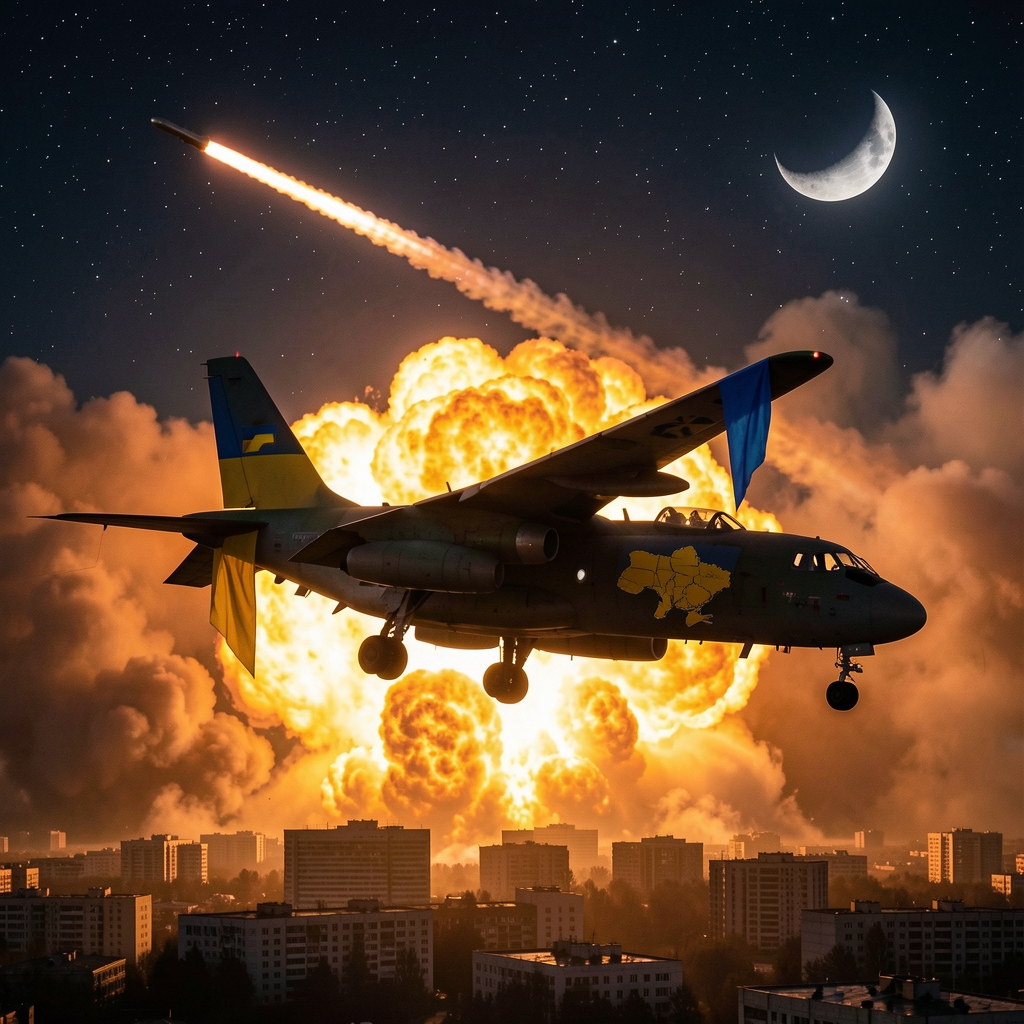
Ukraine’s Bold Airstrike Campaign: A Game Changer in Eastern Europe
In the dead of night, as silence cloaked the war-torn skies, Ukraine unleashed a significant missile strike aimed squarely at Russian military infrastructure. This operation marks a pivotal moment in a conflict that has raged for years, raising crucial questions about escalation, strategy, and the enduring spirit of defiance. As Ukrainian forces targeted sites not only in occupied eastern Ukraine but also deep within the Russian Federation, one must ask: What does this mean for the future of military engagements in this region?
The recent strike, corroborated by multiple sources and regional monitoring channels, is reported to be in direct retaliation for a previous Russian missile attack on Ukrainian soil. This exchange of hostilities showcases an evolving battlefield where both sides are willing to escalate operations significantly. Analysts note that such actions signal a shift in Ukraine’s tactical approach, moving from predominantly defensive postures to more aggressive maneuvers intended to disrupt Russian operational capabilities.
To understand the current dynamics at play, it is essential to revisit the historical context. Since Russia’s annexation of Crimea in 2014 and subsequent involvement in eastern Ukraine, the region has become a flashpoint for geopolitical tensions. A series of agreements and ceasefires have been attempted but have largely proven ineffective against the backdrop of ongoing skirmishes and military buildup. The Western response has evolved as well; arms supplies to Ukraine have increased in both sophistication and volume since the onset of full-scale warfare in 2022.
The most recent developments reveal an alarming trend of escalating violence on both sides. Ukraine’s airstrikes reportedly involved a mix of cruise missiles and drones, showcasing its growing technological capabilities and resolve to strike at the heart of Russian military power. According to Ukrainian officials, these strikes aim not merely to retaliate but to degrade Russia’s capacity for future assaults on Ukrainian territory.
Why does this matter? The implications extend far beyond immediate military outcomes. First and foremost, it challenges the perception of invulnerability that has long surrounded Russia’s military endeavors. Strikes against Russian soil could embolden other nations that view Moscow’s aggression as a threat. It may also invigorate domestic support for Ukraine’s government as citizens rally behind their country’s resilience amid continued existential threats.
Experts suggest that this sudden shift indicates a calculated risk by Ukraine’s leadership. Military analyst Dr. Michael Kofman posits that while Kyiv aims to demonstrate its operational reach, it must simultaneously manage any potential backlash from Moscow—a delicate balance that could either stabilize or further destabilize the region.
Looking forward, observers should monitor several critical elements: Will Russia retaliate with its own escalated measures? How will NATO members respond not only diplomatically but also militarily? Moreover, public sentiment within Russia—how much tolerance exists among its populace for sustained conflict? These questions are integral as we navigate an increasingly complicated geopolitical landscape where every action has far-reaching ramifications.
The human element remains ever present; behind every strategic maneuver lies the reality faced by ordinary civilians caught in an unending cycle of conflict. As the specter of war continues to loom large over Eastern Europe, one cannot help but wonder: In this game of chess between nations, how many pawns are too many sacrificed before peace becomes a tangible goal rather than just an elusive hope?



