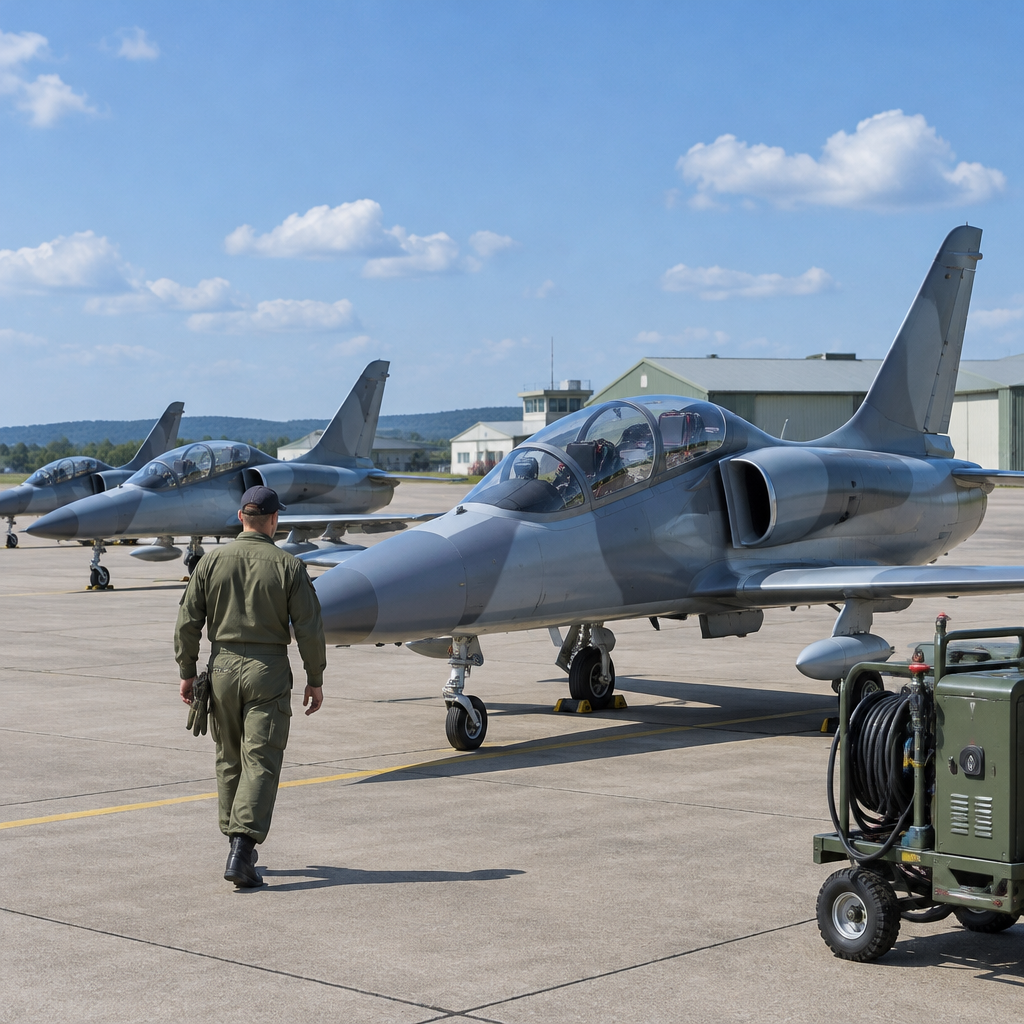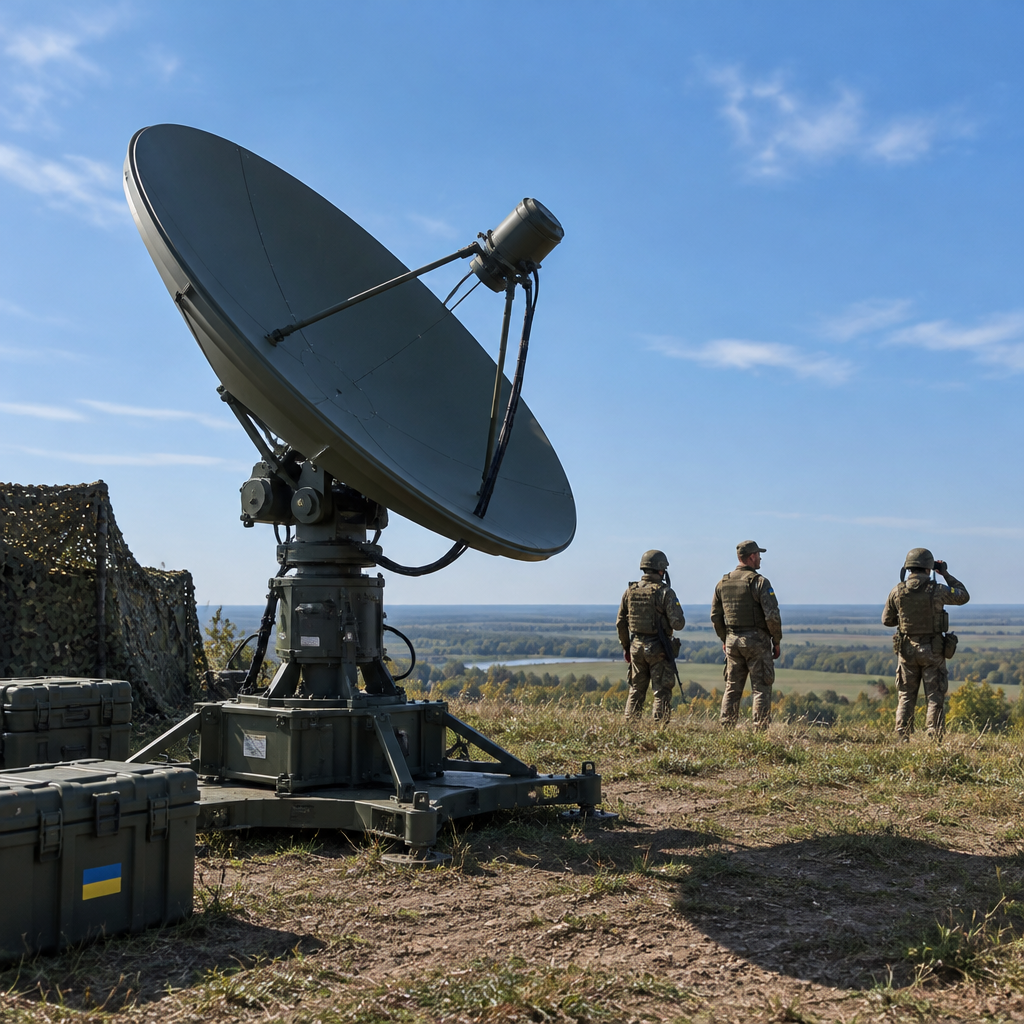
“Unfortunately, our units have been recording significant disruptions to Starshield’s operations over the territory of Ukraine for several days now – along the entire front line and in the temporarily occupied territories of Ukraine,” President Volodymyr Zelensky wrote on X on Nov. 12, 2026.
Starshield and what it does
Starshield is SpaceX’s satellite communications system built “specifically for government and military clients, including the Pentagon,” the company says. According to SpaceX, “Starshield leverages SpaceX’s Starlink technology and launch capability to support national security efforts.” The company distinguishes Starshield from consumer Starlink by saying Starshield targets “Earth observation, communications and hosted payloads” and “uses additional high-assurance cryptographic capability to host classified payloads and process data securely.”
What Ukraine says is happening and the operational effect
Ukrainian officials and frontline personnel report that Starshield terminals are being subjected to systematic speed limits while in motion. Zelensky stated the restriction is a cap at 161 kilometers per hour (100 miles per hour). Presidential advisor Serhii “Flash” Beskrestnov said the operational speed limit is “once again” restricting helicopters and interceptor aircraft that track and shoot down Russian Shahed drones. Independent observers and units on the front described limits at roughly 160 km/h that force “middle strike” drones to fly slower than their designed speed, reducing range or making them easier to intercept.
The reported effects include complications intercepting Russian jet-powered drones and reported strikes that “got through” because interception systems could not reach sufficient speed. Units say limits are affecting strikes on Russian logistics deep in occupied territory and the use of interceptor drones crucial to defeating long-range attack drones.

Audit-ready is a season. It shouldn't be.
Evidence in spreadsheets, controls drifting between audits, frameworks multiplying on flat headcount. Nubivance runs continuous compliance on Rapid7 Cyber GRC - SOC 2, HIPAA, ISO 27001, PCI, CMMC.
End the scrambleSpaceX denial, the October precedent, and internal questions
SpaceX told TWZ the Ukrainian claims are false. “This is false,” a SpaceX official told the outlet. The company earlier distinguishes Starshield as a military-grade service not available to civilians and designed for higher speeds and better connectivity.
Ukrainians raised similar complaints in October; service was later restored, the outlet reports. After that episode, reporting in the Wall Street Journal — cited in the source material — said Elon Musk had ordered a slowdown of Starshield, with disagreement among sources over whether that was done “in concert with President Donald Trump.” The Wall Street Journal also reported the president asked Musk to restore the service, and that Mr. Trump later said the system was “back.”
Tyler Rogoway, editor-in-chief of TWZ, questioned how an individual at SpaceX could unilaterally change Starshield given Pentagon contracts, saying the idea that “Musk just pulled an Office Space in Starlink HQ and told the watch worker to put up a speed gate on terminals around Ukraine sounds like a massive problem for the Pentagon as well as Ukraine.”
Timing: U.S.–Russia–Ukraine diplomacy and Russian reactions
The renewed Ukrainian complaints came as U.S. envoys met with Russian President Vladimir Putin. Two-day trilateral negotiations in Abu Dhabi among the U.S., Russia and Ukraine had concluded with only a large-scale prisoner exchange and “no big breakthroughs,” the reporting says. On Thursday, U.S. special envoys Steve Witkoff and Jared Kushner met with Putin in Moscow; Kushner told Putin, according to Russian state TASS, that “they express the desire to participate in the negotiations” on the European side and hoped to involve them in a multilateral format.
Senior Ukrainian officials told the Financial Times they believed the speed restrictions were imposed to pressure Kyiv during the latest peace talks in Abu Dhabi, according to the reporting cited in the story. The source also notes previous Russian attempts to exploit Starlink: in February, SpaceX and Ukraine’s Defense Ministry restricted Starlink to registered users after Russians were installing unregistered terminals on drones to provide beyond-line-of-sight connectivity.
How technologists, policymakers, and frontline troops are responding
- Technologists and security teams: Those working on satellite communications and battlefield networks will be watching contractual controls and access rules for government-focused services like Starshield, and whether cryptographic or registration measures can prevent unauthorized use without degrading frontline capability.
- Policymakers and regulators: U.S. and allied decision-makers face questions about operational control when private-sector systems are integrated into military operations. The October episode and the Wall Street Journal reporting about control and orders to slow service drew scrutiny in public discussion cited by TWZ.
- Frontline troops and Ukrainian commanders: Units dependent on Starshield for mid-range strike drones and interceptor coordination are tracking speed limits closely because of immediate impacts on intercept capability and the ability to strike logistics targets deep behind Russian lines.
The overlapping timeline — renewed Starshield complaints, recent October disruption and restoration, reporting about who ordered past slowdowns, and U.S. envoys meeting Putin — leaves a tightly coupled set of technical, operational and diplomatic questions. TWZ notes it cannot independently verify the Ukrainian claims. For now, Kyiv is pursuing domestic alternatives, including its own satellite communications program, while acknowledging it “won’t come close to replacing the SpaceX system,” per the reporting.