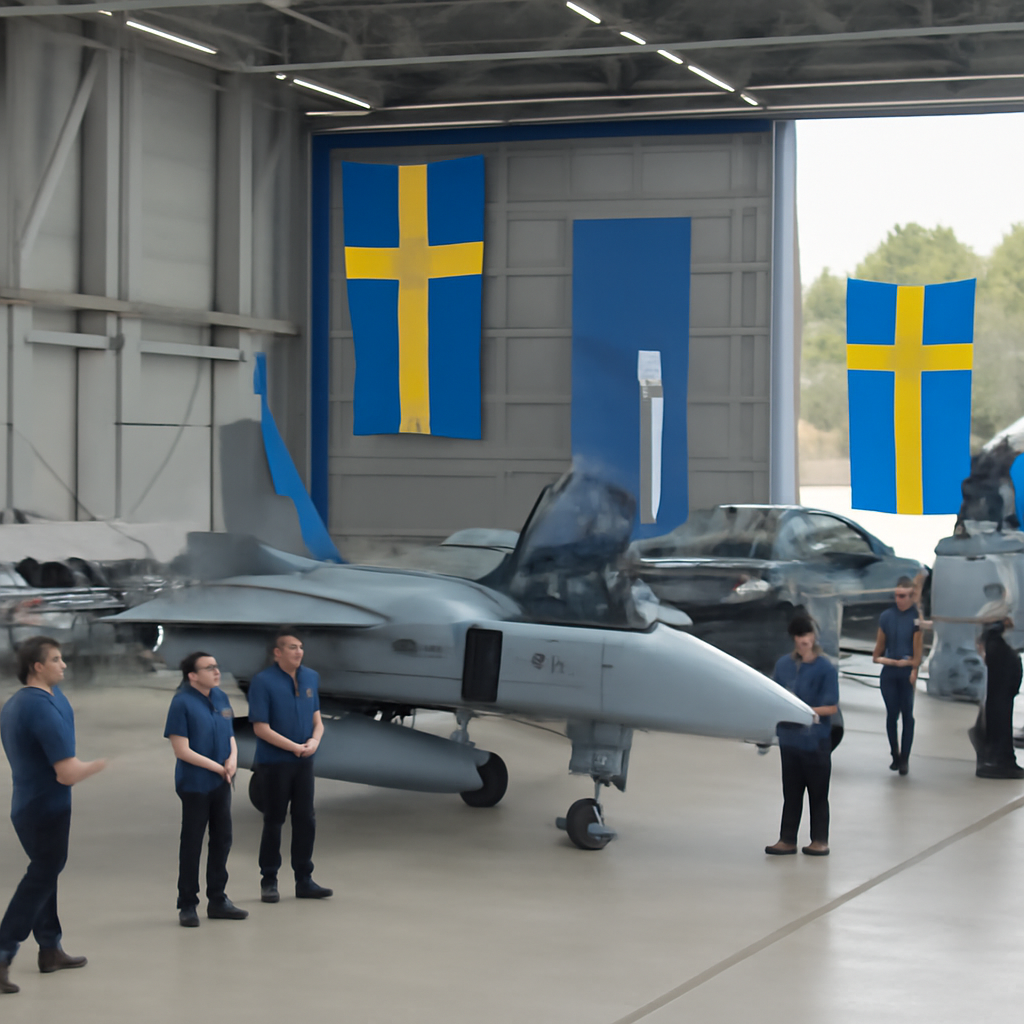
On 30 June 2026, Saab signed a SEK 24.6 billion contract with Sweden’s defence‑procurement agency, the FMV, to deliver 16 new‑build Gripen E fighters to Ukraine — the first time Kyiv has ordered new aircraft rather than relying on donated or second‑hand types.
The contract: Saab, Sweden’s FMV, and the 16 Gripen E
The agreement, signed at a Zelenskyy–Jonson meeting that paired Ukraine’s president with Sweden’s defence minister, covers the 16 Gripen E jets plus spare parts, technical assistance and a training package. Sweden will also donate 16 used Gripen C/D fighters from its own air force; those older jets are scheduled to arrive in Ukraine from early 2027 while the new‑build Gripen E deliveries are planned for 2029 and 2030. Together they will give Kyiv 32 Gripens in total.
Delivery timeline and the bridge role of donated C/D aircraft
The donated Gripen C/Ds are explicitly intended as a bridge: they let Ukrainian pilots and ground crews begin learning the Gripen system and building a maintenance and logistics base ahead of the arrival of the more advanced Gripen E. Training of Ukrainian personnel is already under way in Sweden, according to the contract notes, enabling crews to practise operating and sustaining the type before the new aircraft enter service.

Audit-ready is a season. It shouldn't be.
Evidence in spreadsheets, controls drifting between audits, frameworks multiplying on flat headcount. Nubivance runs continuous compliance on Rapid7 Cyber GRC - SOC 2, HIPAA, ISO 27001, PCI, CMMC.
End the scrambleIndustrial and financial footprint: EU loan, UK support, and British industry
Ukraine plans to fund the purchase through the EU’s Ukraine Support Loan, the €90 billion facility finalised in April 2026, with additional support from the United Kingdom. The British stake in the aircraft is substantial: more than 30 percent of each Gripen is built in the United Kingdom, supporting over 5,000 jobs across 50‑plus suppliers that provide components such as the radar and landing gear. The package price works out to roughly €138.5 million per new jet — about $158 million — a figure that includes spare parts and equipment rather than a clean flyaway price, and which undercuts Colombia’s November 2025 Gripen E/F order priced at €184.4 million each.
Gripen E capabilities and operational fit with Ukraine’s evolving fleet
The Gripen E is described in the contract material as built for dispersed operations from short runways and roads: it can be refuelled and rearmed in around ten minutes by small teams, matching the operational practice of shuttling aircraft between austere bases to complicate targeting. The type carries an active electronically scanned array (AESA) radar, an infrared search‑and‑track (IRST) system, an electronic warfare suite and secure datalinks, and can field long‑range and short‑range air‑to‑air weapons including the Meteor, IRIS‑T and AMRAAM. The long‑range Meteor is highlighted as particularly important against Russian aircraft and cruise missiles.
For Ukraine, the order marks a shift from emergency improvisation to planned modernisation: it is the first time Kyiv has modernised its fleet with new‑build aircraft rather than donated or second‑hand types. The Gripen will be a fourth Western fighter type layered onto a force that already flies the F‑16 and French Mirage 2000, with a possible Rafale order still under discussion — a mix that will increase capability but also the training and sustainment demands of operating several fighter types simultaneously.
How the Ukrainian air force, Swedish/UK industry, and EU/UK funders are affected
- Ukrainian pilots and ground crews: receive near‑term access to Gripen C/D airframes to begin hands‑on training and logistics development in 2027, with a training package included and some instruction already taking place in Sweden.
- Swedish and UK industry: Saab’s contract and the disclosed UK component content expand production work — more than 30 percent of each aircraft is built in the United Kingdom — sustaining over 5,000 jobs across more than 50 suppliers and tying British suppliers into future Ukrainian sustainment requirements.
- EU and UK funders and procurement officials: finance the purchase through the EU’s €90 billion Ukraine Support Loan with additional UK backing, embedding the fighter buy into broader European defence financing and industrial cooperation frameworks.
The 16 new Gripen E and the 16 donated C/Ds are both a capability purchase and a logistics decision: the donated jets shrink the experience gap now, while the new aircraft establish a longer‑term modern fighter capability commencing in 2029–2030. Sweden and Ukraine’s October 2025 letter of intent on a potential export of 100–150 Gripen E remains an ambition; for now, the signed contract and the donation together give Kyiv an immediate pathway to mastering a single modern fighter system and a foothold for larger orders should political and fiscal support persist.