"In modern warfare, the advantage goes to whoever makes decisions faster," Danylo Tsvok told reporters — and Ukraine has reorganised its fight around that premise.
Ukraine’s layered drone strategy
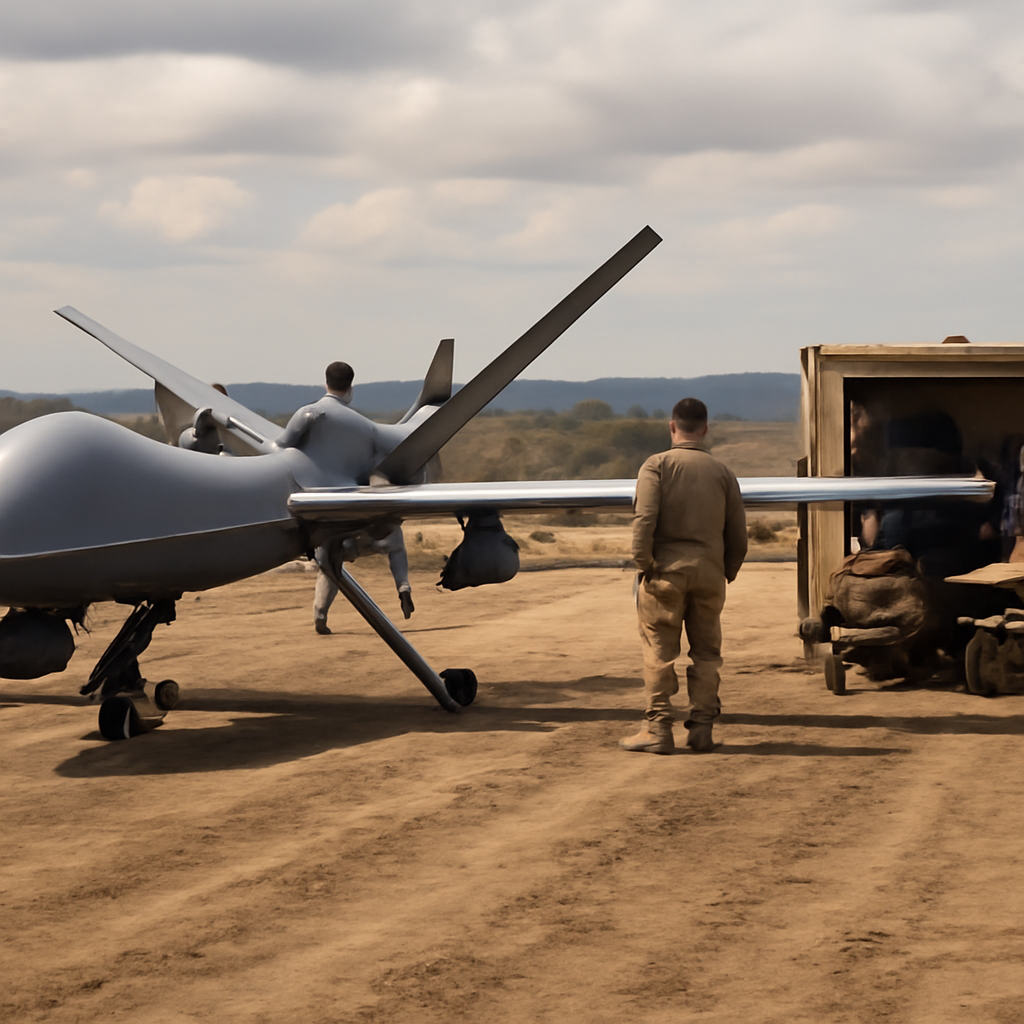
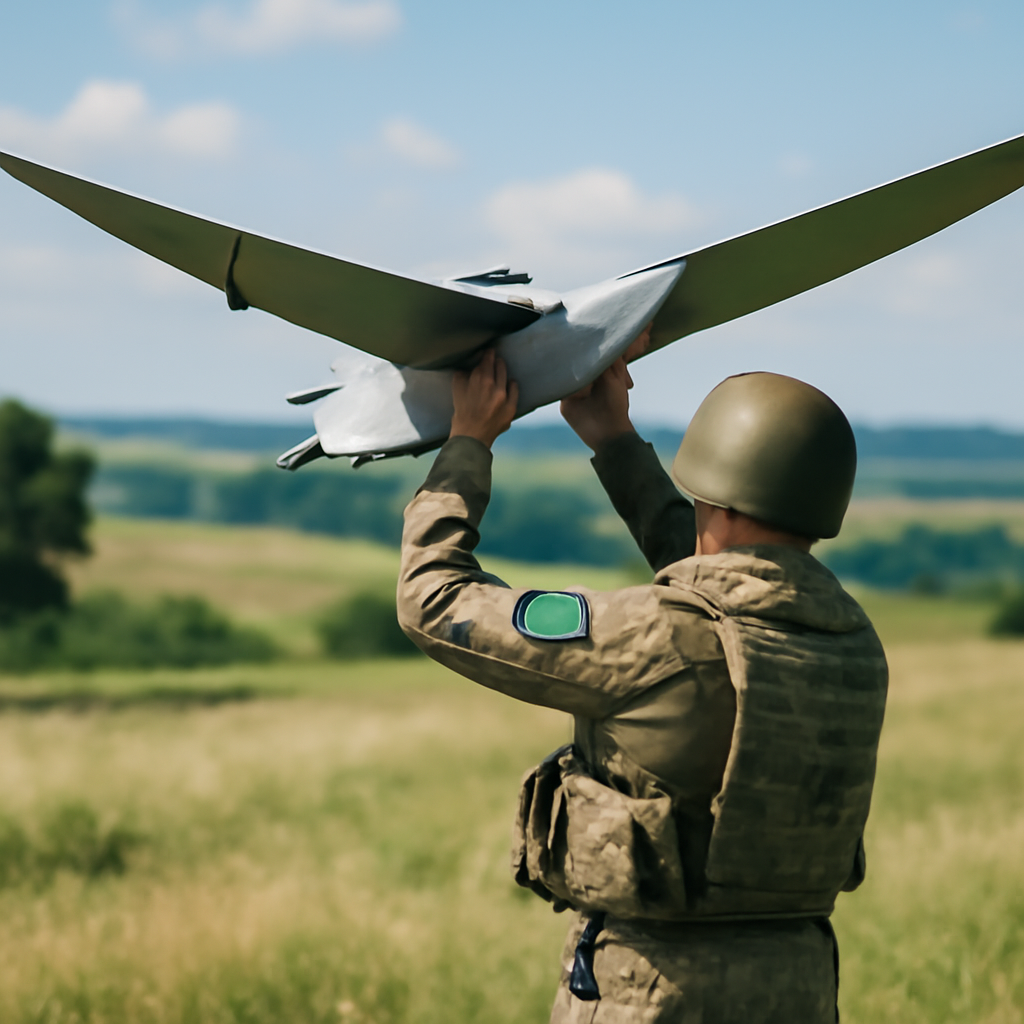
Kyiv has combined multiple classes of unmanned systems into a single, layered approach: a drone wall immediately along the front, long‑range drones that strike deep inside Russia, AI‑enabled mid‑range drones that target logistics behind the front, and naval drones used to enforce a maritime blockade. The source calls the mid‑range strikes — operating at depths beyond 100 km and using platforms such as the Hornet, Darts and RAM‑2X — particularly disruptive to Russian supply lines because autonomous terminal lock guidance reduces the effectiveness of electromagnetic warfare.
Russian adaptations: fibre‑optic drones, mesh networking and autonomous seekers
Russia has adapted in kind. It was the first to deploy fibre‑optic drones at scale across the front, and after losing access to Starlink earlier this year Moscow doubled down on mesh network technology so nearby drones could relay signals and become harder to jam. According to Ukrainian drone specialist Serhii “Flash” Beskrestnov, new variants of Russia’s Geran Seeker and Molniya strike drones use onboard AI for target recognition and autonomous terminal guidance and are being deployed extensively; the Seeker architecture is also being extended to Gerbera drones while work continues to advance autonomous capabilities in Shahed drones. Russian Defence Minister Andrei Belousov said in June that the Kremlin was attempting to advance AI adoption in the army.

This site is the portfolio.
OSINTSights runs on Cloudflare Workers, D1, R2, and Vectorize, with an AI pipeline on Hetzner ARM. Nubivance designed, built, and operates it. We do the same for clients.
See what we buildAI integration: Defence AI Center “A1”, Delta, Vezha, and Palantir
To accelerate AI adoption, Ukraine launched the Defense AI Center “A1” within the Ministry of Defense in March. Led by Danylo Tsvok, the centre aims to help build what he describes as an "AI army" and to integrate battlefield data to shorten kill chains and build comprehensive battlefield awareness. Tsvok said, “The Vezha module in Delta for real‑time battlefield video analysis is also powered by AI,” identifying that Delta is the Ukrainian military’s battlefield management and situational awareness software. “AI detects roughly 70 percent of enemy hardware. The target is detected in about 2.2 seconds,” he added. Tsvok also described a collaboration with Palantir: “Ukraine and Palantir have jointly developed a system for detailed analysis of airstrikes, implemented AI solutions to handle large volumes of intelligence data, and integrated these technologies into the planning of deep strike operations.”
Commercial modules, benchmarks and a rapid‑cycle ecosystem
Much of the innovation has come from a competitive, commercialised ecosystem. Yaroslav Azhnyuk, chief executive of battlefield AI‑module company The Fourth Law, argued the defence industry needs standardised benchmarks — comparable to those used for large language models — to verify real battlefield performance and separate effective systems from hype. The Fourth Law’s cheapest TFL‑1 module is available for only US$150 (A$213), and Tsvok said more than 200 Ukrainian companies were developing AI‑enabled drones while more than 70 AI and computer‑vision systems were already in use on the front line. “We truly believe that AI will become mass technology in the army,” Tsvok said, and stressed that “one of the cornerstones of AI products should be simplicity, so that every service member can use them easily regardless of their level of digital literacy.”
How technologists, policymakers, and soldiers are responding
- Technologists and security teams: are building and advocating for standardised benchmarks and rapid update cycles to keep AI systems responsive to changing threats, as Yaroslav Azhnyuk framed the problem.
- Policymakers and defence planners: are practicing data diplomacy and forging partnerships to share battlefield data and technologies — a strategy underscored by Lieutenant General Christian Freuding’s June remark that “Data is like ammunition.”
- Soldiers and front‑line commanders: are being equipped with simpler AI tools and autonomous platforms intended to shorten the kill chain, clear positions ahead of assaults, and enable rapid, on‑demand deployment of unmanned systems.
For now, Kyiv retains an edge by leveraging Western partnerships and a fast‑paced innovation ecosystem. But the contest is described explicitly as a running arms race: both sides are scaling autonomy and autonomy’s software layer can be replicated and iterated quickly. “The race is only beginning,” the source warns, and it concludes bluntly: whichever side gains the greater advantage in autonomous systems will hold the upper hand in the next phase of the arms race.
https://www.aspistrategist.org.au/the-autonomous-arms-race-in-the-russia-ukraine-war/