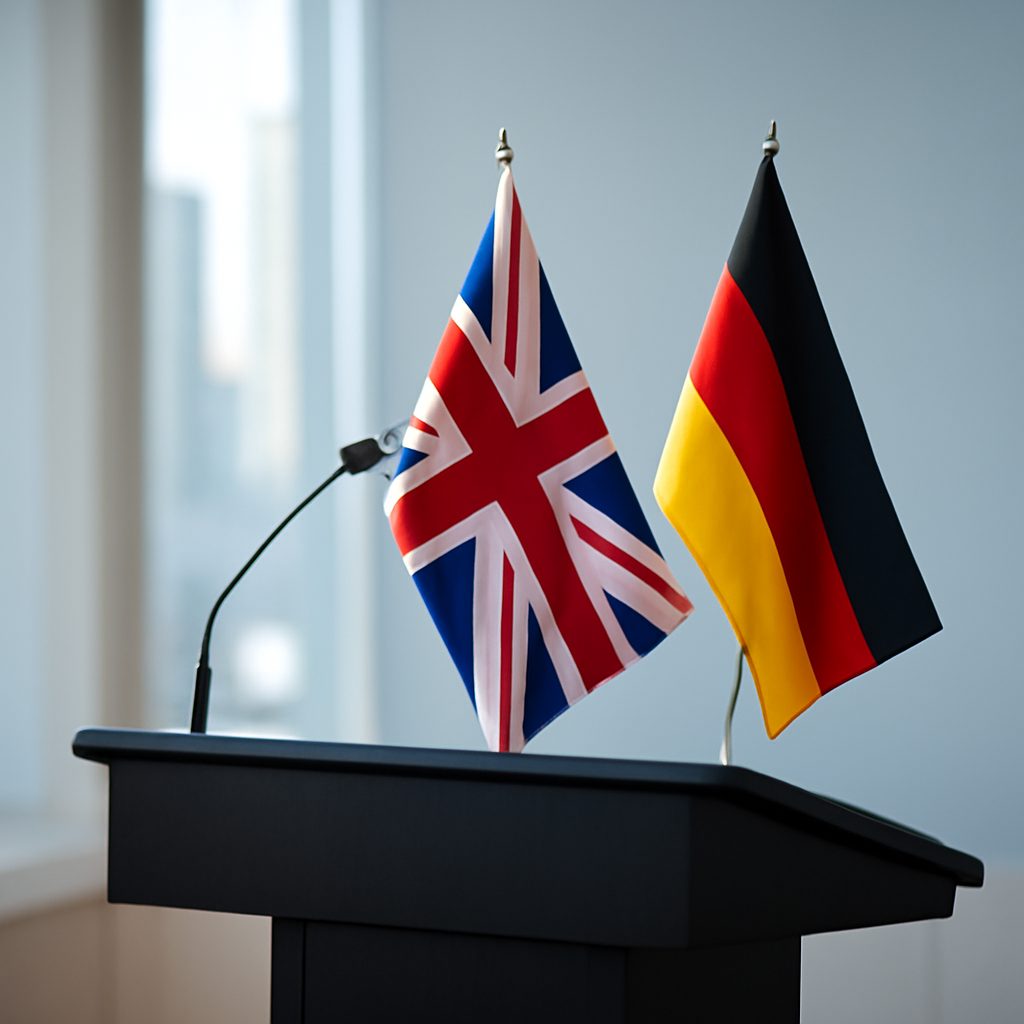
"Attacks on our infrastructure, our businesses and our democracies are not a distant threat," Prime Minister Andy Burnham said ahead of his meeting in Berlin, summing up why Britain and Germany have announced a new security partnership aimed at countering Russian cyberattacks and sabotage.
Burnham and Chancellor Merz meet in Berlin with Europe and security on the table
Prime Minister Andy Burnham travelled to Berlin for his first face-to-face meeting with German Chancellor Friedrich Merz. Security is a primary subject, but not the only one: Burnham is expected to press Germany for support on Britain's relationship with the European Union, including options floated for undoing parts of Brexit. According to the Financial Times, he is seeking German backing for closer economic ties ahead of a UK-EU summit scheduled for November 20.
The UK–Germany cybersecurity partnership: goals stated, methods unspecified
The arrangement announced on Thursday commits the two governments to share information and coordinate efforts to monitor, deter and disrupt hostile activity, including threats to critical infrastructure. Both sides framed the partnership explicitly around countering activity they attribute to Russia: cyberattacks, sabotage and other hostile operations that fall short of outright military confrontation.
But the public announcement offered little operational detail. It named no agencies, specified no additional funding, and did not explain how the countries will disrupt hostile operations — leaving the mechanics of cooperation, legal authorities and resourcing unclear in the public record.

This site is the portfolio.
OSINTSights runs on Cloudflare Workers, D1, R2, and Vectorize, with an AI pipeline on Hetzner ARM. Nubivance designed, built, and operates it. We do the same for clients.
See what we buildKensington Treaty: the legal and political foundation
The new arrangement builds on the Kensington Treaty, which was signed in July 2025 and ratified on Thursday. The treaty already committed Britain and Germany to closer work on defense, cybersecurity, technology and economic security; the latest announcement frames the partnership as a further step in implementing those commitments.
German warnings and recent incidents that sharpen the partnership's focus
German officials have issued striking warnings about Russia's activities in recent weeks. Germany's foreign intelligence chief, Martin Jaeger, warned this week that the confrontation with Russia had entered a more dangerous phase. German authorities have also blamed Moscow for an attempted drone attack at Leipzig airport in August — a concrete incident cited by both governments as part of the threat environment the partnership aims to address.
Domestic UK measures running parallel to the bilateral deal
Alongside closer cooperation with Germany, Britain has been reviving domestic tools aimed at hostile state activity. The government has fast-tracked legislation giving the Home Secretary new powers to designate state-backed organizations and proxy groups. Prime Minister Burnham has also asked security chiefs to establish a National Centre for Information Defence to tackle foreign disinformation campaigns. Those measures sit beside, and will interact with, the bilateral information-sharing and disruption ambitions announced in Berlin.
How technologists, policymakers, and the public are likely to respond
- Technologists and security teams will watch for operational details: which agencies will handle the exchanges, what legal authorities and data-sharing protocols will apply, and whether new funding or joint technical capabilities will be provided — matters that the announcement did not address.
- Policymakers and diplomats will focus on the political dimension: Burnham's request for German backing on closer UK-EU ties ahead of the November 20 UK-EU summit, and how security cooperation with Germany might be leveraged in those talks, as reported by the Financial Times.
- The general public and civil society groups will be attentive to the domestic safeguards for measures such as the Home Secretary's new designation powers and the proposed National Centre for Information Defence, given the announcement's aim to disrupt hostile influence and disinformation.
The deal projects joint resolve against a set of threats both governments now describe as immediate and intrusive, yet it leaves critical questions open: how the partnership will be operationalised, who will be responsible for concrete disruption activities, and how new domestic powers will be governed alongside cross-border cooperation. The next visible milestones are Burnham's talks with Chancellor Merz and the UK-EU summit on November 20 — moments when details and diplomatic support could either clarify the partnership's reach or expose its limits.
Source: The Register — UK and Germany team up against Russian cyberattacks as Brexit rethink looms