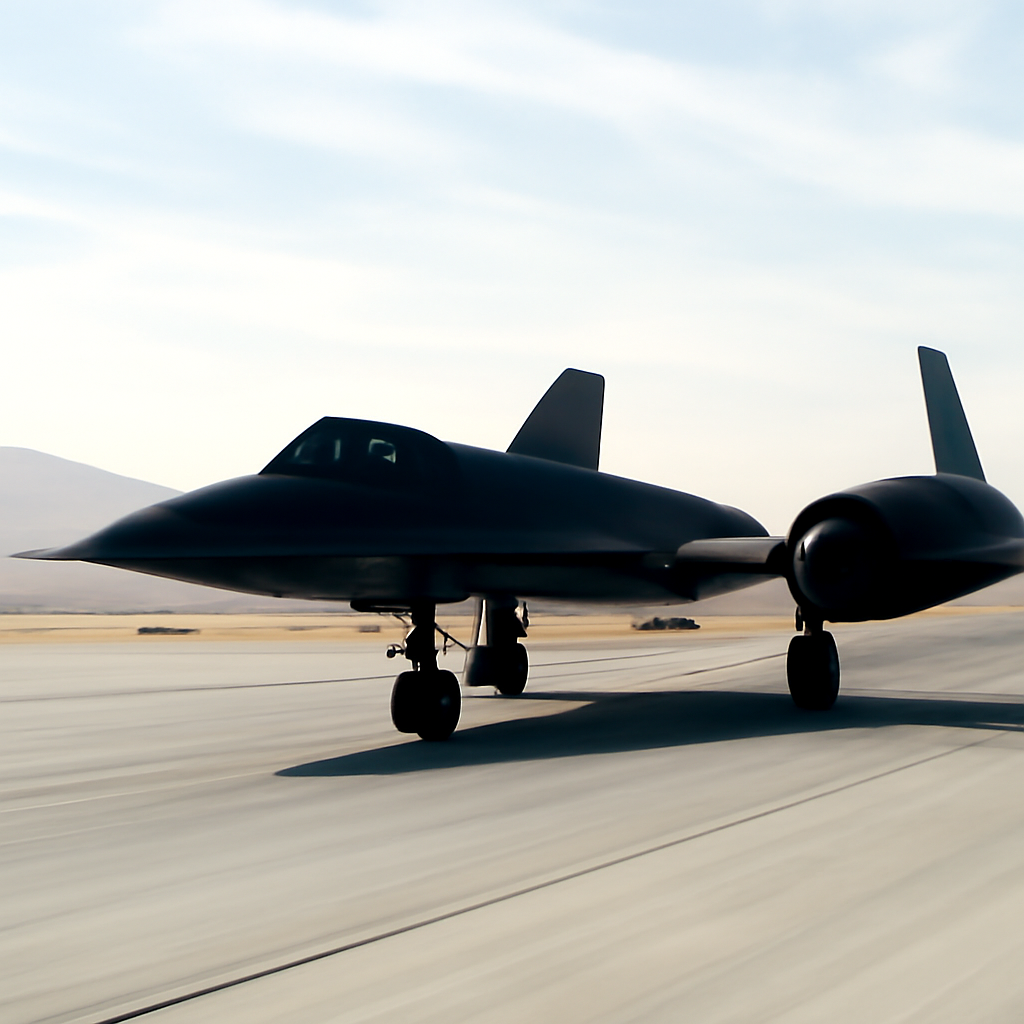
"They didn’t fly out by accident," U.S. President Donald Trump told reporters during a White House gaggle on Monday, when asked why B-1 bombers were removed from RAF Fairford in the United Kingdom. "There were some threats." The airplanes left without the base being struck.
RAF Fairford: a forward bomber hub and a quick retreat
B-1 Lancers had been continuously deployed to RAF Fairford since March, initially in support of Operation Epic Fury against Iran, the reporting records. A contingent of B-52s that had also operated from Fairford left in July. Multiple outlets, first noting ITV News correspondent Dan Rivers’ reporting, say the B-1s departed over a single weekend because of concerns about a near-field drone attack allegedly directed by Iran and modeled on Ukraine’s Operation Spiderweb; those media reports were sourced to unnamed U.S. and British officials. U.S. and British authorities had also investigated an incident on September 27 in which five men were arrested on suspicion of driving bomb-laden vans toward the base; the men were released on bail after no explosives were found.
Operation Spiderweb: the threat model that shaped the decision
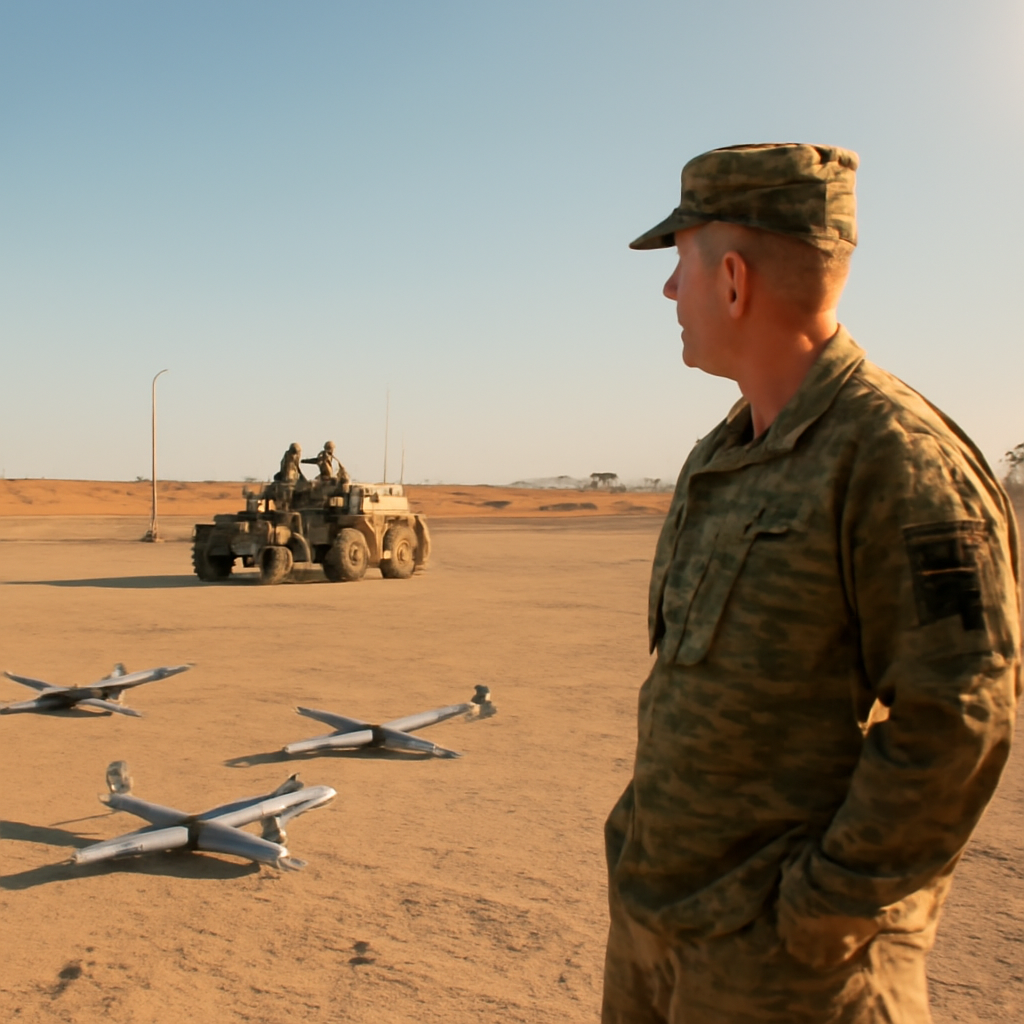
Operation Spiderweb last year involved simultaneous covert near-field attacks using explosive-laden quadcopter-type drones against airbases across Russia, destroying at least 10 Russian bombers parked on open flightlines. TWZ describes that attack as the clearest demonstration yet that parked aircraft on visible flightlines are highly vulnerable. TWZ and other reporting point out that one-way and lower-end precision attack drones have proliferated, can be launched from land or sea, and are increasingly capable of striking static targets using simple GPS coordinates or mapping tools. Satellite imagery previously published in this reporting shows B-1s parked in the open at Fairford (a July 29, 2026 Planet Labs image and other photos taken in March and July 2026), underscoring how exposed high-value aircraft can be when parked in established, perimeter-visible areas.

Audit-ready is a season. It shouldn't be.
Evidence in spreadsheets, controls drifting between audits, frameworks multiplying on flat headcount. Nubivance runs continuous compliance on Rapid7 Cyber GRC - SOC 2, HIPAA, ISO 27001, PCI, CMMC.
End the scrambleU.S. Air Force posture: emphasis on active defenses and dispersal
TWZ reports that the U.S. Air Force has prioritized surface-to-air missiles, active defenses, and aircraft dispersal rather than a large-scale program of hardened aircraft shelters. Gen. Kenneth Wilsbach — quoted at a 2023 Air and Space Forces Association roundtable and in a July interview with Breaking Defense — has said he is "not a big fan of hardening infrastructure," arguing that precision-guided munitions can defeat traditional shelters and that economics do not favor making shelters impervious. He has also argued that defending airspace and ground space with systems that can defeat incoming rounds is the more economical choice. At the same time, Wilsbach acknowledged value in low-cost protections such as nets that can stop small drones, saying "some of them — just nets that are up that keep a small, few-$100 drone from getting next to a $2 billion aircraft. That actually works, [and is] really cheap."
Hardened shelters, passive measures, and recent moves
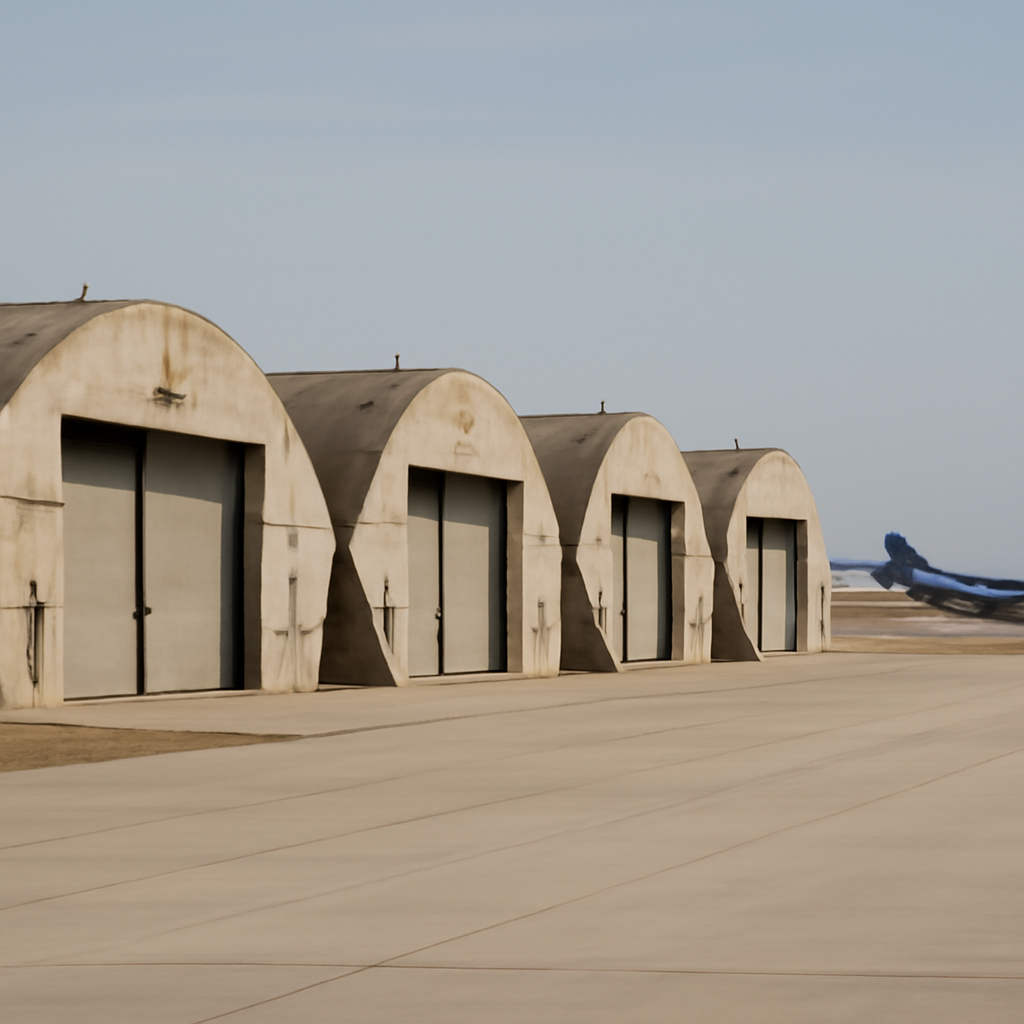
TWZ documents a broader debate and a patchwork of activity: the U.S. Air Force does maintain hardened aircraft shelters at some bases, notably in the Pacific and Europe, but there is no department-wide push evident in this reporting to construct new shelters globally. Other states — including China, Russia, North Korea, and Iran — have increased construction of hardened infrastructure, and Russia in particular has been building new shelters in occupied Crimea and at bomber hubs such as Engels Air Base (Planet Labs imagery cited). TWZ notes recent, smaller-scale U.S. steps: January guidance from Joint Inter-Agency Task Force 401 (JIATF-401) endorsing nets, cables and other passive defenses; a March contracting notice for hardened underground facilities at Al Udeid Air Base in Qatar; and fielded prototypes such as a portable camouflage, concealment, and deception hangar shown in a 2023 Air National Guard exercise. A U.S. Air Force spokesperson told TWZ: "It is inappropriate to discuss matters of intelligence, and we will not discuss specific force protection measures. The Department will continue to assess the threat environment surrounding our installations and take appropriate actions to protect our people, our platforms and the bases where our forces operate from."
What this means for policymakers, base security teams, and operations planners
- Policymakers and acquisition leaders: the Fairford withdrawal highlights a choice between investing in active-defense stockpiles and interceptors versus investing in passive, hardened infrastructure. TWZ highlights cost, logistics, and magazine depth issues tied to interceptors and notes a long-running debate about the economics of shelters.
- Base security teams and technologists: the reporting points to near-term options such as nets, cables and temporary concealment hangars as inexpensive mitigations against small UAS threats, while more capable counter-drone systems remain costly and dependent on replenishable interceptors.
- Operations planners and commanders: withdrawing bombers from a forward operating location without kinetic engagement illustrates a critical operational cost — moving aircraft, crews, fuel and munitions rapidly is resource-intensive and can blunt operational tempo, especially for scarce platforms (TWZ notes there are only 45 B-1s left in service).
The central fact here is stark: a dozen strategic bombers were removed from a key forward base in Europe because of credible threat concerns, not because the base had been struck. The episode lays bare a persistent trade-off — and a policy choice — between active defenses and the slower, costly work of fortifying the places where expensive, finite aircraft must sometimes operate. Whether that choice shifts toward broader investments in shelters, nets or other passive measures remains the practical question left by Fairford’s empty flightline.