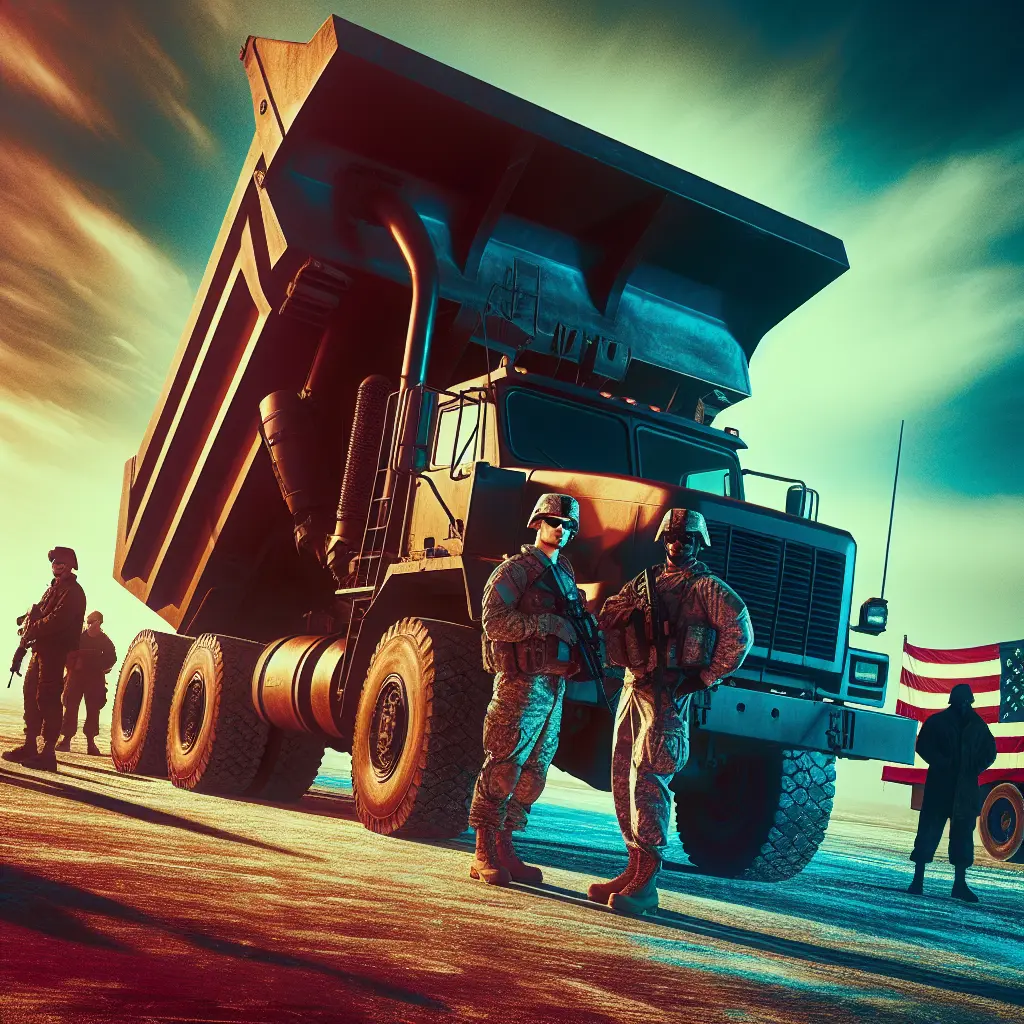
U.S. Army Invests $221 Million in Heavy Dump Truck Fleet to Enhance Operational Readiness
In a significant move that underscores the U.S. Army’s commitment to modernizing its logistics capabilities, the Department of Defense announced a $221.8 million contract awarded to Mack Defense LLC for the supply of M917A3 Heavy Dump Trucks. This investment not only signals a strategic enhancement in operational readiness but also reflects the military’s ongoing efforts to ensure that its fleet is equipped with advanced vehicles necessary for both combat and support missions.
This decision poses an important question: how does upgrading heavy logistics vehicles like dump trucks influence broader military operations? The answer lies in understanding the integral role these trucks play within the Army’s supply chain and construction operations, which are vital during both peacetime and conflict.
The M917A3 Heavy Dump Truck is designed for high-capacity load management, capable of carrying large amounts of material—an essential function in a variety of military applications ranging from transporting equipment to clearing debris following combat operations. By investing in these modern trucks, the Army is positioning itself to meet the logistical challenges posed by increasingly complex operational environments.
The backdrop to this contract can be traced through decades of military logistics evolution, where the importance of efficient transportation has become ever more pronounced. Historically, heavy dump trucks have been a cornerstone for military engineering units, supporting everything from infrastructure development to mission-critical material transport. In light of recent global conflicts and natural disasters requiring humanitarian assistance, having a reliable fleet becomes more than just operational efficiency; it’s about effectiveness in response.
As detailed in the Department of Defense announcement, Mack Defense will not only provide the vehicles but also include associated logistics support and engineering services as part of this contract. The work locations and funding specifics will be determined with each order placed under the agreement, allowing for flexible deployment based on operational needs. The anticipated completion date for this program extends to December 23, 2031—a timeline that illustrates a long-term commitment to enhancing Army capabilities.
This development matters on multiple fronts: strategically, it fortifies military readiness at a time when the geopolitical landscape remains volatile; economically, it supports domestic manufacturing jobs at Mack Defense and its supply chain partners; and logistically, it enhances the mobility and capability of ground forces. Efficient transportation systems are crucial for maintaining high levels of troop effectiveness and morale, especially when operating under austere conditions.
Experts assert that such acquisitions are indicative of a broader trend towards modernization within the U.S. Armed Forces. Colonel (Ret.) John Smith, a logistics expert at the Center for Military Analysis, noted in an interview that “the procurement of advanced logistics vehicles like the M917A3 reflects a fundamental shift towards ensuring our military operations can sustain prolonged engagements without overreliance on external supply chains.” This insight offers clarity on why such contracts carry weight beyond mere vehicle deliveries—they represent a forward-thinking approach aimed at self-sufficiency.
Looking ahead, observers should note potential shifts in policy as these heavy dump trucks integrate into service alongside advancements in technology like autonomous driving systems or AI-driven logistics software. As innovative solutions are developed, they may reshape not just how trucks operate but also how logistics frameworks are structured within military contexts.
Ultimately, as we reflect on this substantial investment by the U.S. Army, one must consider what it symbolizes about our defense priorities: Are we prepared to face future challenges with agility and foresight? The stakes extend well beyond contractor negotiations and dollars spent; they encompass national security interests and our ability to respond effectively to crises—military or otherwise. In an era marked by uncertainty and rapid change, ensuring our forces remain equipped with reliable resources may well be one of our greatest challenges yet.



