Turkey’s defence exports passed $10 billion in 2025, a record; sales to Europe and the United States nearly quadrupled to $5.6 billion.
Direct sales into NATO markets: Poland, Spain, Portugal, Romania
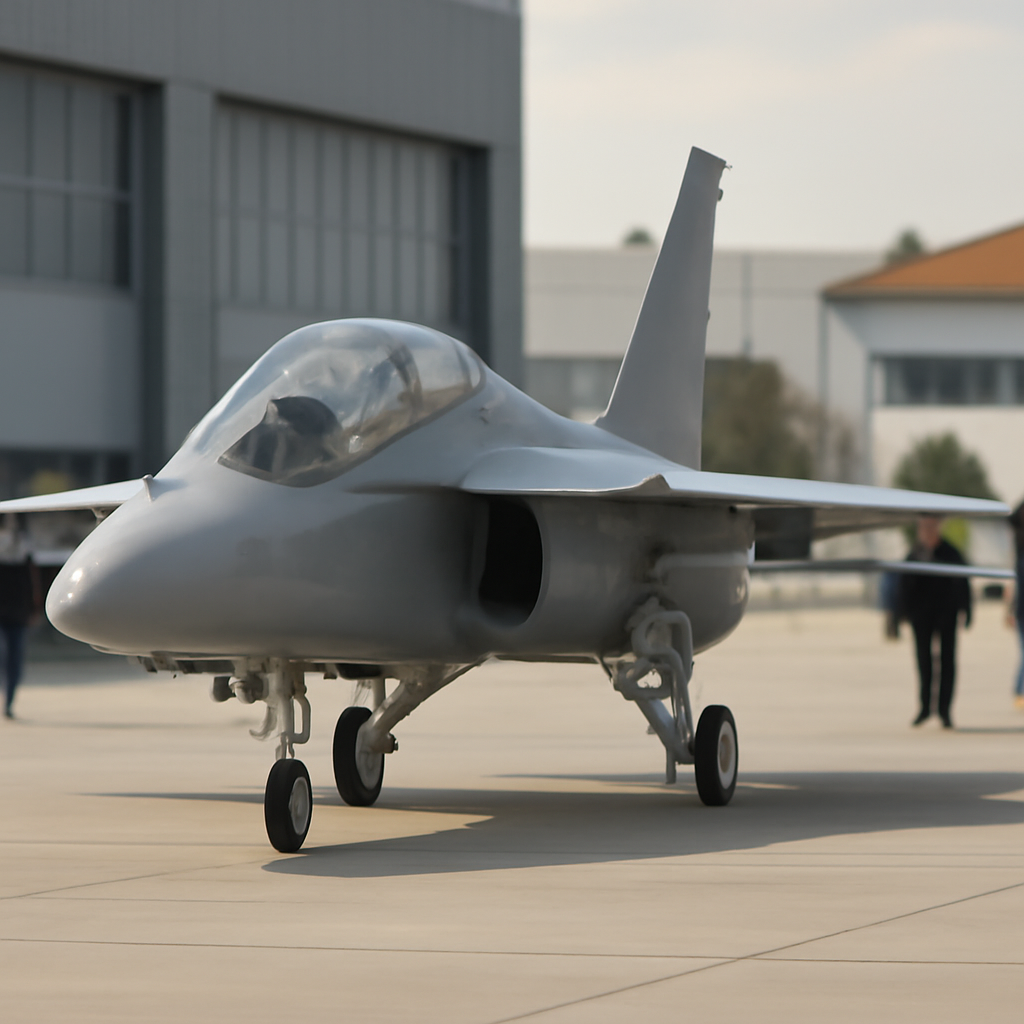
Turkish firms have moved from long-standing customers in the Gulf, Africa and Asia into purchases at the heart of NATO. Aselsan sold electronic‑warfare and radar systems to Poland. Turkish Aerospace Industries (TAI) won a HÜRJET jet‑trainer deal with Spain. STM is building logistics ships for Portugal. And President Recep Tayyip Erdoğan said the delivery of the CAm. Roman corvette to Romania was “Türkiye’s first warship export to a NATO and EU member.” These contracts mark concrete entries for Turkish hardware into Western defence supply chains.
Industrial footholds: Baykar, Piaggio Aerospace, and a plant inside the EU
Baykar’s acquisition of Piaggio Aerospace and a production partnership with Leonardo give a Turkish drone prime an industrial footprint inside the European Union. The Piaggio purchase “hands Baykar an aircraft plant inside the European Union,” the reporting notes — a rare position for a supplier from outside the bloc. Baykar also earns almost all of its revenue from exports, underlining the company’s commercial dependence on foreign markets as it expands beyond drone export into EU‑based manufacturing.

The cyber insurance questionnaire just landed. Now what?
SOC 2, HIPAA, insurance renewals - someone has to own security strategy. Nubivance provides fractional CISO leadership without the full-time salary.
Get a security leadNATO‑level contracts and Turkey’s role in alliance programs
Roketsan and Aselsan, together with the research body TÜBİTAK and STM, were named among contractors in NATO agreements on strike, air‑and‑missile defence, and space and surveillance signed at the alliance’s defence‑industry forum in Ankara. Procurement chief Haluk Görgün said the projects “would form the backbone of the alliance’s deterrence in the coming years.” Those acknowledgements place Turkish companies inside formal NATO procurement frameworks rather than only on the periphery of allied procurement.
Price, speed and capacity: Why European buyers are looking to Türkiye
European military spending rose 14 percent in 2025 to $864 billion, by SIPRI’s count, creating demand and procurement pressure. The reporting explains a practical calculus: many European governments, rearming after Russia’s invasion of Ukraine and questioning the durability of United States guarantees, see Turkish firms as cheaper and faster to deliver than Western suppliers who face capacity limits. Turkish shipyards and defence primes are pitching NATO‑standard platforms at lower cost and on shorter timelines, and the same domestic production lines that feed Türkiye’s Steel Dome air‑defence network also supply export orders now landing in Europe.
What this means for European procurement chiefs, Turkish defence firms, and NATO planners
- European procurement chiefs and governments: expect a new supplier class that offers NATO‑standard platforms with shorter delivery timelines and potentially lower price points; national decisions will still hinge on political will, given that Turkish access to alliance work "has long turned on relations with individual capitals."
- Turkish defence firms (Aselsan, Roketsan, Baykar, STM, TAI): they are translating domestic production and exports into Western contracts and industrial presence, pursuing targets that include doubling exports within two years and reaching $11 billion in exports and a spot among the world’s ten largest arms sellers by 2028.
- NATO planners and alliance procurement authorities: contractors named to NATO agreements — including Roketsan, Aselsan, TÜBİTAK and STM — will be part of planned strike, air‑and‑missile defence, and space and surveillance projects that procurement leadership says will underpin deterrence efforts.
Türkiye’s defence sector now supplies nearly forty countries, employs around 100,000 people, and is explicitly aiming to expand its share of global arms sales. The shift toward Europe runs in parallel with Ankara’s ongoing efforts to purchase Western systems, a two‑way recalibration that keeps old customers while building new industrial ties inside the alliance. Whether those ties deepen will depend less on technical fit than on political decisions by individual capitals — even as European buyers weigh urgency, cost and industrial access against longer‑established supplier relationships.
Original reporting: Quwa — Turkish Defence Firms Break Into NATO Markets as Europe Rearms