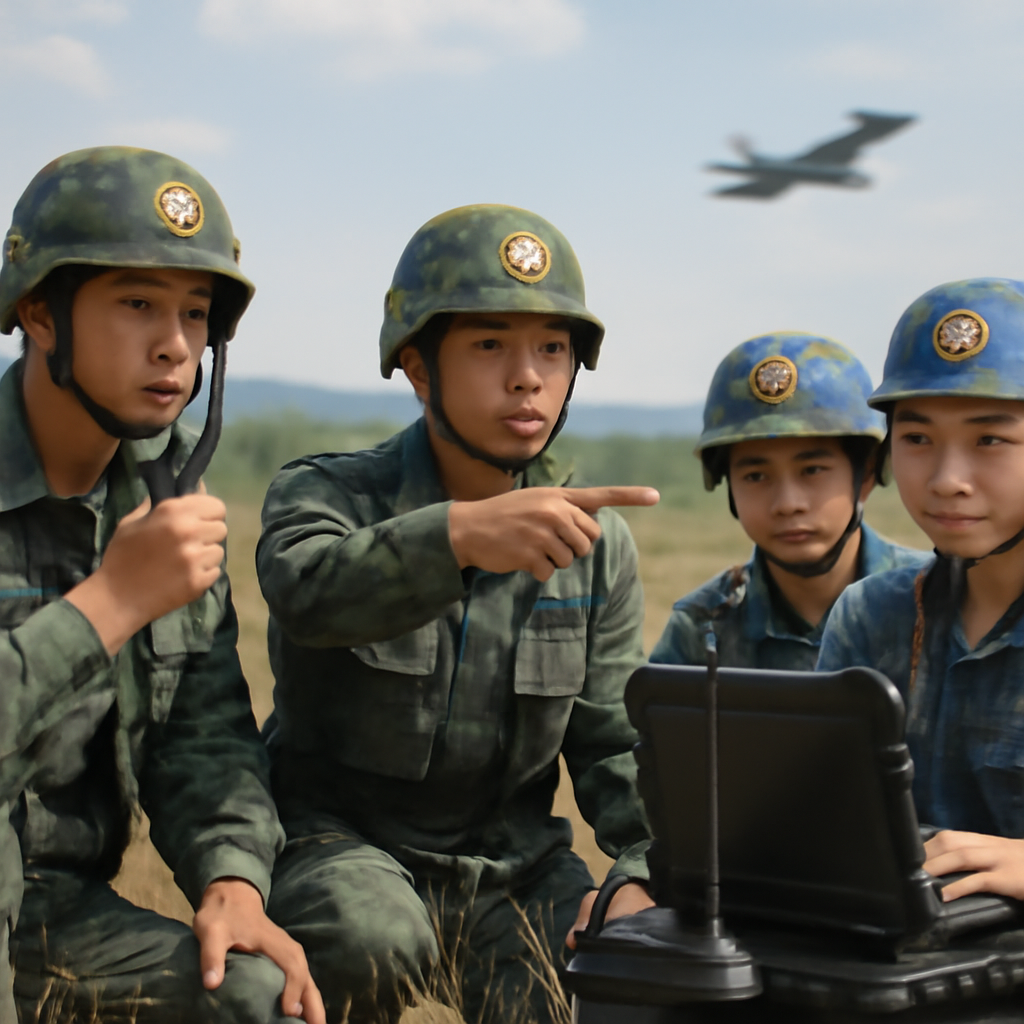
“陆军单兵顺畅呼叫空军战机,这是我们紧盯一体化联合作战能力短板狠下功夫取得的实效。” — 第81集团军某旅侦察排排长 陈聪
What the exercises show about PLA air‑ground teams
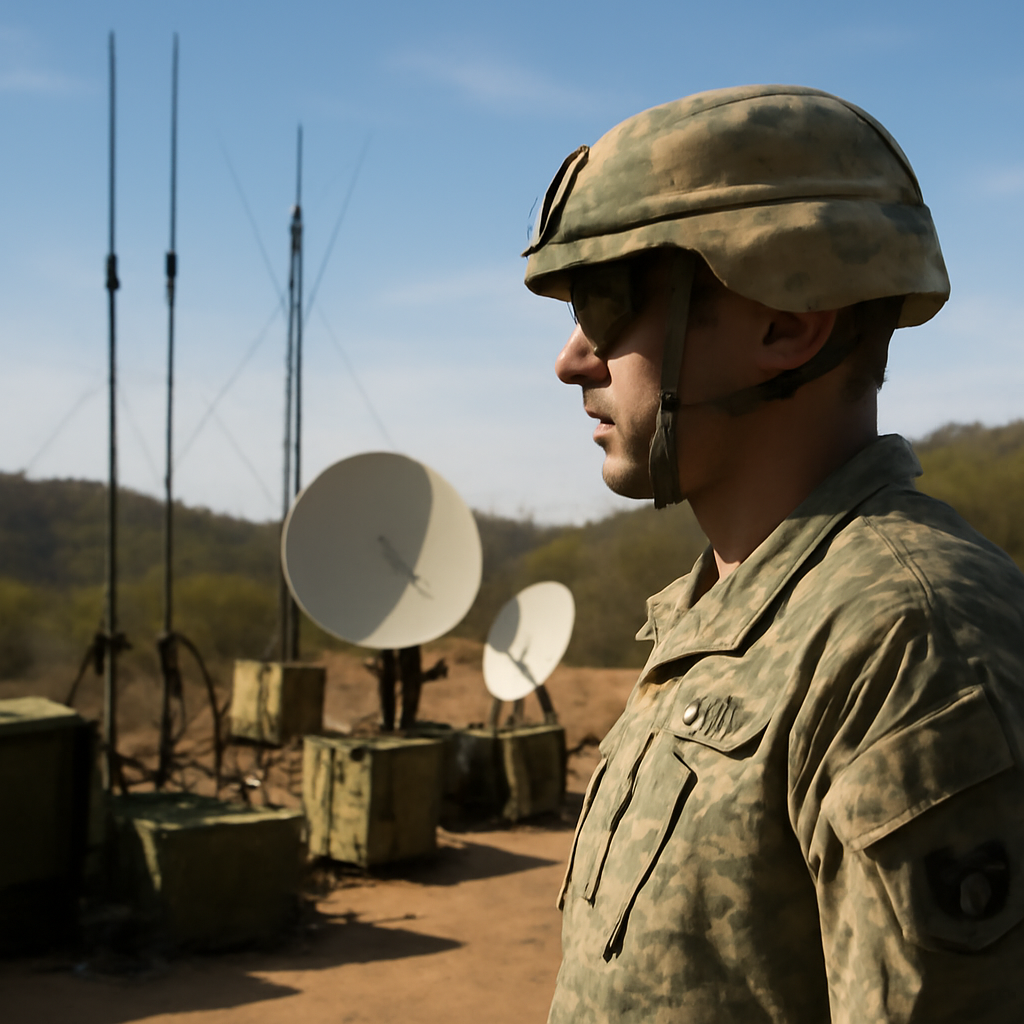
Published reporting and an official account of cross‑service training between an army brigade of the 81 Group Army and an attached air force brigade describe something more than basic reconnaissance. Ground teams in at least one brigade have used laser target designators, forward air‑control terminals, digital fire‑support tablets and secure datalinks to PLAAF strike aircraft. An example in the reporting cites a paired strike—two PLAAF strike aircraft—guided by a ground force against an ammunition depot. Those capabilities amount to an air‑ground integration package consistent with what other militaries call a tactical air control party (TACP).
Where these teams sit inside the force structure
Official accounts locate TACP‑type elements at the brigade level, but the exact internal echelon is not fixed in the reporting. The most plausible placement, based on unit descriptions, is inside a combined‑arms battalion’s combat support company — specifically within the reconnaissance platoon (侦察排), which already handles UAVs, target acquisition and forward observation. The reporting also notes that similar capabilities are realistic to find in special operations detachments where fast, dispersed fighting and real‑time air support are expected.

Audit-ready is a season. It shouldn't be.
Evidence in spreadsheets, controls drifting between audits, frameworks multiplying on flat headcount. Nubivance runs continuous compliance on Rapid7 Cyber GRC - SOC 2, HIPAA, ISO 27001, PCI, CMMC.
End the scrambleHow training broke down old barriers
The reporting lays out recurring practical frictions that the training sought to resolve: incompatible target‑coordinate formats, differing tactical symbols and terminology, separate command systems, and non‑interoperable communications and data interfaces. It recounts a 2024 cross‑service contest in which a red force reconnaissance group located an enemy armored assembly and requested strike, only to lose time reconciling coordinate formats and waiting for an air force guider to arrive — by which time the blue force had withdrawn and three red‑force soldiers were “wounded” in the simulated engagement.
To remedy that, the two brigades conducted reciprocal immersion: ground officers learned airspace management rules, joint communications protocols and aircraft performance parameters at the flight tower and command posts; air force personnel embedded in reconnaissance squads to learn ground situational assessment, target‑prioritization and battlefield update practices. The training produced six agreed training standards, seven trained subjects and a jointly produced 《战术引导员训练手册》 to standardize terminology and procedures.
Operational practices demonstrated in exercises
After nearly a year of reciprocal training and iterative refinement, the reporting describes concrete operational outcomes. Ground joint‑guidance teams completed the steps to establish liaison, transfer command, update situational awareness, plan attacks and issue tactical orders; they then guided multi‑wave air strikes against high‑value targets such as an enemy ammunition depot and a command post. Exercises also rehearsed night guidance, operations under electromagnetic interference, batched strikes against multiple targets and rapid response to emergent targets—activities the units cite as tests of their new procedures and tools.
What this means for 陆军基层作战分队, 空军飞行员, and 旅级/集团军领导
- 陆军基层作战分队: The new military training outline mandates that基层作战分队 be assigned兼职引导员 and that reconnaissance professional officers possess air‑ground joint guidance capability; units will need to train on airspace rules, shared communications protocols and target‑format standards described in the joint training manual.
- 空军飞行员: Aircrews participating in the joint training report moving from “single‑way” receipt of ground info toward “two‑way” battlefield perception; pilots must learn to interpret ground tactical symbols and a ground unit’s target descriptions to reduce ambiguity during fast moving engagements.
- 旅级/集团军领导: Brigade and group‑level commands that coordinated the training have begun institutionalizing a常态化联合合作机制, using the joint manual and recurring combined exercises to embed liaison routines and shared templates across services.
Those developments suggest an organized effort inside the forces to translate stated joint‑operations priorities into unit‑level practice: common protocols, shared tools and embedded personnel who can call, format and confirm strikes without waiting for separate air‑force guide teams. The reporting stops short of naming formal organizational designators for a PLA TACP equivalent, but it shows practical steps — training standards, a handbook, routine cross‑attachment and demonstrable multi‑wave strike drills — that turn concept into capability at the brigade and battalion reconnaissance levels.
Link to original story: https://china-defense.blogspot.com/2026/07/pla-tacp-what-we-actually-know-and.html