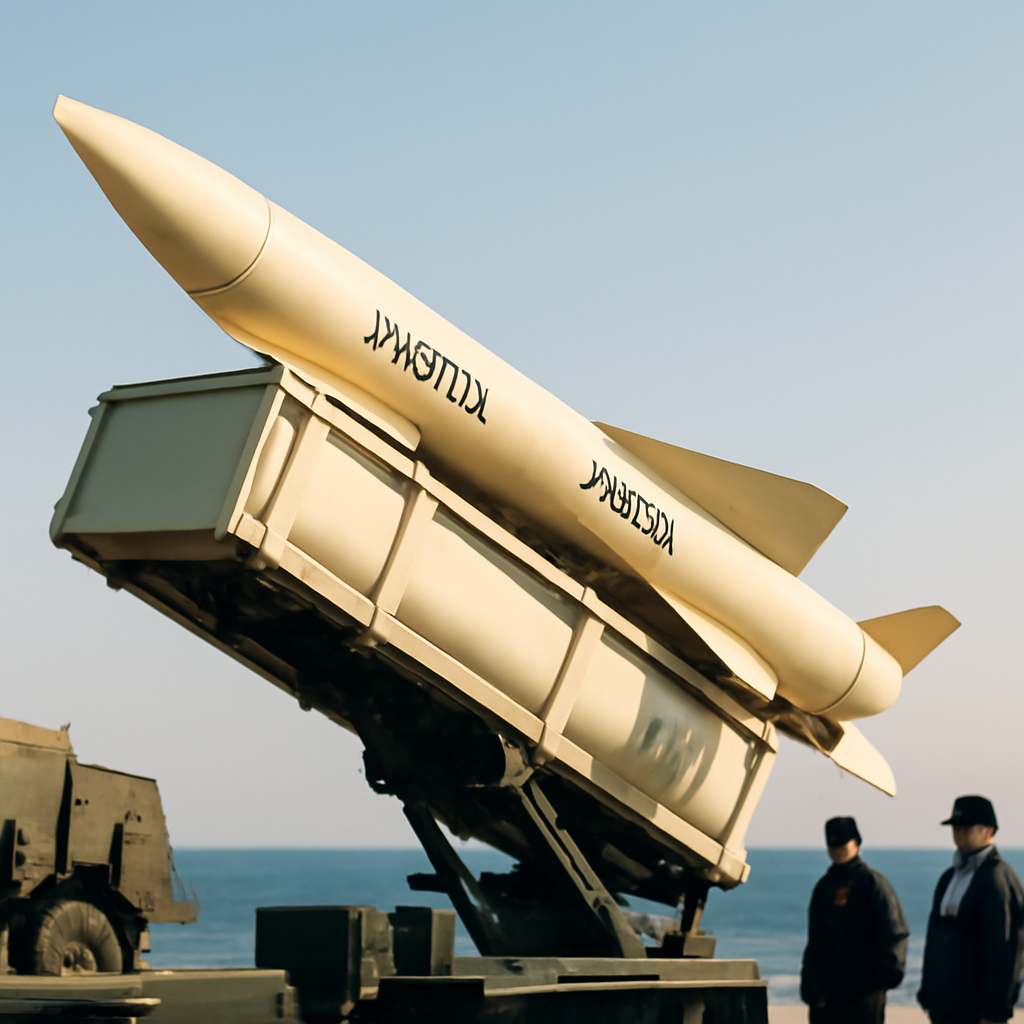
On 4 July 2026 a Tayfun Block‑3 missile test in the Black Sea destroyed a seven‑metre unmanned vessel built to imitate a small fishing boat, with Roketsan reporting the missile arrived at hypersonic speed.
4 July 2026 Black Sea test: a manoeuvring target struck in flight
Roketsan and Türkiye’s Presidency of Defence Industries reported a live‑fire trial on 4 July 2026 in which a Tayfun Block‑3 engaged and destroyed a seven‑metre unmanned surface vessel that had been allowed to manoeuvre freely. The companies said the missile locked on during its descent and struck the vessel with a live warhead. The trial is presented as the first time a Turkish ballistic missile has struck a manoeuvring target at sea.
Tayfun Block‑3: terminal seeker and the mechanics of an anti‑ship conversion
Where earlier Tayfun variants flew to coordinates fixed before launch, the Block‑3 carries a terminal seeker head that acquires and tracks a target in the final phase of flight, converting what had been a land‑attack weapon into an anti‑ship ballistic missile. Roketsan’s description of the Block‑3 includes a detachable heatshield on the nosecone, which the company says points to an optical seeker because optics require protection during hypersonic descent. Roketsan also noted the missile arrived at hypersonic speed.
The baseline Tayfun measures about 6.5 metres and weighs roughly 2,300 kilograms. Roketsan reports the baseline missile uses inertial and satellite‑aided guidance to achieve a published accuracy under ten metres, fires from a mobile launcher, uses solid fuel and is designed to resist jamming by day, by night and in poor weather.

This site is the portfolio.
OSINTSights runs on Cloudflare Workers, D1, R2, and Vectorize, with an AI pipeline on Hetzner ARM. Nubivance designed, built, and operates it. We do the same for clients.
See what we buildDatalinks, sensors and the Barbaros coastal‑defence network
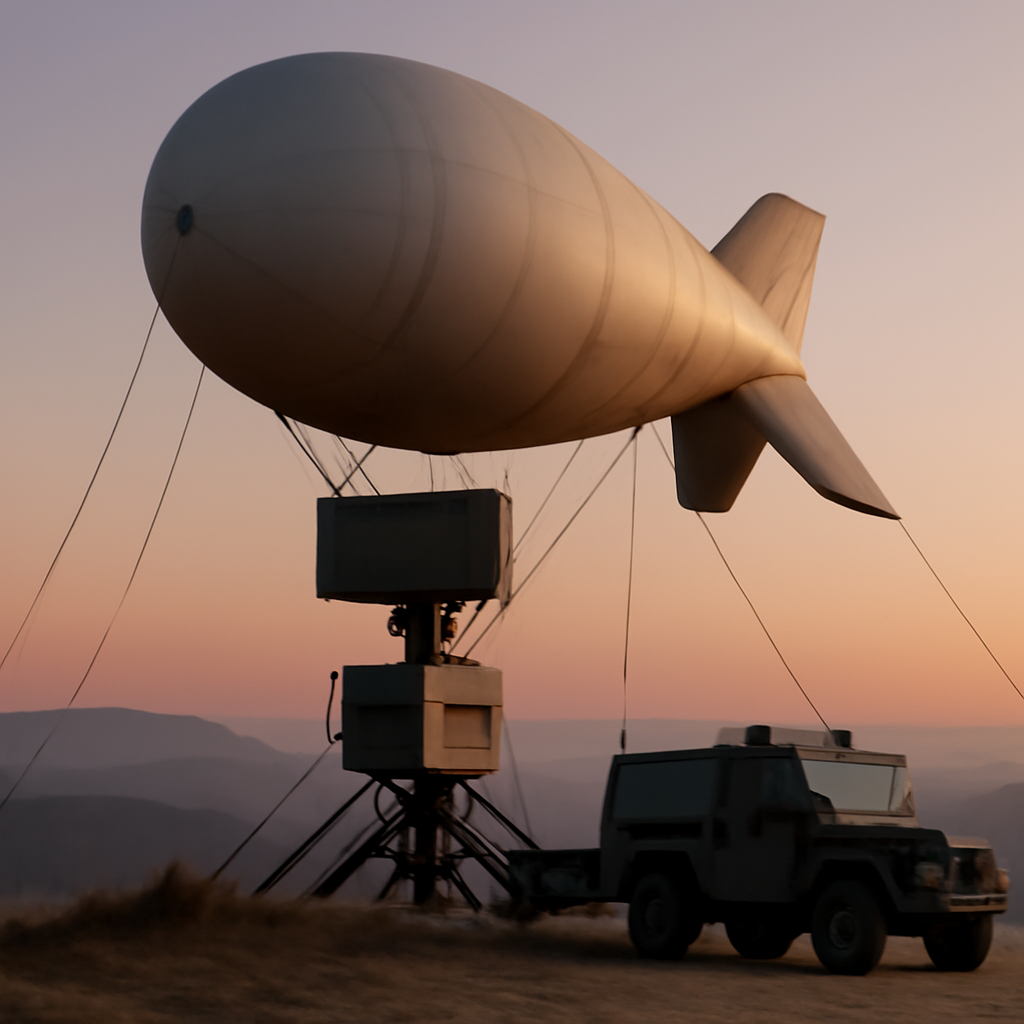
Roketsan described how continuous tracking of a moving ship would typically lean on a datalink for midcourse updates. The company said those updates could be supplied by drones, coastal radars and an over‑the‑horizon radar tied into the Barbaros coastal‑defence network that operates alongside the land‑based Atmaca anti‑ship cruise missile. Together, Roketsan and other Turkish systems give the coast both a high, ballistic path and a low, sea‑skimming option — the Block‑3 on a steep, high‑speed dive and Atmaca on a low cruise‑profile flight.
Roketsan, procurement and domestic production milestones
Roketsan chief executive Murat İkinci said the seeker work placed the missile “among only a handful of examples worldwide,” and procurement chief Haluk Görgün described the Block‑3 as a “strategic capability strengthening deterrence.” Türkiye’s Special Forces Command accepted a fresh batch of Tayfun Block‑2 missiles in late June, extending an inventory that began mass production in 2023. Roketsan has also unveiled a larger Block‑4 — a ten‑metre design aiming for speeds above Mach 5, which the company displayed at Türkiye’s SAHA 2026 exhibition in Istanbul.
On the industrial side, Roketsan reported exports of more than $750 million in 2025 against company revenue above $2 billion, and İkinci has said the firm aims to grow those export and revenue figures by half again in 2026. Türkiye’s defence industry has framed tests such as the Block‑3 trial as evidence of self‑reliance rather than dependence on foreign suppliers.
How Türkiye’s Special Forces Command, the Turkish coast, and regional navies are positioned
- Türkiye’s Special Forces Command: The unit recently received additional Block‑2 missiles, and Roketsan presents Block‑3 as an extension of an existing, domestically produced ballistic family that can be tailored with swappable guidance packages.
- The Turkish coastal‑defence posture: With Block‑3 and the Atmaca cruise missile operating alongside the Barbaros radar network, Türkiye’s coast now combines a high‑angle, short‑warning ballistic threat and a low, sea‑skimming cruise option to hold ships at risk from land.
- Regional navies and warships: Roketsan framed the Block‑3 as increasing deterrence by placing ships at risk far from shore through a steep, high‑speed dive that shortens warning time; only China, Iran and Pakistan are identified in the source as established fielders of anti‑ship ballistic missiles.
Unanswered technical limits and the path of further trials
Roketsan has not disclosed the anti‑ship variant’s range or the precise seeker type beyond the company’s technical inferences, and the source notes further trials will be needed against larger, faster and electronically defended targets in more cluttered waters. The company’s own roadmap of Tayfun variants — from the Yıldırım and Bora to the modular Tayfun family and now Block‑3 and Block‑4 — shows an iterative approach to extending range, speed and guidance options while keeping the system mobile and largely domestically produced.
The Block‑3 test marks a demonstrable technical step — a ballistic missile acquiring and striking a moving surface target — while leaving key operational questions open: undisclosed range and seeker specifics, and how the weapon performs against bigger, faster and electronically protected ships. Those are precisely the gaps Roketsan and Türkiye will need to close with further trials before the Block‑3 can move from a headline demonstration to an operationally validated coastal‑defence component.