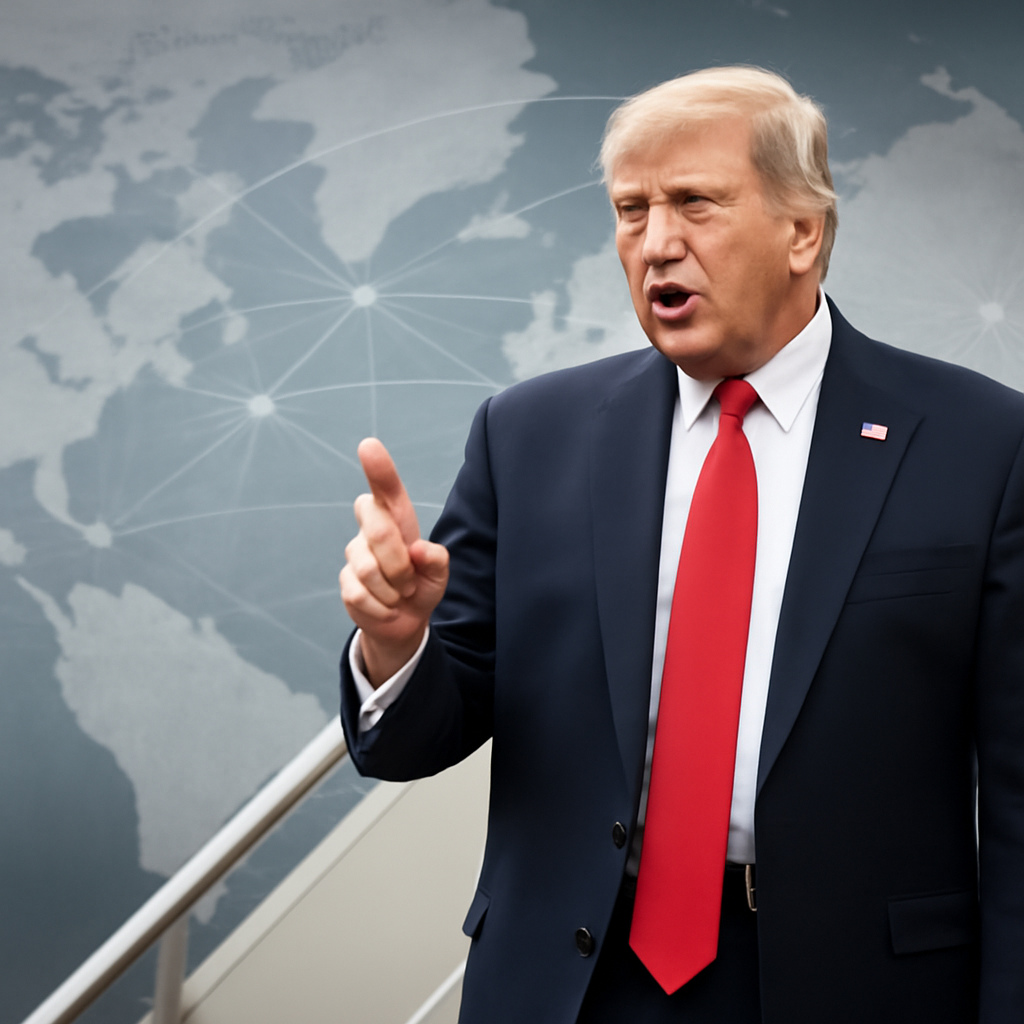
“I did. And he talked about attacks that we did in China. Y’know, what they do, we do too.”
Trump’s account of the Air Force One conversation with Xi
President Donald Trump told reporters aboard Air Force One that he raised cyberattacks and spying with Chinese President Xi Jinping during their bilateral meeting earlier this week. He said Xi “talked about attacks that we did in China,” and added bluntly, “We spy like hell on them too.” Trump did not offer details of specific cyber campaigns discussed; he summarized the exchange to reporters as, “I told him, ‘We do a lot of stuff to you that you don’t know about and you’re doing things to us that we probably do know about.’”
The White House and the Chinese embassy in Washington did not immediately respond to requests for comment, according to the report.
Public acknowledgment of U.S. clandestine cyber efforts
The remarks represent a rare public nod to U.S. clandestine efforts to monitor Chinese officials and networks. The report notes that intelligence agencies such as the National Security Agency and Central Intelligence Agency employ covert tools, capabilities and secret partnerships to track foreign adversaries. It also cites CIA officials saying the agency has used video campaigns to recruit Chinese officials as intelligence assets.
At the same time, the story underscores the diplomatic sensitivity: cyber operations can be hard to attribute publicly, and Chinese officials routinely deny allegations of hacking and espionage. Trump’s account framed the exchange as an implicit acknowledgement from Beijing that it has at times sought to infiltrate U.S. networks and recruit American assets, even as such denials remain routine.

Audit-ready is a season. It shouldn't be.
Evidence in spreadsheets, controls drifting between audits, frameworks multiplying on flat headcount. Nubivance runs continuous compliance on Rapid7 Cyber GRC - SOC 2, HIPAA, ISO 27001, PCI, CMMC.
End the scrambleVolt Typhoon, critical infrastructure, and presidential skepticism
U.S. officials have publicly warned that the group known as Volt Typhoon has penetrated critical infrastructure systems — including power grids and water treatment plants — to position itself to disrupt or sabotage those systems in the event of a Chinese invasion of Taiwan. When asked about those intrusions, Trump’s on-the-record response was circumspect: “Well, you don’t know that. I mean, I’d like to see it, but it’s very possible that they do.”
The exchange highlights a tension between classified assessments described by U.S. officials and the kinds of public statements presidents may make about cyber threats during diplomacy.
Recruitment efforts, workforce departures, and a market for offensive cyber tools
The report cites a January Nextgov/FCW account that suspected Chinese spies sought out a former senior State Department officer late last year, requesting an assessment of U.S. policy priorities in Venezuela in exchange for payment. It says such recruitment efforts have resurged amid a wave of departures from the federal government over the last year as the administration pursued measures to shrink the federal workforce.
Separately, the piece notes that in the president’s second term U.S. officials have been seeking a more hardened approach against foreign hackers and cybercriminal groups. That posture, the story says, has helped create a budding market for offensive cyber capabilities that government and industry are still grappling with. According to a counterterrorism strategy released earlier this month, offensive cyber operations would be among the tools the administration plans to use against groups deemed threats to the United States.
What this means for the NSA and CIA, critical-infrastructure operators, and the White House
- NSA and CIA: Public remarks by the president acknowledging clandestine activity can recalibrate expectations on operational secrecy and diplomatic signaling. Agencies that rely on covert tools and recruitment campaigns will watch for any change in public or diplomatic posture that could affect sources and methods.
- Critical-infrastructure operators (power grids, water treatment plants): Operators and incident response teams have cause to monitor claims about Volt Typhoon’s presence in industrial networks and remain vigilant about resilience and contingency planning, given officials’ public warnings about the group’s access to systems that could be disrupted or sabotaged.
- The White House and diplomatic officials: The administration faces the challenge of reconciling classified threat assessments with diplomacy. Trump’s characterization of the exchange with Xi — and the lack of immediate comment from the White House or the Chinese embassy — underscores how sensitive cyber topics are when raised in bilateral meetings.
Trump’s on-record portrayal of the Xi meeting put clandestine cyber activity on full public display: a president describing mutual espionage in blunt terms, U.S. agencies acknowledging covert recruitment tactics, and officials warning of intrusions into critical infrastructure. The comments leave a practical question open — how will senior policymakers balance classified operations, public attribution, and diplomacy when both sides appear to trade tacit admissions?