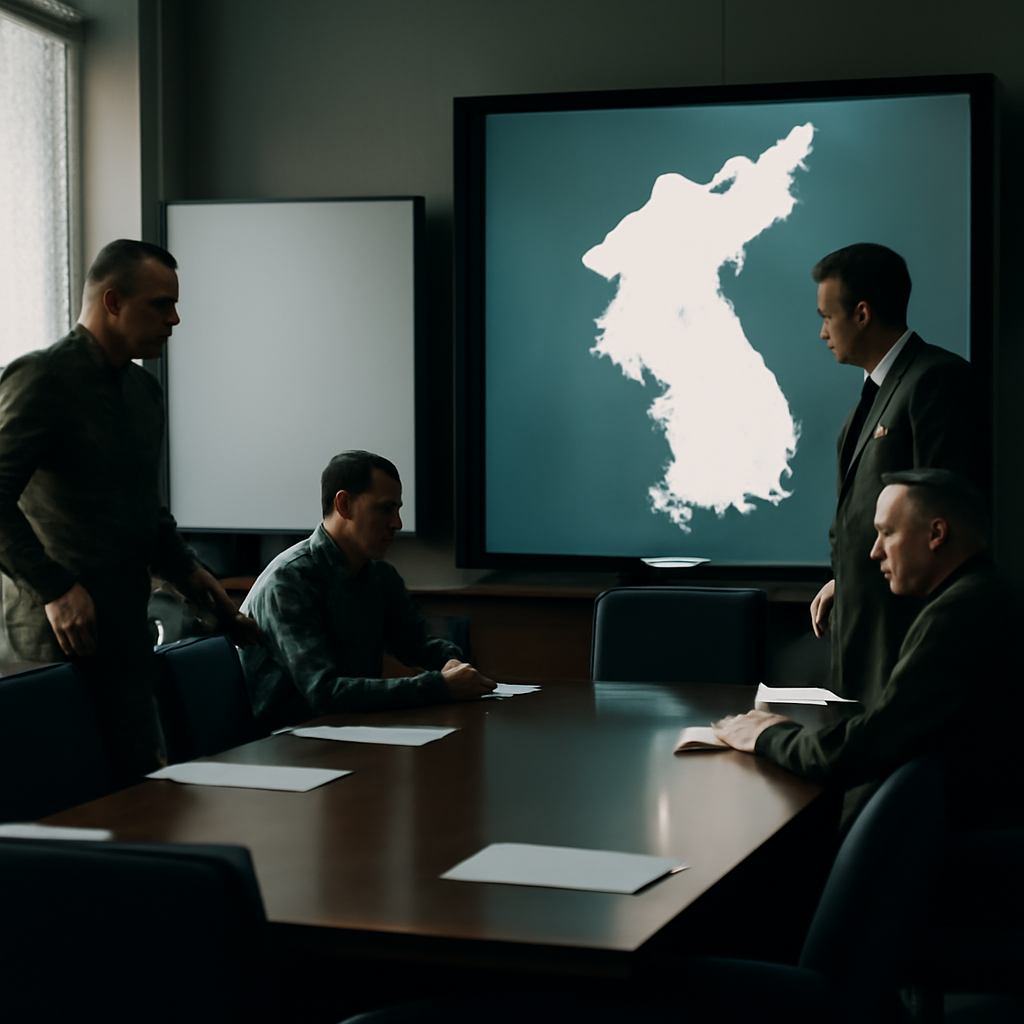
"It is too late to cancel." Those six words, posted on Truth Social by U.S. President Donald Trump hours before the allies began Ulchi Freedom Shield on August 17, encapsulate an abrupt turn: the presidential order to "substantially reduce" the exercise, a move the president framed as a cost-saving and diplomatic gesture toward North Korea while tying it—confusingly—to Seoul's reluctance to join U.S. action on Iran.
What the president ordered and the immediate ambiguity
The public instruction to scale back Ulchi Freedom Shield arrived hours before the 11-day, combined U.S.-South Korea exercise was due to start. The Pentagon offered no public explanation of which elements would be cut, leaving the allies, analysts, and the public to weigh incomplete signals. The source notes the likeliest near-term options are narrower U.S. participation, fewer supporting assets, or reductions in field events yet to occur, but emphasizes that until detailed guidance emerges, the military impact is difficult to measure.
What Ulchi Freedom Shield rehearses
Ulchi Freedom Shield 2026 involves about 18,000 South Korean personnel and integrates computer-assisted command-post training with field exercises. This year's plan incorporated lessons from recent wars, including drone operations, GPS disruption, and cyberattacks. Originally scheduled field events included 14 battalion-level or larger exercises (down from 17 in 2025), while the total number of South Korean participants remained roughly unchanged. Beyond counts of troops and events, the exercise rehearses theater-level machinery—command relationships, intelligence flows, reinforcement, logistics, missile defense, and civil-military coordination—functions that are difficult to replicate through smaller or ad hoc training.

Audit-ready is a season. It shouldn't be.
Evidence in spreadsheets, controls drifting between audits, frameworks multiplying on flat headcount. Nubivance runs continuous compliance on Rapid7 Cyber GRC - SOC 2, HIPAA, ISO 27001, PCI, CMMC.
End the scrambleOperational control, burden-sharing, and a policy contradiction
Ulchi Freedom Shield 2026 had an institutional role: the allies planned to use it to assess capabilities and systems supporting a conditions-based transition of wartime operational control. A successful assessment would help certify the Combined Forces Command’s full operational capability and advance discussion of a transition timeline later this year. The decision to curtail exercises thus risks more than immediate readiness; it could complicate a joint process Washington has encouraged.
The source highlights a policy tension: the 2026 U.S. National Defense Strategy asks South Korea to take primary responsibility for deterring North Korea with "critical but more limited" U.S. support. That approach requires strengthened combined planning and credible validation of South Korean command capacity—tasks that depend on predictable, consultative exercises. Curtailing them without prior allied coordination undermines the very burden-sharing the strategy purports to advance.
North Korea's posture and the risk of sidelining Seoul
The broader strategic context amplifies the stakes. The source reports North Korea has deepened military cooperation with Russia, that North Korean troops gained battlefield experience in the Russia-Ukraine war, and that Pyongyang continues to improve its missiles. North Korea conducted two ballistic missile launches since August 6 and threatened to strengthen its nuclear deterrent in response to the exercise. President Trump described North Korea’s behavior in general as "unthreatening and respectful."
Past precedent matters: after the 2018 Singapore summit, Trump surprised U.S. and South Korean military officials by suspending major exercises. That pause created space for diplomacy but also "produced a measurable degradation in combined-force readiness," and three subsequent Trump-Kim meetings produced no lasting curbs on North Korea’s nuclear or ballistic-missile development, according to the source. The present action, taken without prior allied agreement, risks reinforcing Pyongyang’s preference to deal directly with Washington while excluding Seoul—a dynamic South Koreans often call "Korea passing."
What this means for the South Korean government, the U.S. military, and Pyongyang
- South Korean government: Seoul should seek a joint political and military review to clarify which activities are affected and to protect command-post functions, the operational-control assessment, and training involving critical U.S. enablers. The source urges Seoul to avoid public confrontation yet reject passive acceptance of an undefined order.
- U.S. military and Pentagon planners: They face immediate pressure to issue detailed guidance that identifies cuts, offers compensatory training, and prevents temporary reductions from becoming an unplanned new baseline; the allies should agree that any diplomacy-linked change is time-limited, reversible, and tied to observable North Korean action.
- North Korea (Pyongyang): The source suggests a unilateral U.S. concession without reciprocal North Korean steps could reward Pyongyang's threat signals and strengthen its preference for bilateral U.S. engagement that sidelines Seoul.
The alliance, the source concludes, can absorb one late and partially implemented order. It will struggle, however, if combined readiness becomes a bargaining chip exchanged for diplomatic atmospherics or used to punish disagreement on unrelated issues. The immediate, practical test is straightforward: will Washington and Seoul convene the joint review the source recommends, spell out specific, time-limited adjustments, and condition any restraint on reciprocal steps by Pyongyang—or will uncertainty over exercises become a new normal that erodes combined deterrence and the consultation the treaty depends on?



