The scene at Dapeng Bay: two USVs, one autonomous escort
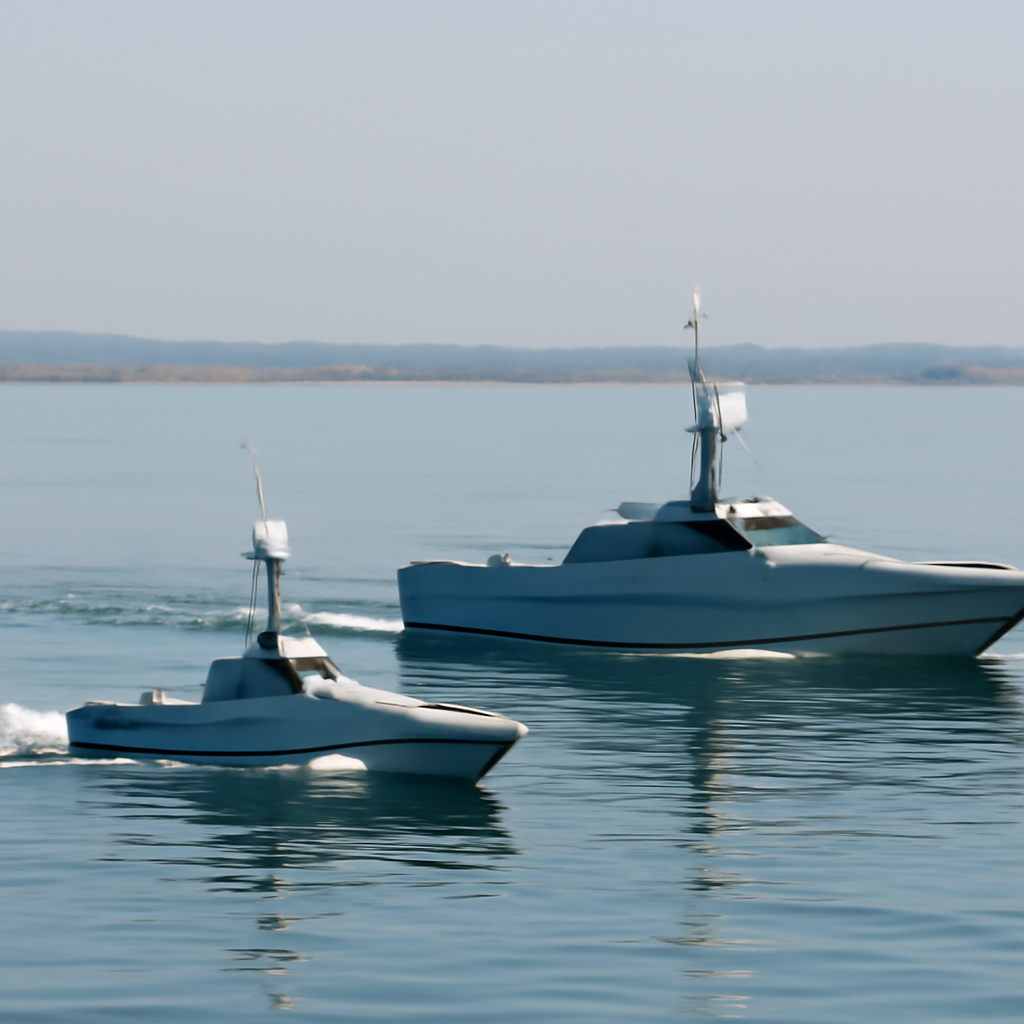
On 29 July, two Taiwanese unmanned surface vessels (USVs) running Shield AI’s Hivemind autonomy software detected a crewed target vessel and escorted it out of a designated search area off southern Taiwan. The event took place at Dapeng Bay in Pingtung County with personnel from Taiwan’s National Chung-Shan Institute of Science and Technology (NCSIST) and the Coast Guard Administration in attendance. Thunder Tiger Corporation supplied the hulls — a SeaShark 600 and a larger SeaShark 800 — while Shield AI supplied the autonomy stack that planned, searched and coordinated the escort using maritime radar, imagery and automatic identification system (AIS) data.
How Hivemind coordinated the interception
According to the companies, Hivemind divided the search box into two sectors and assigned one vessel to each. When the first USV made the detection, real-time data sharing allowed the second to close on an optimized intercept route. The crewed vessel was expelled from the test area without human intervention across a roughly two square kilometre area. Shield AI described this as its first integration of maritime radar and AIS into Hivemind; the company also noted Hivemind has now flown or sailed on more than thirty platforms, including the Kratos MQM-178 Firejet.

This site is the portfolio.
OSINTSights runs on Cloudflare Workers, D1, R2, and Vectorize, with an AI pipeline on Hetzner ARM. Nubivance designed, built, and operates it. We do the same for clients.
See what we buildThunder Tiger hulls and the hardware baseline
Thunder Tiger’s SeaShark 800 was unveiled in April 2025 at 8.1 m in length and 2.7 tonnes full displacement, with a stated 600 km range, speeds above 50 knots and a low-radar-cross-section hull. The 6 m SeaShark 600 Stealth followed in September 2025 with an aluminium-alloy hull roughly half the weight of fibre-reinforced plastic and a payload of 300 to 600 kg. The company took a controlling stake in Morningstar Boats in September 2024 and builds unmanned surface vehicles at Luzhu Industrial Park in Taoyuan at about one hull per week; a further plant at Chiayi is due to fit out in the second half of 2026. Earlier autonomy work included a November 2025 exercise at Dapeng Bay where Thunder Tiger ran six SeaShark 680 USVs from a single control station in held-line, lightning and single-file formations — then with a human directing the pattern rather than software selecting it.
Partnership, pace and integration
The rapid timeline drew attention. Shield AI and Thunder Tiger signed on 13 May 2026 and committed to a live demonstration in summer 2026. The joint work moved from simulation to hardware-in-the-loop to live vehicle, with integration of the software onto the vessels completed in roughly six weeks. The demonstration follows Shield AI’s February 2026 contract with NCSIST covering the Hivemind software development kit for indigenous Taiwanese platforms alongside turnkey Hivemind for NCSIST multi-role unmanned systems.
What this means for NCSIST, Thunder Tiger, and procurement leaders
- NCSIST and operational commands: NCSIST personnel attended the demonstration and hold a February 2026 contract for Hivemind SDK and turnkey Hivemind for multi-role unmanned systems, placing the institute at the centre of integrating autonomy into Taiwanese unmanned programs.
- Thunder Tiger and industry: Thunder Tiger can produce hulls at an established pace (about one hull per week at Luzhu) and has been iterating hardware (SeaShark 800 and 600) while moving toward autonomy partnerships rather than sole reliance on human control.
- Procurement leaders and legislators: The Executive Yuan’s June 2026 special budget of NT$210 billion (roughly US$6.6 billion) envisages 208,200 attack drones, 1,446 reconnaissance drones and 1,320 unmanned surface vessels, and the USV portion traces to NCSIST’s Kuai Chi program (about NT$18 billion over five years) with Lungteh, Jong Shyn and CSBC competing — but no SeaShark order has been publicly confirmed and the legislative approval remains pending in the Legislative Yuan.
The demonstration also highlights a broader shift the companies pointed to: the barrier to fielding USVs in numbers has moved from hull production to software. The source cites that pattern as visible in the attack USV designs that struck Bandar Abbas and notes other navies are developing autonomy stacks alongside airframes and hulls; Turkey, for example, is moving to procure 100 expendable USVs from Aselsan, STM and Havelsan for swarm strike operations.
The concrete milestones are clear: a first, shipboard multi-asset autonomous interception at Dapeng Bay; the first integration of maritime radar and AIS into Hivemind; a six-week software-to-hardware integration after a May 2026 agreement; and an active procurement picture in Taiwan that still awaits legislative clearance. Whether the Legislative Yuan will translate budget lines into confirmed hull orders — including any for Thunder Tiger’s SeaShark series — is the immediate decision left on the table.
Source: Quwa — Taiwan’s Thunder Tiger Demonstrates Autonomous USV Teaming With Shield AI’s Hivemind