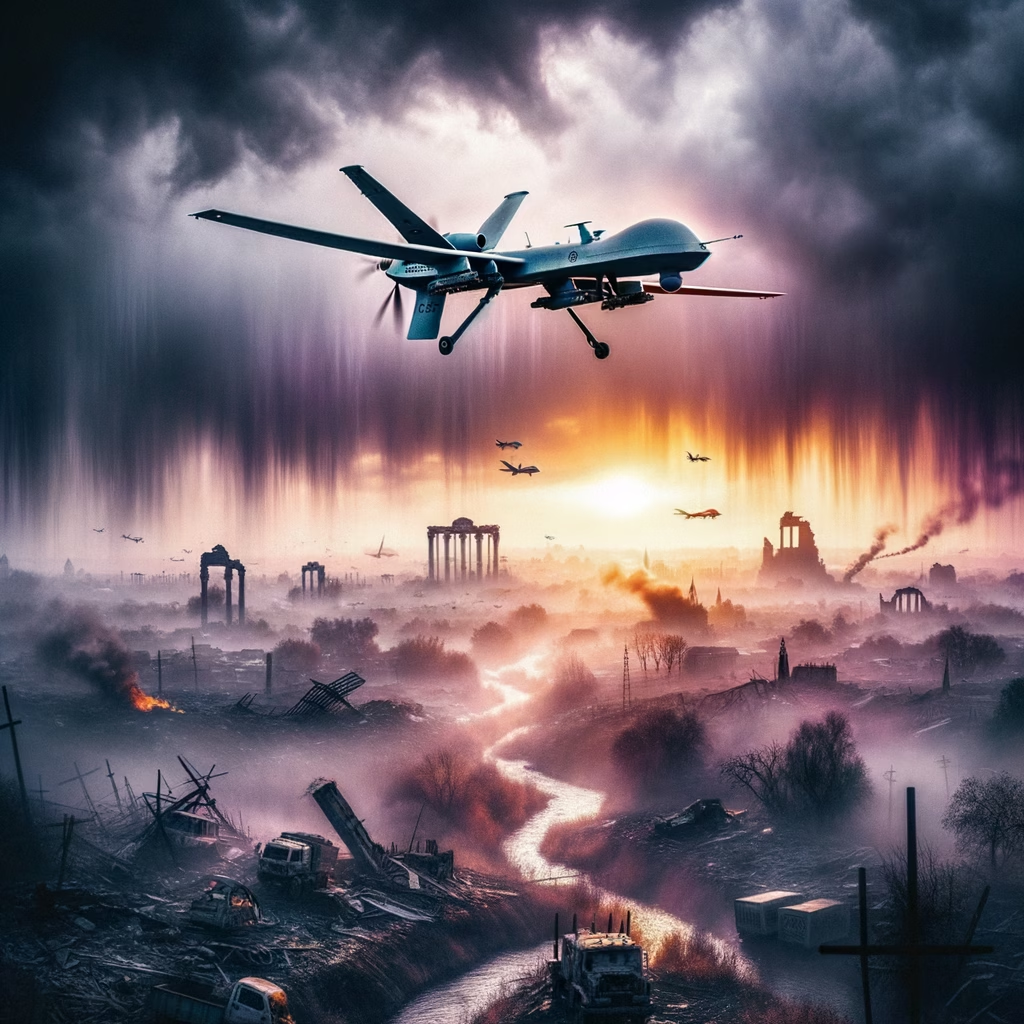
Can a flood of inexpensive, improvised flying machines change the course of a conventional war — or merely stave off defeat until a higher-cost, higher-tech balance is restored? That is the dilemma facing Kyiv and its Western backers as drones reshape how battles are fought but stop short of delivering a decisive, strategic victory.
From the first images of hobbyist quadcopters modified to drop grenades to swarms of purpose-built loitering munitions striking columns and artillery positions, unmanned aircraft have become a defining feature of the fighting in Ukraine. Their rapid adoption has forced new tactics, accelerated industrial responses, and exposed seams in traditional force structures. Yet nearly three years into the most drone-heavy European ground war in modern memory, those gains have proven largely tactical — preventing routs, degrading systems, and buying time — rather than translating into the kind of operational breakthroughs that end wars.
Background matters. Prior to Russia’s full-scale invasion, militaries treated drones as a niche capability: useful for reconnaissance, a boutique strike option, or a high-cost precision adjunct to traditional airpower. Ukraine turned drones into a mass instrument of war. Commercial quadcopters adapted with off-the-shelf explosives, first-person-view (FPV) racing drones used as precision close-support strike systems, and imported loitering munitions from overseas manufacturers created a new ecosystem of attrition. Western deliveries — everything from handheld reconnaissance systems to Switchblade loiterers and precision munitions — further expanded Ukraine’s toolkit.
That toolkit has mattered. Drones have repeatedly disrupted Russian logistics, blinded and harried air defenses, and allowed Ukrainian forces to strike high-value targets with lower risk to personnel. In many cases, drone-fed intelligence shortened kill chains: spotting an enemy vehicle with a small quad, passing location to artillery observers, and executing a strike within minutes. This convergence of sensors, communications, and affordable effectors has lowered the cost of localized battlefield success.
But the same forces that make drones potent also limit their strategic effect. Weaponized drones tend to be consumable and vulnerable. As their battlefield utility became obvious, adversaries adjusted: Russia deployed layered air-defense systems, electronic warfare (EW) packages, and specialized counter-drone forces. Attrition rates climbed. The result is a grim arithmetic — you can delay defeat by inflicting repeated losses on an opponent, but unless you can scale production, protect your assets, and tie tactical wins to logistics and maneuver, the front lines ossify.
Several structural reasons explain this dynamic. First, drones change the tempo of combat but not, by themselves, the requirements for decisive offensive operations: massed logistics, indices of force projection, and control of the air and deep fires. Second, countermeasures have matured quickly. EW can jam guidance and communications; kinetic interceptors and decoys can defeat many airframes; camouflage and hardened logistics reduce exposure to over-the-horizon strikes. Third, politics and economics shape sustainment. Ukraine’s drone corps has relied on a mix of state procurement, foreign military assistance, and volunteer-run production lines. That hybrid system is agile, but fragility remains when under sustained pressure.
Technologists see both promise and limits. Many developers argue that improvements in autonomy, battery density, and swarm coordination will tip the balance over time. Machine learning-driven target recognition could further compress sensor-to-shooter timelines. Yet even optimistic engineers acknowledge the hard problems: contested electromagnetic environments, secure supply chains for critical semiconductors, and the rules-of-engagement constraints that limit fully autonomous lethal action.
Policymakers face a different calculus. Drones democratize lethality: small states, nonstate groups, and well-funded militias can field impactful aerial systems at relatively low cost. That raises proliferation questions and complicates export controls. Western governments have tried to thread a needle — supplying Ukraine with enough capability to defend itself while seeking to prevent destabilizing flows to other actors. The policy trade-offs are stark: withhold too much and a partner’s battlefield options shrink; supply too freely and new threats proliferate globally.
For users on the ground — Ukrainian soldiers and volunteer engineers — drones have been a godsend and a headache. They provide reconnaissance and firepower in denied spaces, improve force protection, and allow asymmetric effects against larger formations. At the same time, operators must contend with training needs, logistics for batteries and spare parts, rapid obsolescence of tactics, and the psychological toll of constant engagement in a system increasingly mediated by remote sensors.
Adversaries adapt. Russia’s response has included fielding dedicated anti-drone units, developing jamming and spoofing capacities, and investing in loitering munitions of its own. These countermeasures have raised the threshold for drone effectiveness and forced continuous innovation from Ukrainian engineers and Western suppliers. In other words, the battlefield has entered an arms race that rewards faster iteration but punishes complacency.
The strategic implications extend beyond Ukraine. If drones reliably prevent defeat without producing decisive victories, we may be entering an era of prolonged, attritional conflicts where low-cost aerial systems become the norm and wars drain resources without clear reclamation of territory. That prospect shapes alliance thinking about force posture, industrial mobilization, and legal frameworks for autonomous systems.
What, then, does success look like for a drone-enabled force? It is not simply counting destroyed vehicles or sorties flown. Real success requires integration: drones must be part of combined arms campaigns that include secure logistics, intelligence fusion across domains, hardened command and control, and political strategies that convert battlefield gains into sustainable outcomes. In Ukraine, drones have bought time and space; they have not — at least so far — substituted for those other ingredients of victory.
There are practical lessons emerging. Short-run investments in mass production, standardized maintenance, and resilient supply chains matter as much as headline-grabbing prototypes. Tactical doctrine must anticipate contested electromagnetic environments and plan for redundancy. International policy must balance deterrence, assistance, and nonproliferation concerns. And, crucially, citizens and leaders must recognize that technological novelty can be a force multiplier without being a political panacea.
The image of an army held together by a swarm of cheap flying machines is powerful, but also incomplete. Drones are accelerants and blunt instruments; they can ignite possibilities but cannot, on their own, engineer strategic outcomes. In Ukraine, they have averted defeats, preserved options, and exposed new vulnerabilities in modern warfare. Whether that pattern becomes the template for future conflicts — endless contests of attrition fought by remote pilots and automated sensors — depends not just on innovation, but on doctrine, industrial capacity, and political will.
As battlefield drone innovation speeds ahead while war’s larger determinants remain stubbornly traditional, one question lingers: will these flying tools become instruments that end wars, or merely devices that ensure they grind on longer?
Source: https://www.defenseone.com/technology/2025/09/ukraines-drone-milestone-shows-drones-prevent-defeat-dont-secure-victory/407846/



