Tag: department of defense
124 articles

Cybersecurity Maturity Model Certification: Must-Have Risk
The DoD has turned CMMC into a must‑have for many defense contracts, forcing vendors to upgrade cybersecurity or risk being shut out — a big shift that strengthens supply‑chain defenses but could strain small and mid‑size suppliers. Success now hinges on solid enforcement, enough qualified assessors, and real support to help firms get up to speed.

stream keys: Stunning Risky Exposure at Pentagon
A tiny, overlooked stream key left DoD livestreams dangerously open to hijack—proof that small credential slip‑ups can let adversaries impersonate official channels and spread confusion. The Pentagon says it’s fixed the issue, but stronger secrets hygiene and policy changes are still needed to stop a repeat.

foreign agents: Stunning, Risky Threat to U.S. IP
A blunt DCSA warning reveals how state-backed actors—mostly linked to China—exploit agents, front companies and open research networks to siphon U.S. intellectual property and defense know‑how. We must sharpen vetting, export controls and cyber defenses while protecting the openness that fuels American innovation.

fast-glob Risky Threat: Must-Have Utility Exposed
A tiny but widely used Node.js utility, fast-glob, turns up in dozens of DoD projects and thousands of codebases — and questions about its sole maintainer’s ties to Russia have reignited urgent supply‑chain concerns. Experts urge practical fixes—better governance, inventories, and runtime safeguards—so one small package can’t become a systemic risk.
warfighter readiness: Must-Have, Risky AI Advances
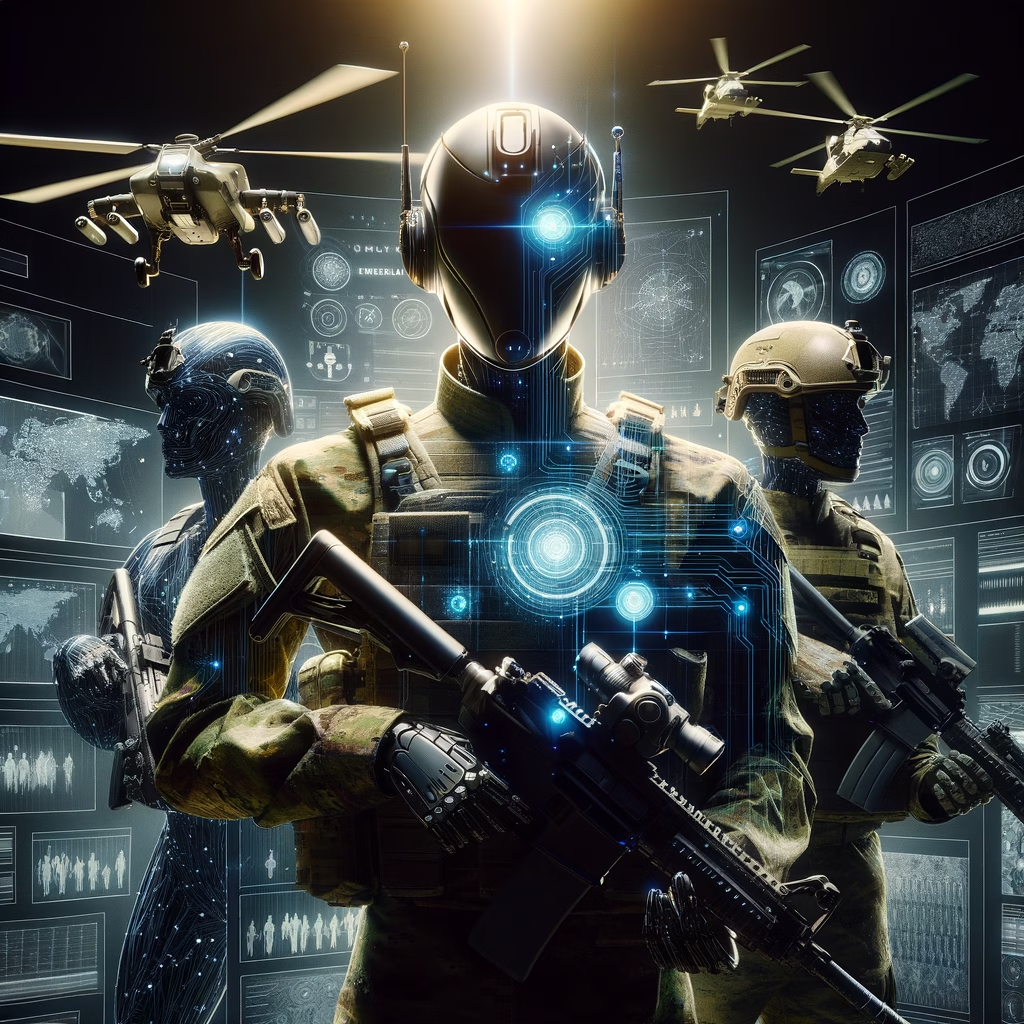
At the DoD’s 4th Annual AI for Defense Summit, experts are turning the question Can you trust a machine with a soldier’s life? into practical solutions—AI-driven triage, predictive maintenance, and smarter logistics that save lives, boost readiness, and keep humans firmly in control.

artificial intelligence: Must-Have, Best Defense Edge
As the Pentagon partners with commercial AI innovators, faster decision-making, smarter logistics, and safer human‑machine teaming are within reach — but success hinges on building strong safeguards so innovation never outpaces accountability. Getting that balance right will determine whether AI becomes a decisive defense advantage or a risky misstep.

drone defenses: Must-Have Yet Risky Solutions
As autonomous drones shrink the window for decisions to seconds, militaries face a stark choice: build defenses that act instantly or risk catastrophic delay — but rushing automation without legal, ethical and technical guardrails could hand machines the power to make life-or-death calls. We must move fast to protect people, and smarter still to ensure those protections never become irreversible harms.

inertial measurement units: Must-Have for Best Ops
Imagine the sky goes dark—300,000 IMUs already in the field show how these tiny motion sensors become the military’s lifeline, keeping vehicles, drones, and weapons on course when GPS is jammed or lost.

head-mounted displays: Must-Have Best Warfighter Tech
On the battlefield, the best head‑mounted displays don’t win by flash alone — they must deliver clear, timely, and secure information that helps soldiers survive and decide under fire. Demand real-world performance, interoperability, cyber hardening, and user-centered sustainment, because a helmet is only as good as the system behind it.

Agile Combat Employment: Essential & Risky Shift
Can a force built for big bases learn to fight from improvised strips under missile, cyber, and electronic attack? Agile Combat Employment (ACE) answers with small, mobile teams, palletized maintenance, and decentralized command to make aircraft harder to find, faster to move, and far more resilient in a contested world.

situational awareness gap: Must-Have HMDs for Best Safety
Could a visor really save lives? Helmet‑mounted displays bring pilots and crews the same real‑time picture—cutting radio clutter, speeding decisions, and closing the situational‑awareness gap that can mean the difference between mission success and disaster.

Salt Typhoon Breaches National Guard Systems: What You Need to Know
The recent breach of National Guard systems by the hacker group Salt Typhoon raises alarming questions about our cybersecurity readiness—how safe are we really in protecting sensitive military information? With threats evolving and intertwining with our daily lives, its time to take this digital arms race seriously.

Salt Typhoon Breach: How it Compromised National Guard Systems
The recent Salt Typhoon breach of the National Guard Systems serves as a stark reminder that our digital defenses are just as vital as the ones on the battlefield—highlighting urgent questions about our national security and the resilience of military operations. As experts call for enhanced cybersecurity measures, its clear that safeguarding our nation in the digital age is more crucial than ever!

Federal Agencies Must Modernize Data for Better Healthcare Outcomes
In today’s fast-paced healthcare world, the gap between technology and patient care is impossible to ignore. It’s time for federal agencies to upgrade their outdated systems—because every delay in modern data means delays in patient care, and that’s a challenge we can’t afford!

Salt Typhoon breach: Stunning, Risky National Threat
The Salt Typhoon breach of the National Guard is a stark wake‑up call—sophisticated attackers exploited systemic weak spots to expose sensitive data and erode trust. Fixing it will take urgent, coordinated action: modernizing systems, tightening authentication, and improving detection and transparency.

Modernizing Data Systems: Essential for Best Care
Outdated systems are slowing clinicians and frustrating patients—modernizing data across federal healthcare will streamline workflows, enable smarter decisions with analytics, and deliver faster, more coordinated care for veterans, service members, and all who rely on these services. Investing in interoperable, user-centered technology today means better outcomes, less burnout, and more efficient use of taxpayer dollars tomorrow.

DoD Advances from Language Models to Agentic AI for Security
Discover how the DoD is transforming national security by moving beyond language models to cutting-edge agentic AI systems that think and act autonomously to outsmart evolving threats.

DoD Advances Agentic AI for Future National Security Challenges
The DoD is stepping into a new era with agentic AI—technology that doesnt just assist but thinks and acts independently to outpace evolving threats and keep the nation safe.

DoD Advances Agentic AI and Large Language Models for Security
Discover how the Department of Defense is harnessing smart, self-thinking AI and powerful language models to stay one step ahead in national security—turning futuristic technology into today’s frontline defense.

Iris Experts Group Annual Meeting Highlights 2024 Innovations
Discover how the latest breakthroughs in iris recognition are transforming security with smarter, faster, and fairer biometric technology at the Iris Experts Group 2024 Annual Meeting.

HMD for Rotary-Wing Enhances Pilot-Crew Situational Awareness
“In the chaos of modern aerial combat, how can a pilot truly keep all the pieces in view?” This pressing question underscores the evolving challenge faced by rotary-wing aviators operating…

U.S. Navy Expands Fleet with Purchase of Three Additional SSC Hovercraft
U.S. Navy enhances its fleet by acquiring three more SSC hovercraft, bolstering amphibious capabilities and operational readiness.

Defense Department’s Budget Proposal Prioritizes AI and Autonomy
The Defense Department’s budget proposal emphasizes investment in AI and autonomy, aiming to enhance military capabilities and modernize national defense.
Raytheon Secures $279M Contract from U.S. Army for Phalanx Weapon System Support
Raytheon has secured a $279M contract from the U.S. Army to provide support for the Phalanx Weapon System, enhancing military defense capabilities.