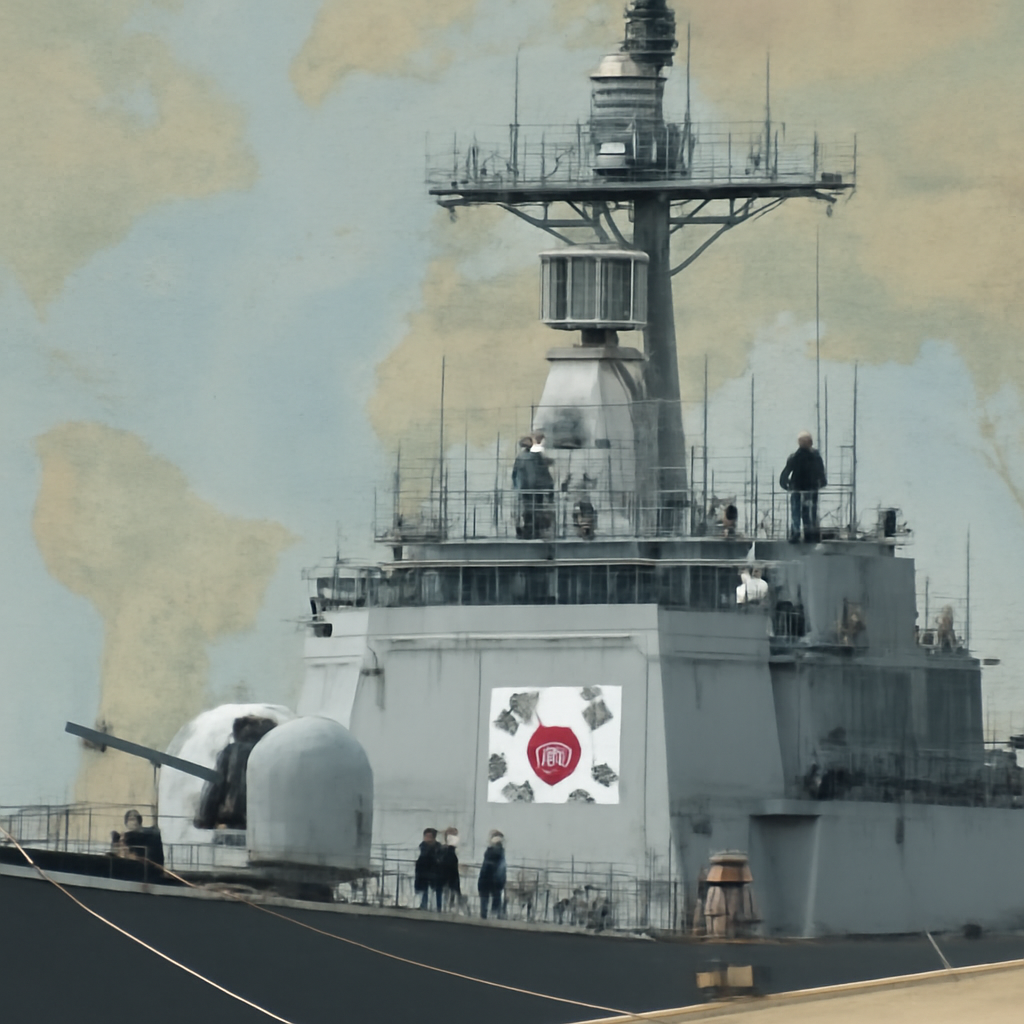
President Lee Jae‑myung’s red line
On September 18, South Korean President Lee Jae‑myung told reporters that “there will be no deployment that involves or intervenes in the war,” while also saying Seoul should take “minimum measures to protect its commercial vessels, crude oil shipping routes, and the lives and safety of its citizens, as other countries are doing.” That formulation frames a narrow, defensive role rather than active participation in hostilities.
International legal and coalition constraints
The diplomatic and legal environment today differs sharply from the 2003 Iraq case. In 2002 the U.S. Congress passed H.J. Res. 114 authorizing the use of force against Iraq; the U.N. Security Council adopted Resolution 1441 and later Resolutions 1511 and 1546 that were used to support Iraq’s political transition. By contrast, in the current campaign neither the U.S. Congress nor the U.N. Security Council have authorized force against Iran. NATO has refused “any collective military action under Article 5,” and, aside from Israel, other U.S. allies have refrained from directly joining the war. The United Kingdom and France are preparing to lead “an independent and strictly defensive multinational military mission” to protect freedom of navigation through the Strait of Hormuz — a defensive framing that differs from a broader combat coalition.

This site is the portfolio.
OSINTSights runs on Cloudflare Workers, D1, R2, and Vectorize, with an AI pipeline on Hetzner ARM. Nubivance designed, built, and operates it. We do the same for clients.
See what we buildMilitary risk and Iranian warnings
Operational realities also raise risk: while the Iraq regime fell in roughly three weeks in 2003, the Iranian government and the Islamic Revolutionary Guard Corps remained intact nearly seven months after Israeli‑U.S. strikes began. Tehran has made clear the political and security costs of participation. Iranian Foreign Ministry spokesperson Esmaeil Baghaei posted a warning in Korean on X: “Any other country’s military presence or participation in operations in the Persian Gulf and the Strait of Hormuz can only be regarded as direct support for the party responsible for the aggression and will have serious consequences.” That Korean‑language message is widely read as a direct warning about Seoul’s potential deployment, and a South Korean presence in Hormuz could expose its forces to retaliation.
Historical precedent and domestic politics
Seoul has sent troops to the Middle East before. Between 2003 and 2008 roughly 4,000 South Korean soldiers served in Iraq in engineering, medical, security, reconstruction, and other non‑combat roles. Then‑President Roh Mooh‑yun committed additional forces after a U.S. request and National Assembly approval, in part to reinforce alliance ties while seeking U.S. cooperation on North Korea. The Roh government nonetheless paid a political price: public opposition to the Iraq deployment grew, and by June 2004 56 percent of South Koreans opposed the deployment; Roh’s approval rating fell to 28.2 percent.
Today’s domestic climate looks less forgiving. President Lee’s approval rating recently hit a record low of 38 percent, and a recent survey found 55 percent of South Koreans opposed a potential deployment to Hormuz while 32 percent supported it. Last weekend more than 500 civic and religious groups demonstrated against the possible deployment. Given that domestic political reality, the source argues Lee has far less room than Roh did to use overseas troop deployment as leverage in relations with Washington.
Seoul and Washington: alternative cooperation areas
Because the political and legal costs of deploying troops are high, the source recommends shifting U.S.–South Korea focus toward domains that produce tangible benefits for both capitals. Specifically, it highlights shipbuilding, semiconductors, and nuclear energy as consequential areas where “the national interests of both South Korea and the U.S. converge.” That approach would avoid opening Seoul to the diplomatic and security liabilities that could follow a military presence in Hormuz.
Washington’s public prodding — including President Trump’s announced scaling down of annual South Korea‑U.S. joint military exercises and his continued calls for Seoul to do more — has placed Lee between alliance pressure and domestic resistance. With Iranian warnings in Korean, a fractured international legal backdrop, and a South Korean public that is largely opposed, the balance of facts in the source suggests Seoul is constrained from sending combat forces to Hormuz. Instead, the source urges both capitals to prioritize cooperation in shipbuilding, semiconductors, and nuclear energy where political risks are lower and mutual gains clearer.