Intra‑SCO trade in 2024 was worth US$725 billion (A$1 billion), up from US$463 billion in 2021.
The Shanghai Cooperation Organization marks 25 years this week with a summit on 31 August and 1 September that will again be used by China and Russia to promote an alternative to Western‑led institutions. But the organisation’s long record of symbolic diplomacy is colliding with persistent rivalries and a limited record of practical achievement — especially on security — leaving the SCO’s future uncertain.
Security architecture: exercises and institutions, few results
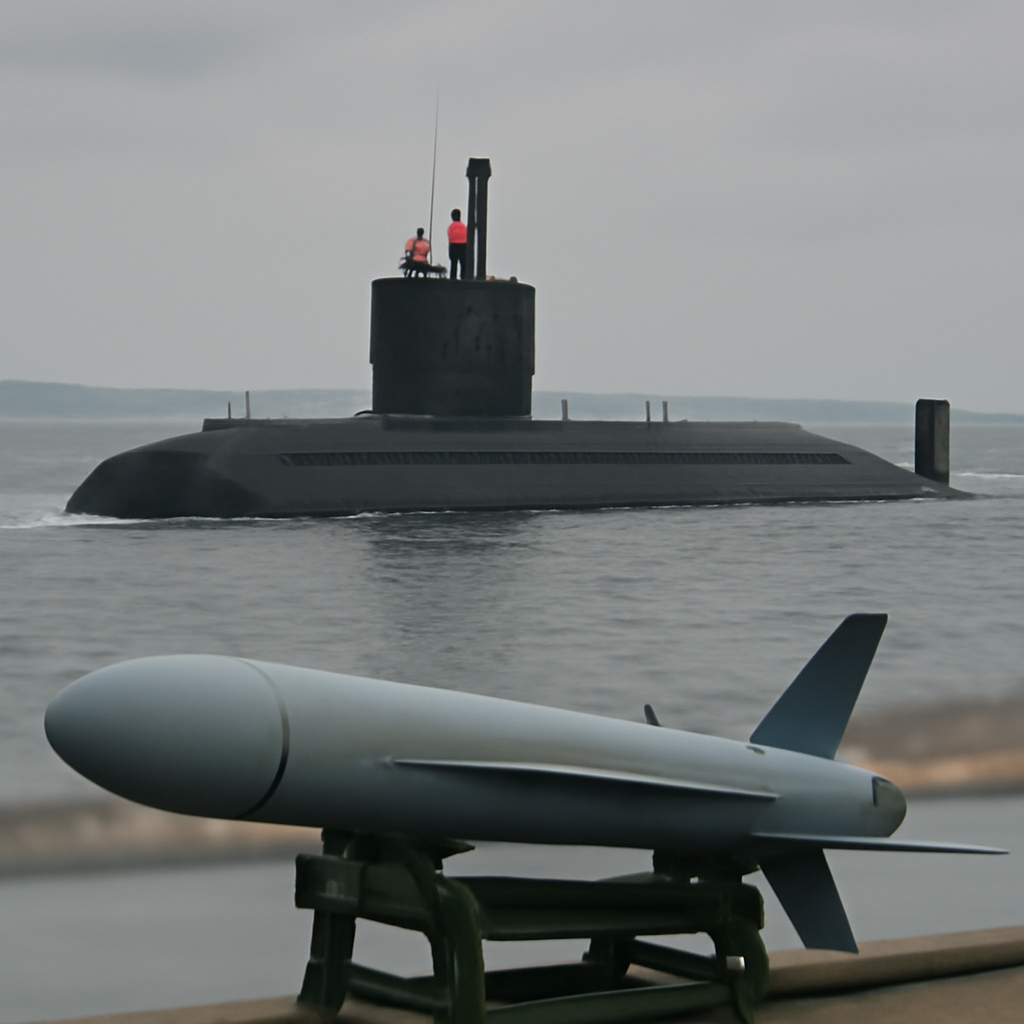
The SCO’s security work is visible in concrete forms such as the Regional Anti‑Terrorist Structure and the recurring Peace Mission military exercises. Yet the organisation is “not a security treaty,” and, as the source observes, its security agenda has been weak, producing “very little to show in terms of actual results.” The exercises and structures have not succeeded in diluting political and military tensions among major SCO members.
Sino‑Indian tensions and the limits of hotlines
The SCO sits atop a longstanding Sino‑Indian contest that predates the grouping and periodically flares into violence. The most recent, unusually violent clash occurred in 2020, producing the first casualties from such border incidents in decades and putting relations “into a freezer.” Talks “this month” reportedly made some progress, including agreement on two additional military hotlines to connect India’s Eastern Army Command and Central Army Command with their Chinese counterparts. The source notes these institutionalised channels can be useful to avoid incidents in parts of the border, but cautions that “an absence of mechanisms is not necessarily the problem,” and that in previous crises such mechanisms did not prevent escalation.

This site is the portfolio.
OSINTSights runs on Cloudflare Workers, D1, R2, and Vectorize, with an AI pipeline on Hetzner ARM. Nubivance designed, built, and operates it. We do the same for clients.
See what we buildIndia’s multidirectional balancing act
India is managing engagement with the SCO as “a fine diplomatic balancing act” between Washington on one side and Beijing and Moscow on the other. The source highlights Prime Minister Nerendra Modi’s use of multiple fora — including the SCO, the Quad and other minilateral groupings — to demonstrate a “multidirectional foreign policy.” A photo op at the 2025 SCO Summit in Tianjin involving Nerendra Modi, Xi Jinping and Vladimir Putin was cited as an example of India showing it has options. Yet the source is explicit that “China continues to be India’s most important national security threat,” a reality that constrains how useful the SCO can be for New Dehli.
Economic cooperation and the contested SCO Development Bank
The SCO’s most tangible forward motion has been economic. By some estimates cited in the source, intra‑SCO trade rose from US$463 billion in 2021 to US$725 billion in 2024. Members agreed in principle at the 2025 Summit to establish an SCO Development Bank — a project framed as potentially “China’s answer to Western financial hegemony” and part of Beijing’s long‑running push (dating back to 2010) to expand the global footprint of the yuan and create an economic alternative to Western post‑Bretton Woods institutions.
But the bank itself is a site of friction: Russia is described as a reluctant supporter because of fears of Chinese economic dominance in Central Asia, and India has remained sceptical because the bank would enhance China’s regional dominance. Those frictions reflect deeper, long‑standing disagreements about whether the SCO should be primarily an economic grouping or a security bloc.
Messaging, legitimacy and the limits of multipolarity
Beijing and Moscow use the SCO to speak the language of multipolarity, a message that has resonance in parts of the Global South seeking alternatives to Western institutions. However, the source notes a countervailing problem: both countries have repeatedly violated the UN Charter through unilateral actions against neighbours, “exhibiting little respect for international law.” Even if many in the Global South may ignore such violations, the source argues, “the hypocrisy tends to accumulate and undermine the legitimacy” of SCO messaging. The organisation lacks an acknowledged leader despite China’s material dominance, and its principal members “fear each other at least as much as they need each other.”
What this means for India, China, Russia, and Global South countries
- India: Will continue a multidirectional foreign policy, using the SCO alongside the Quad and other forums while keeping a wary view of China as its primary security concern; New Dehli’s scepticism about the SCO bank reflects that caution.
- China: Gains a platform to expand economic influence — including through the proposed development bank and increasing yuan use — but faces resistance from partners wary of enhanced Chinese dominance.
- Russia: Supports the SCO as a security‑oriented platform but remains reluctant on economic centralisation that could shift influence toward China.
- Global South countries: May welcome alternatives to Western architectures, yet the accumulation of unilateral actions by major SCO members and questions of legitimacy may blunt enthusiasm over time.
At 25, the SCO is both broader and more brittle than at its founding: trade ties are stronger and the organisation’s reach has widened, but unresolved bilateral rivalries, conflicting economic goals and questions of legitimacy limit its practical utility. The summit on 31 August and 1 September will again showcase multipolar symbolism, but the source’s assessment is blunt — the SCO may survive because “none of the major partners can afford to abandon it,” yet that survival rests on fragile, sometimes contradictory incentives rather than on a clear, shared programme.