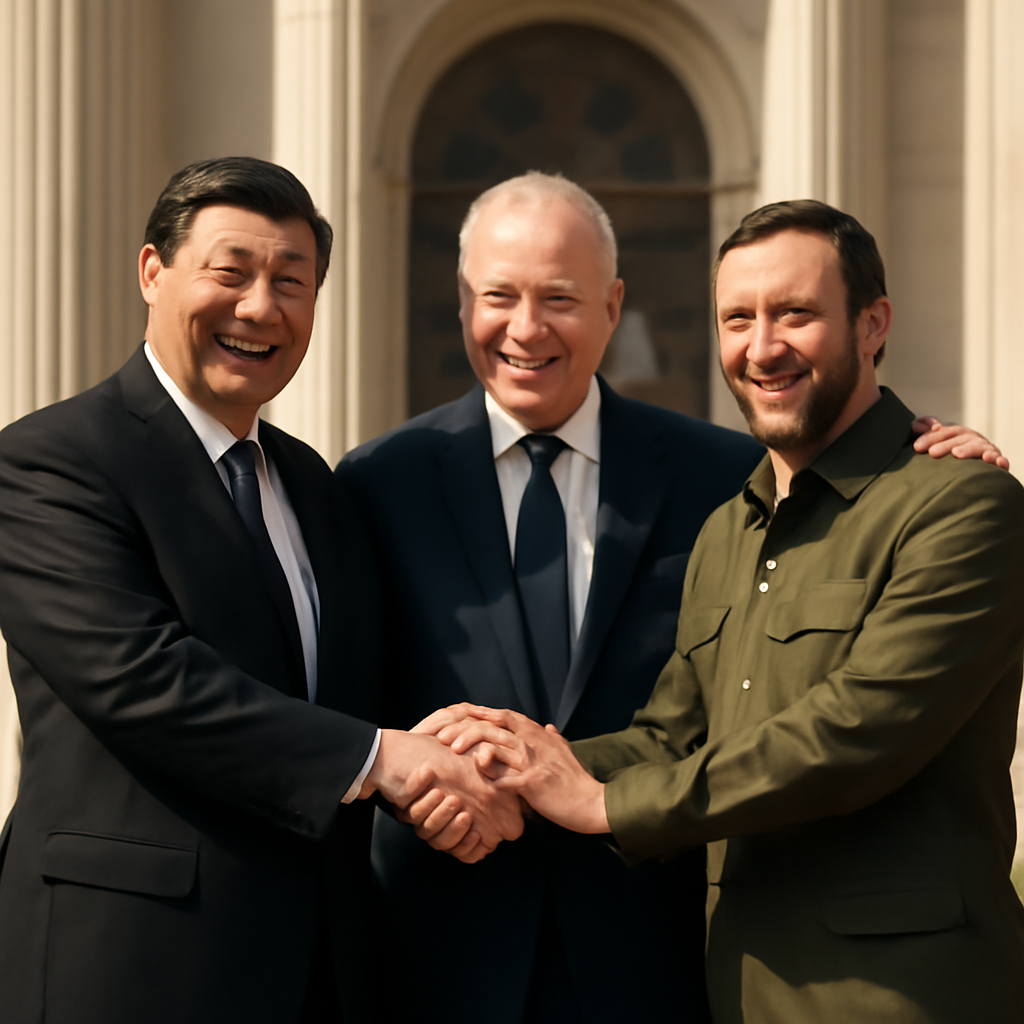
"The Agreement is intended to strengthen collective deterrence against any act of aggression, and stipulates that any armed attack against one of the three States shall be regarded as an attack against them all. It further provides for the enhancement of all aspects of defence cooperation among the three states," the Pakistan Ministry of Foreign Affairs said after the Makkah signing.
The signing in Makkah and what was put on paper
On 07 August 2026, Saudi Crown Prince and Prime Minister Mohammed bin Salman, Turkish President Recep Tayyip Erdoğan, and Pakistan’s Prime Minister Muhammad Shehbaz Sharif signed the Makkah Joint Defence Agreement (MJDA) at Al-Safa Palace in Makkah, Saudi Arabia. Pakistan’s Ministry of Foreign Affairs framed the pact as a collective-deterrence instrument that treats an armed attack on one member as an attack on all and that aims to “enhance all aspects of defence cooperation among the three states.” The agreement follows more than six months of reported trilateral talks and builds on a bilateral Strategic Mutual Defence Agreement (SMDA) between Saudi Arabia and Pakistan signed on 17 September 2025.
Article 5 mimicry and the immediate scepticism
Observers were quick to note that the MJDA contains a provision mirroring NATO’s Article 5—an attack on one treated as an attack on all. But the Quwa analysis records substantial scepticism about whether the three states can or will deliver a joined, allied wartime response. The doubts are not procedural: they flow from each country’s distinct constraints. Pakistan must balance its relationship with Iran, which includes a shared border and demographic links, even as it supports Saudi security. Saudi Arabia seeks to protect economic ties with India while expanding ties with Pakistan. And Türkiye, the analysis notes, is historically cautious about becoming embroiled in non-Turkish obligations. Put simply, the MJDA’s commitment is politically and financially demanding, and domestic audiences in each country will weigh whether and how to sustain collective action.

The cyber insurance questionnaire just landed. Now what?
SOC 2, HIPAA, insurance renewals - someone has to own security strategy. Nubivance provides fractional CISO leadership without the full-time salary.
Get a security leadCapacity-building, not troop deployments
Unlike a classic mutual-defence alliance that depends on the ready movement of troops and ships, the MJDA—at least as described in this analysis—appears to emphasize capacity-building through industry, finance, and procurement. None of the three states is asking for active military support in the form of deployed forces. Instead, the logic is practical: Riyadh can provide financing; Ankara can provide technology, production know‑how, and export markets; and Islamabad can contribute personnel experience and defence infrastructure. The analysis argues this makes the MJDA more likely to be substantive than the SMDA, if the pact is executed as a programme of industrial integration rather than a call for immediate operational support.
Concrete procurement links and industrial incentives
Recent defence engagement between the three countries validates this industry-first logic. Türkiye is marketing its KAAN next-generation fighter aircraft (NGFA) to both Saudi Arabia and Pakistan. Saudi Arabian Military Industries (SAMI) selected Pakistan’s Heavy Industries Taxila (HIT) to design a wheeled howitzer program. In July 2026, Field Marshal Asim Munir travelled to Ankara for defence talks focused on industrial cooperation. The analysis outlines the incentives: Pakistan could use Saudi-backed financing and Turkish technology to reach NATO-standard capabilities; Türkiye would gain secure markets and consortium partners to scale programmes and diversify outside Western trade and investment; Saudi Arabia could invest downstream—steel and alloys, for example—lower production costs using its energy sector, secure munitions at scale, and seed domestic job creation and technological growth.
Nuclear topics, limits, and the international context
The analysis also raises a sensitive point: nuclear capabilities. It notes both Ankara and Riyadh have voiced interest in acquiring nuclear capabilities in some form, and Pakistan possesses nuclear know‑how that could be relevant. The author of the analysis asserts Pakistan will not extend its nuclear deterrent to either partner, saying Pakistan’s nuclear posture remains tuned to India, lacks a global projection, and is still working toward a credible sea‑based leg. The piece warns that any trilateral nuclear cooperation—conceived as shared fuel‑cycle work or a parallel uranium market—is distant and contingent on how determinedly the United States and other actors enforce non‑proliferation mechanisms such as the Nuclear Suppliers Group (NSG). The analysis also notes Pakistan’s constraints under US‑led mechanisms that limit its access to uranium on the open market and certain energy technologies outside of China.
What this means for Pakistan, Türkiye, and Saudi Arabia
- Pakistan’s military and procurement planners will watch financing and technology arrangements closely: the MJDA promises access to NATO‑standard equipment with Saudi-backed funding and Turkish tech partnerships that could materially raise conventional deterrence capacity.
- Türkiye’s defence industry will look for secure export markets and consortium partners: the KAAN NGFA and broader industrial cooperation could help sustain high‑technology programs and diversify Türkiye’s dependence on Western trade.
- Saudi economic and industrial planners will pursue investments across supply chains: downstream manufacturing, low‑cost munitions supply, and partnerships in alloy and steel production are positioned as levers to lower costs and create jobs while integrating Riyadh into regional defence ecosystems.
The MJDA, as described in the Quwa analysis, reframes a mutual‑defence promise into a pragmatic pathway: build the capacity so partners do not require one another’s battalions. Whether that pathway becomes an industrial success story, a limited financing scheme, or an awkward diplomatic paper depends on the mechanics of procurement, the reach of financing, and the international constraints—above all, non‑proliferation enforcement—that will shape how deep cooperation can go.



