On May 13, 2026, divers discovered a grenade-type improvised explosive device (IED) underwater at Alabama’s Converse Reservoir dam, a critical water infrastructure asset serving approximately 350,000 residents in the Mobile area.
Converse Reservoir, May 13, 2026: a reminder of unseen risks
The device at Converse Reservoir was retrieved and detonated safely before it caused damage. That single event crystallizes a practical problem: many critical assets sit in remote, dispersed locations where suspicious activity can occur long before anyone on the ground notices. Dams, reservoirs, substations, transmission corridors, pipelines and waterways commonly span thousands of miles and are difficult to secure solely by on-site measures.
Why fencing, cameras, and inspections can miss the early signs
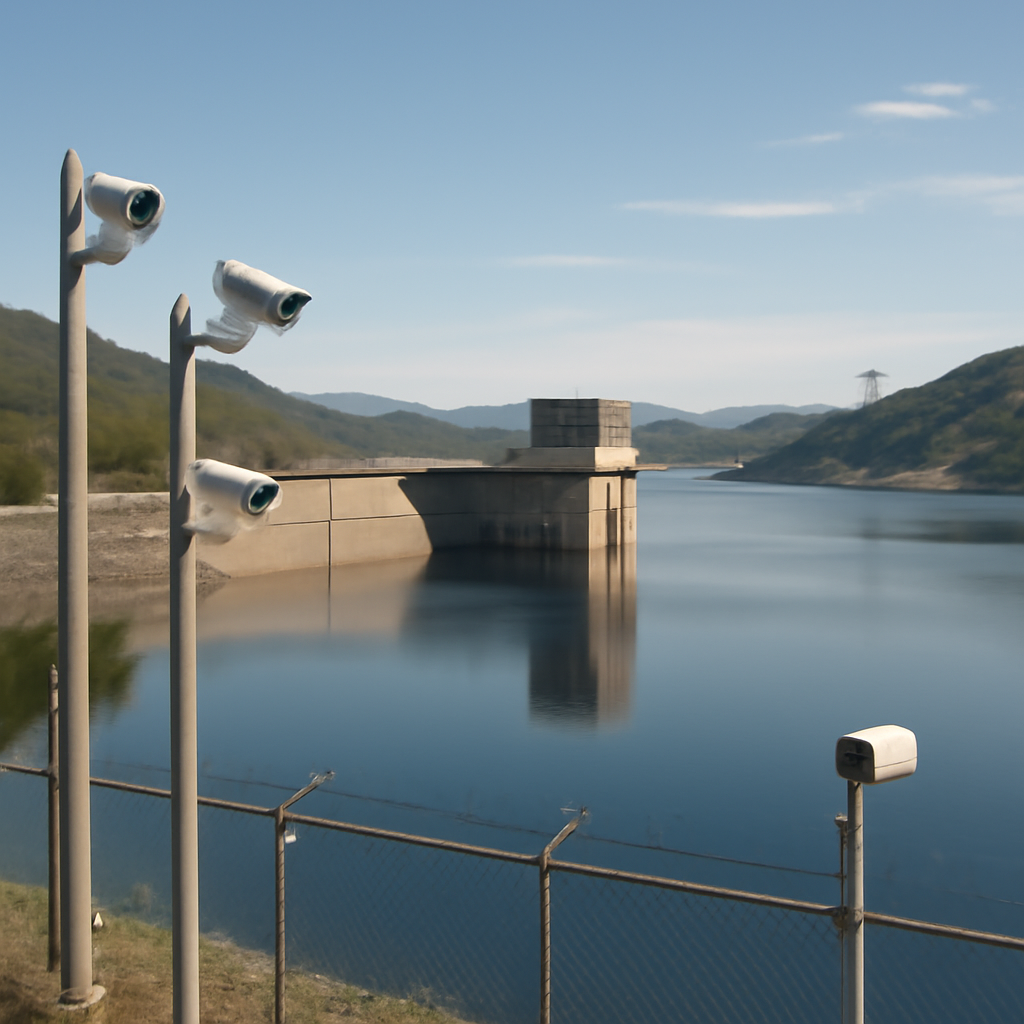
Traditional tools—fencing, cameras, periodic inspections—remain important. But they have clear limits. Cameras only capture what is directly in front of them, security teams cannot be everywhere at once, and periodic inspections leave gaps in time during which staging or other preparatory activity can take place. The Converse Reservoir discovery underscores that suspicious activity may be ongoing in areas not covered by these measures, or may occur outside the narrow field of view or cadence of human patrols and fixed sensors.

The cyber insurance questionnaire just landed. Now what?
SOC 2, HIPAA, insurance renewals - someone has to own security strategy. Nubivance provides fractional CISO leadership without the full-time salary.
Get a security leadPersistent monitoring from space: what Vantor’s Sentry does
Persistent monitoring from space is presented in the source material as an additional layer of situational awareness. The solution named, Vantor’s Sentry, uses satellite imagery combined with automated analytics to identify changes or patterns that may warrant closer review. Examples given include repeated vehicle activity near sensitive locations, new access routes, unusual staging, or notable environmental changes—each of which can cue analysts to areas that merit human follow-up.
How Sentry is said to change analyst workflows and response timelines
Sentry does not replace physical security, local sensors, or analyst judgment; instead, it is described as complementary. By reducing the burden of broad-area manual review and surfacing relevant changes more quickly, Sentry can help teams prioritize where to look next. That prioritization, in turn, supports earlier indications and warnings and gives analysts more time to interpret activity, assess risk, and inform operational decisions. For critical infrastructure where even a temporary disruption can affect entire communities, the material argues that faster response can make a meaningful difference.
What this means for technologists, policymakers, and affected communities
- Technologists and security teams: will likely view persistent, overhead analytics as a tool to narrow large areas of interest into actionable leads—looking specifically for repeated vehicle activity, new access routes, staging areas, or environmental changes that automated systems can flag for human review.
- Policymakers and regulators: may be interested in how an added layer of overhead awareness complements local sensors and physical security without replacing them, and in how earlier indications and warnings could change response expectations for critical-asset protection.
- Affected communities and operators of critical assets: can expect that integrating satellite-based monitoring could provide visibility into remote stretches of infrastructure they cannot physically patrol, potentially giving security teams more time to act when unusual activity surfaces.
The Converse Reservoir incident makes plain a central point: visible defenses at a site can mask the fact that other, less apparent layers of monitoring may be in place—an advantage noted in the source material. A bad actor may be able to see fencing, cameras, or checkpoints on the ground; they may not know that overhead monitoring is also tracking activity around that location. The material presents persistent monitoring as an additional tool that, when paired with local sensors and human analysis, can strengthen resilience around systems that communities rely on every day.
As operators weigh investments and procedures, the concrete questions left by the facts reported are practical rather than abstract: how quickly can overhead analytics turn imagery into prioritized alerts, how will those alerts be integrated with local detection and response, and how will operators measure whether earlier indications actually translate into fewer disruptions? The surfaced answers will determine whether satellite-based persistent monitoring becomes a routine complement to the fences and cameras guarding the nation’s most remote, most critical infrastructure.
Source: The Role of Persistent Monitoring in Protecting Critical Infrastructure