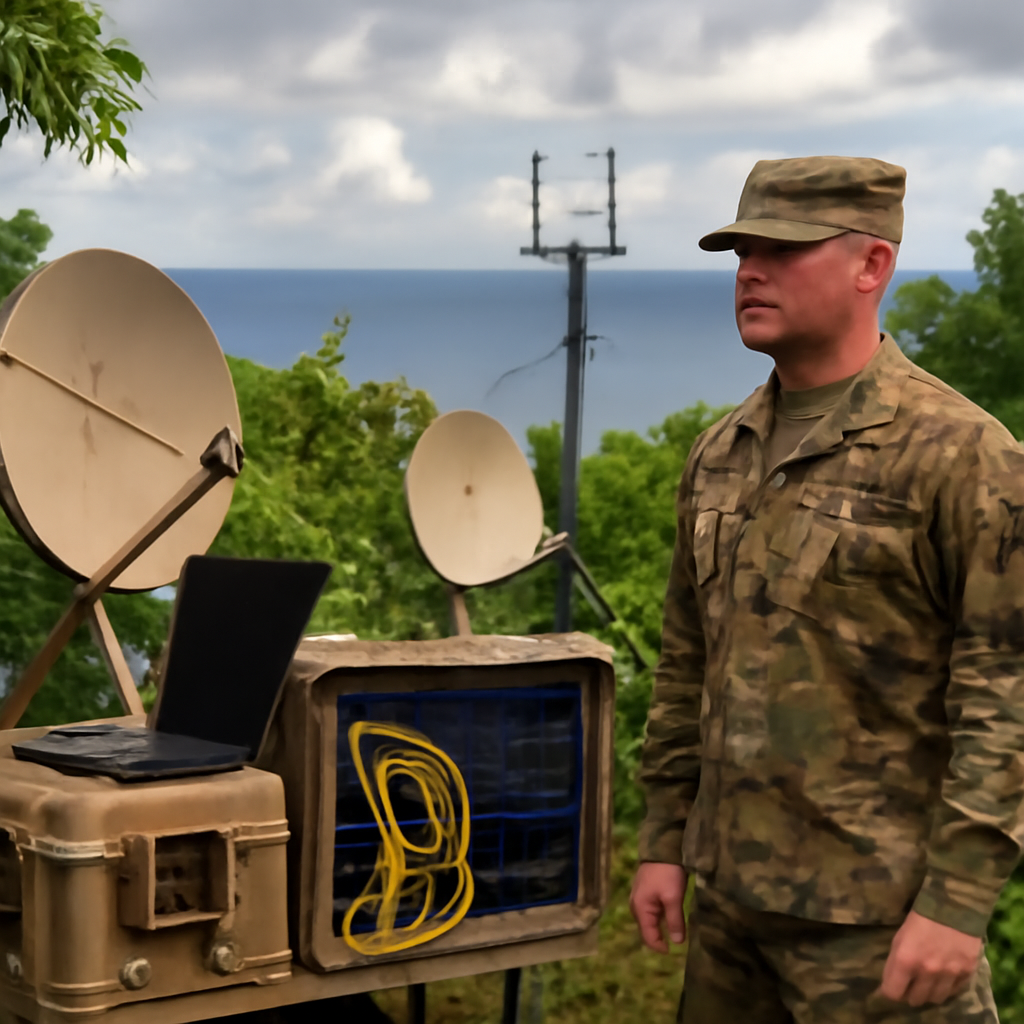
“It wasn’t seamless, and we learned a lot,” Brig. Gen. Shane Taylor said on the sidelines of the AUSA conference, summing up the Army’s first attempt to graft Anduril’s Next Generation Command and Control (NGC2) tools onto an older communications architecture.
Lightning Surge 5 in Hawaii and the 25th Infantry Division
The test took place in September during Lightning Surge 5 in Hawaii, where the Army’s 25th Infantry Division attempted to use Anduril’s Lattice platform as part of a “multi-phase campaign to modernize its command-and-control architecture.” That environment — dense jungle terrain and lighter platforms such as Infantry Squad Vehicles — differed markedly from the open plains and Stryker-heavy formations of Fort Carson, Colo., where the 4th Infantry Division previously used the same NGC2 software paired with mostly commercial hardware and software.
Anduril’s Lattice, radios, and edge compute constraints
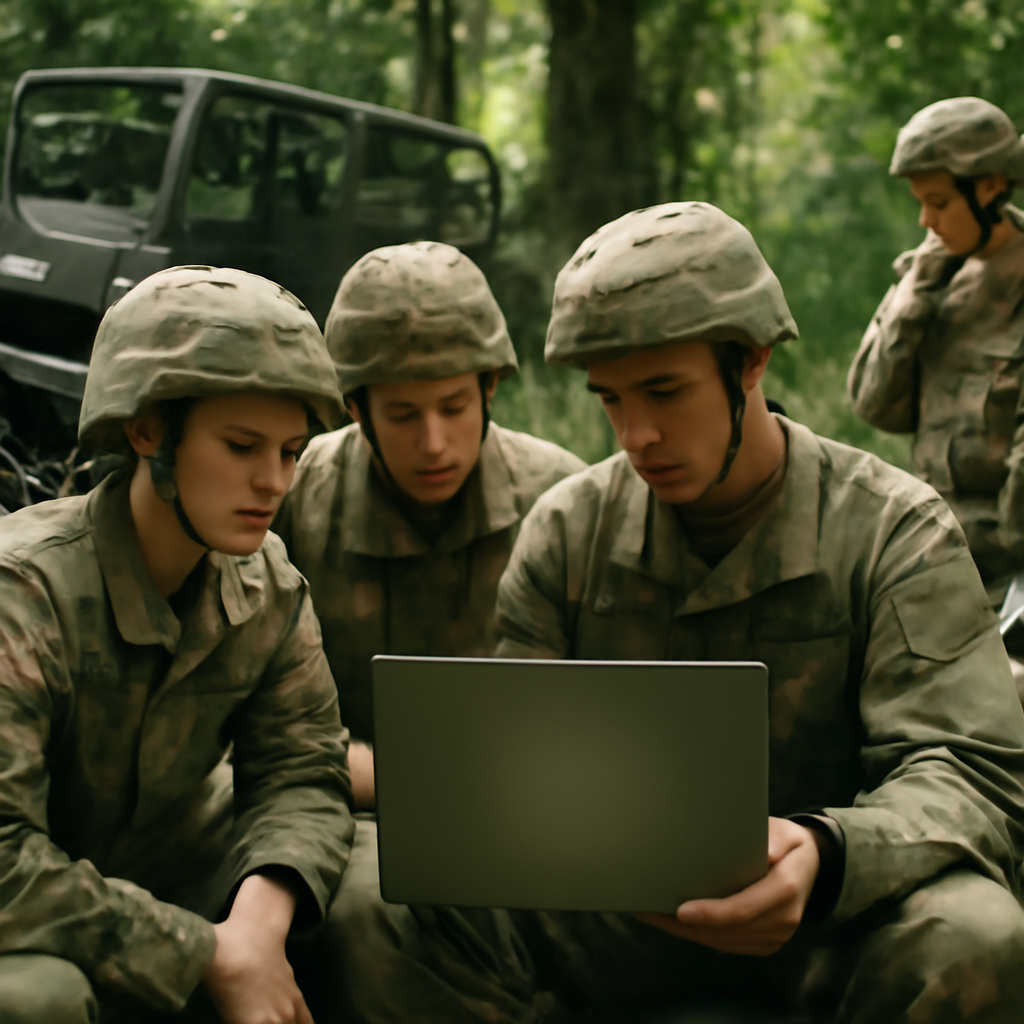
Anduril’s program manager for NGC2, James Craven, acknowledged the “growing pains” and described concrete technical hurdles: the 25th’s radios (TSM radios) used different waveforms and configurations than those at 4th ID, and Lightning Surge introduced several novel mission threads. Craven said the exercise revealed limits across the communications architecture and highlighted a requirement to go smaller with edge computing — Lattice had previously been integrated on the Mounted Family of Computer Systems at 4th ID, but Lightning Surge was the first time Lattice was used on tablets, and that tablet work was performed mid-exercise rather than beforehand.

This site is the portfolio.
OSINTSights runs on Cloudflare Workers, D1, R2, and Vectorize, with an AI pipeline on Hetzner ARM. Nubivance designed, built, and operates it. We do the same for clients.
See what we buildLockheed Martin as integrator and restoring operational architecture
Lockheed Martin served as the integrator for Anduril’s platform on the 25th ID’s portion of the NGC2 architecture. Chandra Marshall, vice president of multi-domain combat solutions at Lockheed Martin, told Breaking Defense the company expected challenges and that “some people are surprised at how much of a challenge it has been.” Marshall said scaling Lattice and passing data through the system “just is not at the state it should be right now with bringing in the Lattice product,” and emphasized Lockheed’s immediate task: getting the 25th ID “back to working operational architecture so that we can continue to build on the capabilities.”
Platform permissiveness, legacy capabilities, and integration tradeoffs
Army acquisition and portfolio officials framed the 25th ID test as a deliberate stress test for a more representative fielding model. Joseph Welch, the Army’s portfolio acquisition executive for Command and Control (C2) and Counter C2, explained the challenges of platform permissiveness — what can be mounted on lighter vehicles versus Strykers — and the tradeoffs for transport solutions and compute capacity across echelons. Craven emphasized that unlike the 4th ID’s “fresh fielding,” the 25th will preserve legacy capabilities and must maintain “seamless integrations with legacy equipment” because many units will not receive entirely new kit.
What this means for technologists, policymakers, and I Corps units
- Technologists and security teams: expect to focus on waveform interoperability, channel configuration (including separating data and voice channels), scaling data throughput through Lattice, and smaller-footprint edge compute integrations such as tablets — all concrete issues that surfaced during Lightning Surge 5.
- Policymakers and procurement leaders: will watch baseline timelines closely — the Army plans to baseline other divisions under I Corps within the fiscal year but acknowledged the continuing resolution may force “pacing” of some systems — and must factor logistics for distributing systems across units that span to Alaska and Pacific commands.
- I Corps divisions and end users (25th ID, 4th ID, other ITN divisions): are likely to insist that NGC2 arrive as an enabler rather than a disruptor. Army leaders said teams are in routine communications with formations to align introductions to exercises and training so fielding does not interfere with mission focus.
Army and industry officials framed the 25th ID activity not as failure but as a realistic rehearsal of the harder problem: marrying modern, commercial-derived software with diverse legacy radios, platforms, and tactical constraints. The immediate next steps are incremental and specific — restore a working operational architecture for the 25th, work pre-field integrations (for example, tablet-based Lattice) before future exercises, and continue baselining other I Corps divisions within the fiscal year while managing pacing and logistics. How quickly those technical fixes and pacing decisions translate into seamless operations across dispersed formations — including those with legacy waveforms and equipment — will determine whether the “growing pains” remain temporary learning or a persistent integration drag.