“The solutions that are being deployed most effectively are the ones that work, and you have to have the backups all the time… you need to have the right thing for the right time.” — Dave Davis, Senior Technical Director for Global Government at ST Engineering iDirect
Satellite connectivity as a more flexible connectivity option
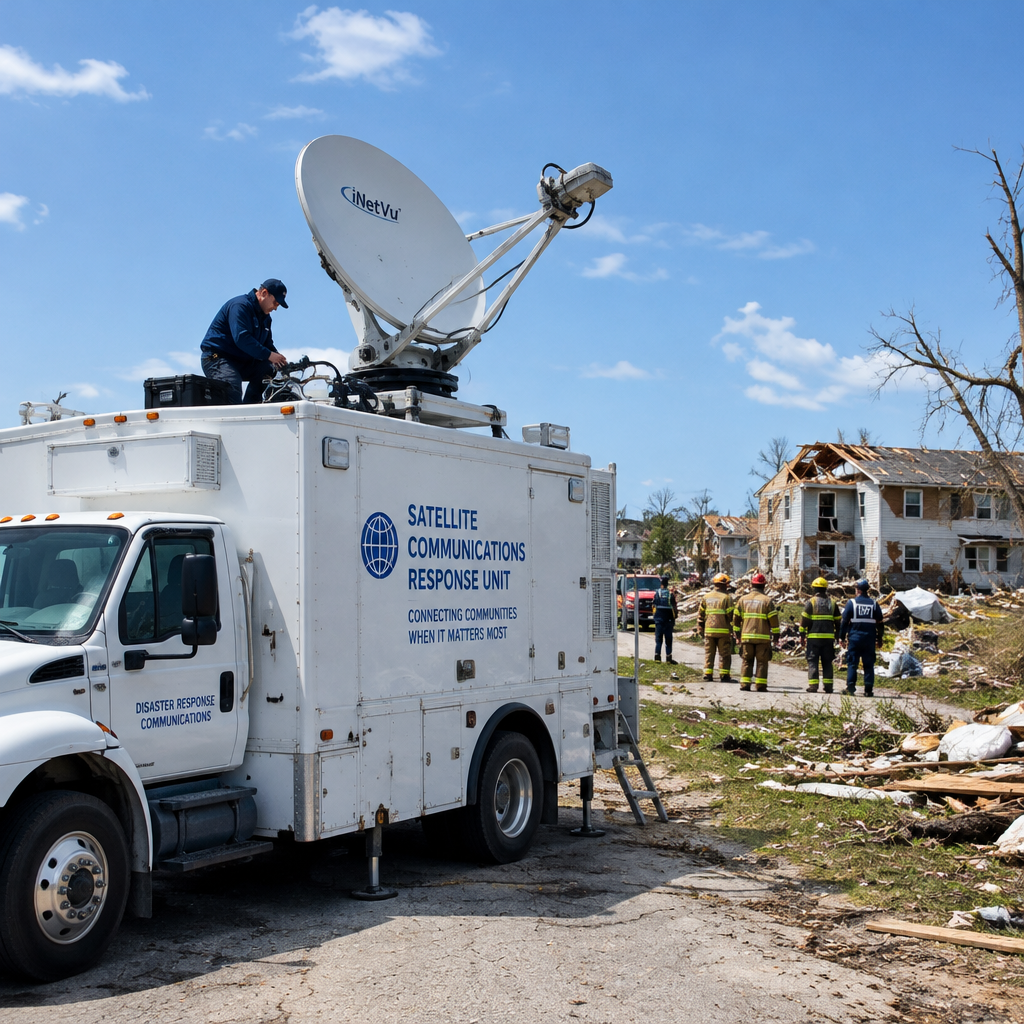
Satellite is no longer a single, monolithic fallback for disaster response; in the conversation hosted by Lucas Hunsicker on the Government Technology Insider podcast, callers from the field described satellite connectivity as an increasingly flexible tool. Calvin Johnson of Verizon Frontline Crisis Response and Dave Davis of ST Engineering iDirect discussed how satellite has evolved into an option that responders can fit into a broader set of communications choices rather than relying on it exclusively.
Moving among 5G, multiple satellite orbits, alternate backhaul, and portable terminals
The podcast emphasized that effective disaster communications often require switching among technologies. Depending on location, mission, available bandwidth, and ground conditions, responders may need to move between 5G networks, multiple satellite orbits, alternate backhaul methods, and portable terminals. That variety reflects an approach built on operational flexibility rather than a one-size-fits-all design.

Audit-ready is a season. It shouldn't be.
Evidence in spreadsheets, controls drifting between audits, frameworks multiplying on flat headcount. Nubivance runs continuous compliance on Rapid7 Cyber GRC - SOC 2, HIPAA, ISO 27001, PCI, CMMC.
End the scrambleSituational awareness, security, and the need for continuity
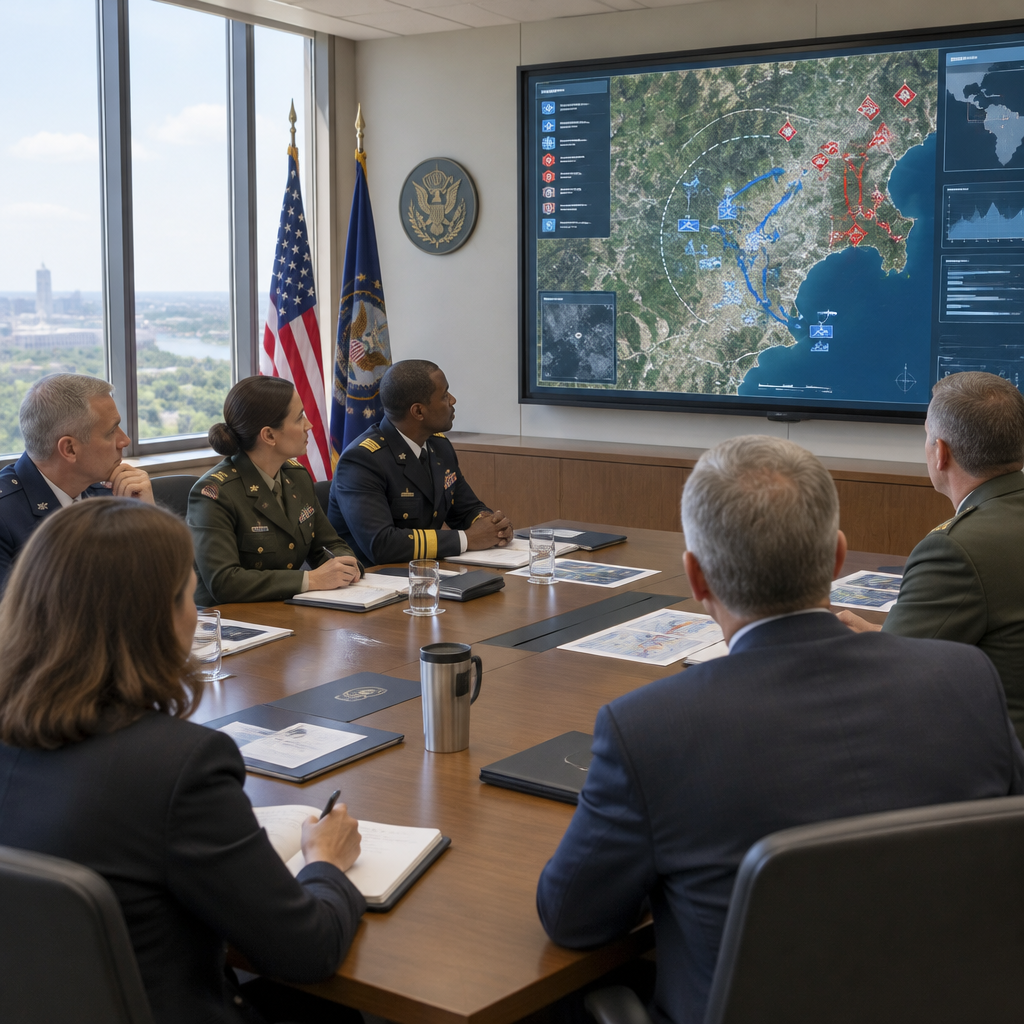
Participants framed connectivity as a core enabler of situational awareness, resource coordination, and continuity of communications when terrestrial networks are damaged, congested, or unavailable. The conversation covered situational awareness and security as central requirements: responders must maintain data flows and protect those flows even as they transition between networks and terminals.
Power, logistics, and cognitive load on personnel
Beyond radio and satellite links, the guests highlighted practical constraints that shape what can be sustained in the field. Flexibility has to account for available power, logistical support, security considerations, and the cognitive demands placed on personnel working under pressure. In short, technology choices are inseparable from the real-world burdens of keeping equipment powered, transported, and operated by stressed teams.
Backups, interoperability, and “the right thing for the right time”
Dave Davis’ remark about backups and choosing the right tool for the right time crystallizes the episode’s central practical guidance: systems and plans should assume failure modes and provide alternatives. The discussion urged that responders and planners maintain interoperable options and rehearsed fallback arrangements so communications continuity does not depend on a single network or terminal.
How technologists, procurement leaders, and responders are responding
- Technologists and security teams: Pay attention to architectures that allow seamless switching among 5G, satellite orbits, and alternate backhauls while maintaining secure data flows and situational-awareness feeds.
- Procurement leaders and logistics planners: Account for portable terminals, power supply, and transport requirements when specifying systems so that the selected solutions can be deployed and sustained where terrestrial infrastructure is compromised.
- Responders and field commanders: Practice moving between connectivity modes and prioritize simple, reliable configurations that reduce cognitive load during high-pressure operations.
The podcast frames a simple, operationally consequential point: connectivity is not a single product but a capability made up of multiple technologies, supporting systems, and human processes. As Calvin Johnson and Dave Davis described it, maintaining communications continuity in disasters means layering options, managing trade-offs around power and logistics, and rehearsing the transitions that will be required when networks fail or become congested. The episode leaves one clear, practical imperative—build and exercise modular, redundant communications so the right tool is ready for the right time.