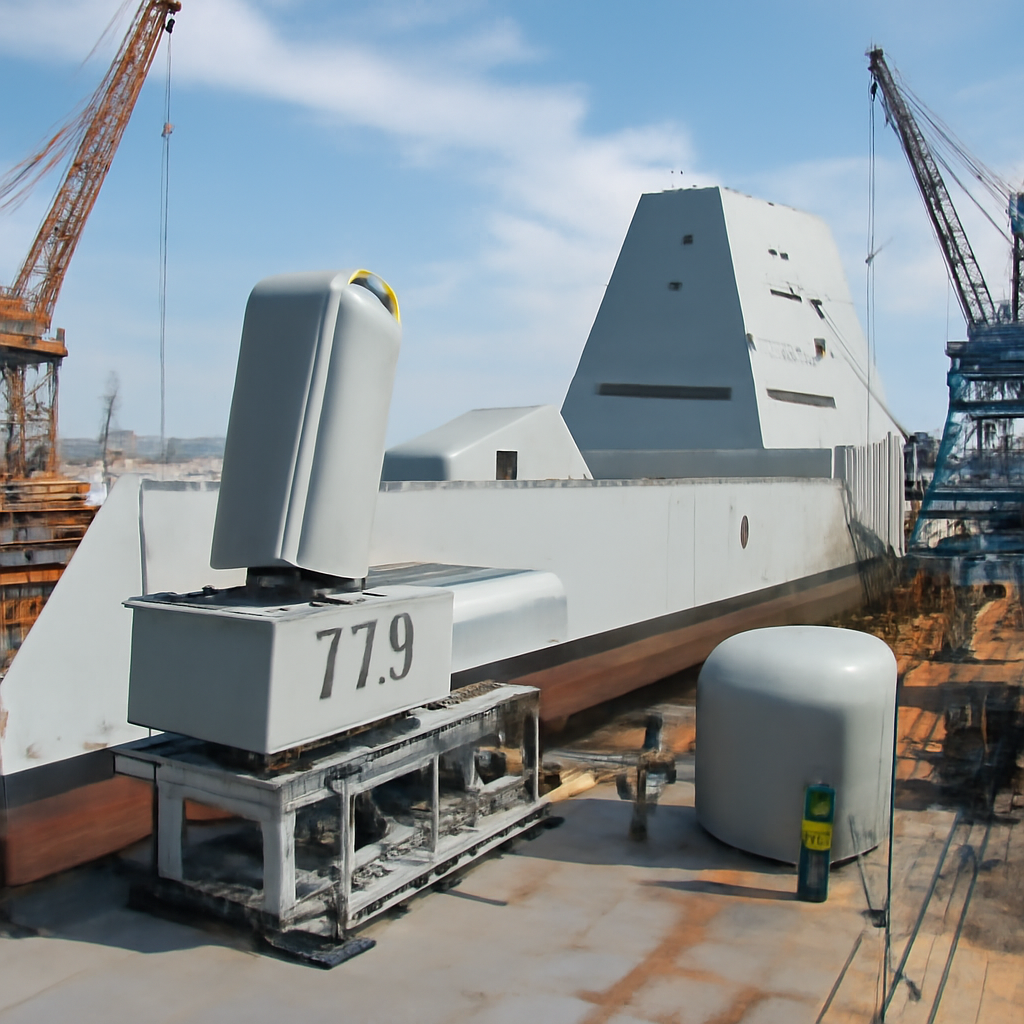
"Over the past year, the cost and schedule performance on the first ship to undergo this [IRCPS and other upgrade] work, the DDG 1000, has degraded," the Government Accountability Office reports — a blunt assessment that frames the Navy's effort to transform USS Zumwalt into the fleet's first hypersonic-missile–capable surface combatant.
USS Zumwalt (DDG-1000): what the ship will carry and when it returns
The Navy expects USS Zumwalt to be formally returned to service by September after a modernization period that began in 2023 and has run roughly 10 months behind schedule. Central to the overhaul are four new launch tubes for Intermediate-Range Conventional Prompt Strike (IRCPS) hypersonic missiles; each tube will be able to hold three missiles and replaces the destroyer’s original pair of 155mm Advanced Gun Systems (AGS). The work is packaged as the Build Yard Modernization Period (BYMP) and has proceeded in parallel with routine maintenance and expanded fuel capacity installations intended to increase range and endurance.
Integrated Power System shutdown and the causes of delay
GAO says one contributing factor to the delay was the first full shutdown and restart of the Zumwalt class Integrated Power System (IPS) since the ship’s delivery six years earlier. The IPS — a hybrid-electric power plant combining gas turbines and electric generators — can generate up to “approximately 78 megawatts of power,” the Navy told GAO, and is central to the ship’s advanced systems. Equipment failures in the ship’s complex electrical system, along with unanticipated cabling needs after a contractor cut and removed more cabling than planned in the ship’s forward section for missile launch tube installation, produced unplanned work and schedule slip.

Audit-ready is a season. It shouldn't be.
Evidence in spreadsheets, controls drifting between audits, frameworks multiplying on flat headcount. Nubivance runs continuous compliance on Rapid7 Cyber GRC - SOC 2, HIPAA, ISO 27001, PCI, CMMC.
End the scrambleProgram changes, costs, and industrial limits
To address the unexpected labor and technical tasks, the Navy modified its BYMP contract with Huntington Ingalls in August 2025, adding 230,000 hours at a cost of $20 million. GAO reports the estimated cost to upgrade all three Zumwalt class ships rose from $1.8 billion to at least $2 billion. Separately, GAO’s annual assessment places the unit cost of each DDG-1000 destroyer, inclusive of research and development, at just over $10.6 billion, with total acquisition costs for the program near $32 billion. For context reported by GAO, the price of a new Flight III Arleigh Burke-class destroyer was around $2.5 billion per a Congressional Budget Office figure cited in the report.
IRCPS missile production, costs, and testing
The missile that will arm Zumwalt at sea is the same common missile the Army is procuring in a ground-based configuration called Dark Eagle. GAO explains the weapon uses a multi-stage booster that releases an unpowered hypersonic boost‑glide vehicle which then glides at high speed through the atmosphere and maneuvers toward a target. GAO highlights industrial and cost constraints: prime contractor Lockheed Martin’s facility is currently capable of producing a maximum of six to seven rounds per year, short of the roughly 12 rounds per year GAO says are necessary to stabilize production. Over time estimates have shifted — in fiscal year 2020 the Navy estimated about $31 billion in lifecycle costs for 262 missiles; in 2024 GAO records that the Navy increased its lifecycle estimate to $41 billion while reducing the planned buy to 224 missiles. The Army plans to spend more than $10 billion to procure 48 missiles and associated ground support equipment. As of April 2026, GAO reports the average estimated unit cost per missile at approximately $67 million.
What this means for the Navy, the Army, and Lockheed Martin
- Navy: Zumwalt’s September return will mark the service’s first at-sea platform certified to carry IRCPS, but GAO emphasizes the capability will be relatively limited and costly; the Navy is feeding lessons from Zumwalt into ongoing work on Lyndon B. Johnson and the planned Michael Monsoor BYMPs.
- Army: The ground-based Dark Eagle program shares the missile design and is sized and funded differently; GAO notes the Army plans to procure 48 missiles and ground equipment and is part of the joint effort with the Navy.
- Lockheed Martin: GAO points to constrained facility capacity as a bottleneck — production currently runs at six to seven rounds per year versus the 12-per-year rate tied to stabilized production — tying the pace of fielding to industrial expansion and steady procurement funding.
Milestones ahead and the strategic trade-offs
GAO reports the target for a first live-fire at-sea IRCPS launch has slipped to next year, while work on the future USS Lyndon B. Johnson is now scheduled for April 2027 and the USS Michael Monsoor’s BYMP is slated to begin before the end of the year. The report underscores the strategic trade-offs embedded in the program: IRCPS will give the three Zumwalt class ships a very-long-range strategic-strike role, but only in very limited numbers, constrained by missile cost, production capacity, and the small size of the ship class itself — a trio of ships reduced from an earlier plan of 32.
USS Zumwalt’s formal return to the fleet will be a clear technical milestone — the first warship in the U.S. fleet modified to fire hypersonic boost‑glide weapons — but GAO’s findings leave the Navy facing concurrent challenges: finishing integration and corrective work on DDG-1000, expanding industrial capacity, and reconciling high unit costs with a small intended inventory. The coming year’s live-fire test, and how quickly production capacity can be increased, will largely determine whether IRCPS moves from a narrowly held strategic tool to a more sustainable operational capability.



