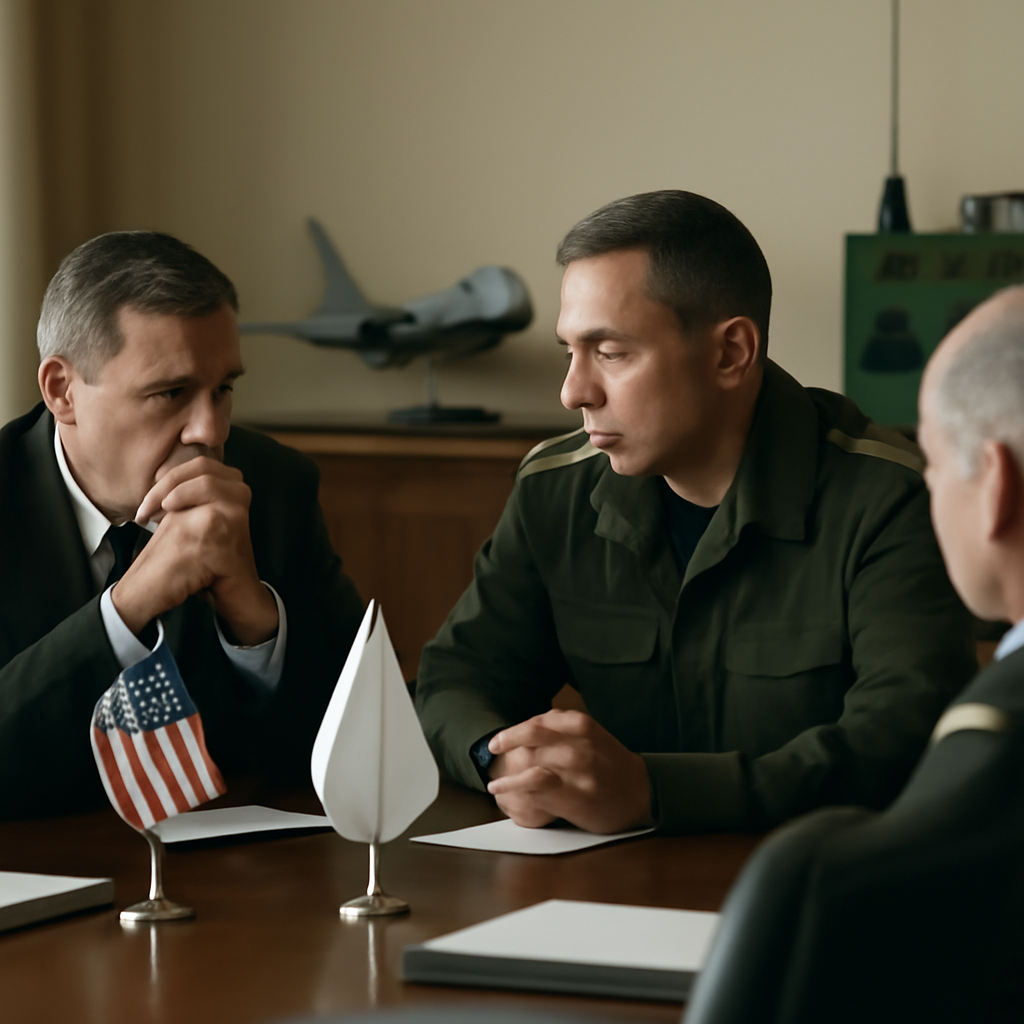
“I can say one thing here: this is an extremely sensitive issue.” — Kremlin spokesman Dmitry Peskov.
Kremlin confirms contact with Ankara over S-400s
Kremlin spokesman Dmitry Peskov said Moscow is “in contact with the Turkish side” about Ankara’s Russian-made S-400 air defenses and that Russia will “continue to maintain contact with them on this issue.” Asked whether Turkey had sought Russia’s approval for a reported transfer of the systems to a third country, Peskov declined to comment on the substance of the reports, but he framed the matter as “extremely sensitive.”
Turkish media say the S-400s could be sold to a Gulf state
Turkish press reports have asserted Ankara is considering transferring its S-400 batteries to an unnamed Gulf country. Journalist Abdulkadir Selvi wrote in Hürriyet that “the S-400s have been sold to a third country” and that “the sale will be announced today. The S-400s are going to a country in the Gulf.” Other public reporting and social-media posts named the United Arab Emirates and Qatar as potential candidates, and one commentator claimed Turkey would announce a sale to the United Arab Emirates “in order to lift the restrictions on the sale of F-35s to the country.” The Turkish government has not confirmed the reports.

This site is the portfolio.
OSINTSights runs on Cloudflare Workers, D1, R2, and Vectorize, with an AI pipeline on Hetzner ARM. Nubivance designed, built, and operates it. We do the same for clients.
See what we buildThe F-35 carrot: why Ankara might surrender the S-400s
Turkey was removed from the F-35 program in 2019 after refusing to abandon its 2017 purchase of the S-400, and by that time roughly 30 F-35A aircraft had been built for Turkey; most were later transferred to the U.S. Air Force. For Ankara, re-entry to the Joint Strike Fighter program promises significant military and industrial benefits: Lockheed Martin “anticipates that by the 2030s, more than 600 F-35s will be operated from more than 10 European countries,” and a Turkish return could revive local production of F-35 components and access to an extended European operator footprint. The source says Turkish President Recep Tayyip Erdogan appears willing to relinquish the S-400s to regain access to the F-35 program.
Sanctions, congressional approval, and U.S. politics
Re-admitting Turkey to the F-35 program would require lifting sanctions imposed under the Countering America’s Adversaries Through Sanctions Act (CAATSA). Under the conditions described in the reporting, the U.S. president would need to notify Congress that the S-400s are no longer operational, that Turkey no longer possesses any of the systems, and that Ankara has pledged not to pursue similar defense ties with Russia. Even if the White House makes such a notification, Congress could still vote if lawmakers remain unconvinced. At the NATO summit in Ankara this week, there were indications the United States might soften its stance: when asked if Turkey could be allowed back into the program, U.S. President Trump said, “Why wouldn’t we do that? … Turkey, in many ways, has been much more loyal than other countries that we think would be loyal.”
How Russia, Turkey, and the United States could respond
- Turkey: Ankara could announce a sale or transfer of its S-400 batteries to a Gulf country in order to seek removal of CAATSA sanctions and re-entry to the F-35 program; the Turkish government has not confirmed any sale.
- The United States: A presidential certification to Congress would be required to lift CAATSA-based restrictions, and lawmakers could still exercise their authority to challenge or block a re-entry into the F-35 program.
- Russia: Moscow has previously said contractual obligations tied to the S-400 purchase forbid resale without authorization; the source also raises the possibility that Russia might seek to reacquire systems to bolster homeland air defenses strained by the war in Ukraine.
Battlefield signals and the wider context
The source notes that Turkey’s S-400s have reportedly spent much of their service life in storage and that questions have been raised about the S-400’s combat performance in Indian service during a past India‑Pakistan conflict. The reporting also highlights Russia’s security needs: as Kyiv increases long-range drone and cruise missile strikes against Russia, Russian air defenses are described as under pressure, and one cited operation said operators of the NGU special unit “Lasar’s Group,” together with the 429th Separate UAV Battalion and the Joint Forces Grouping, struck an S-400 launcher in the Belgorod region using a heavy bomber drone.
The narrative in the source ends on a procedural note: even if Ankara relinquishes the S-400s, reopening the door to the F-35 would ultimately depend as much on Congress as on the White House.
Source: https://www.twz.com/air/russia-confirms-talks-with-turkey-over-fate-of-s-400s-amid-f-35-push