“Russia has around 25 submarines in the Pacific. Twelve are nuclear powered.”
Russian Pacific submarine modernisation
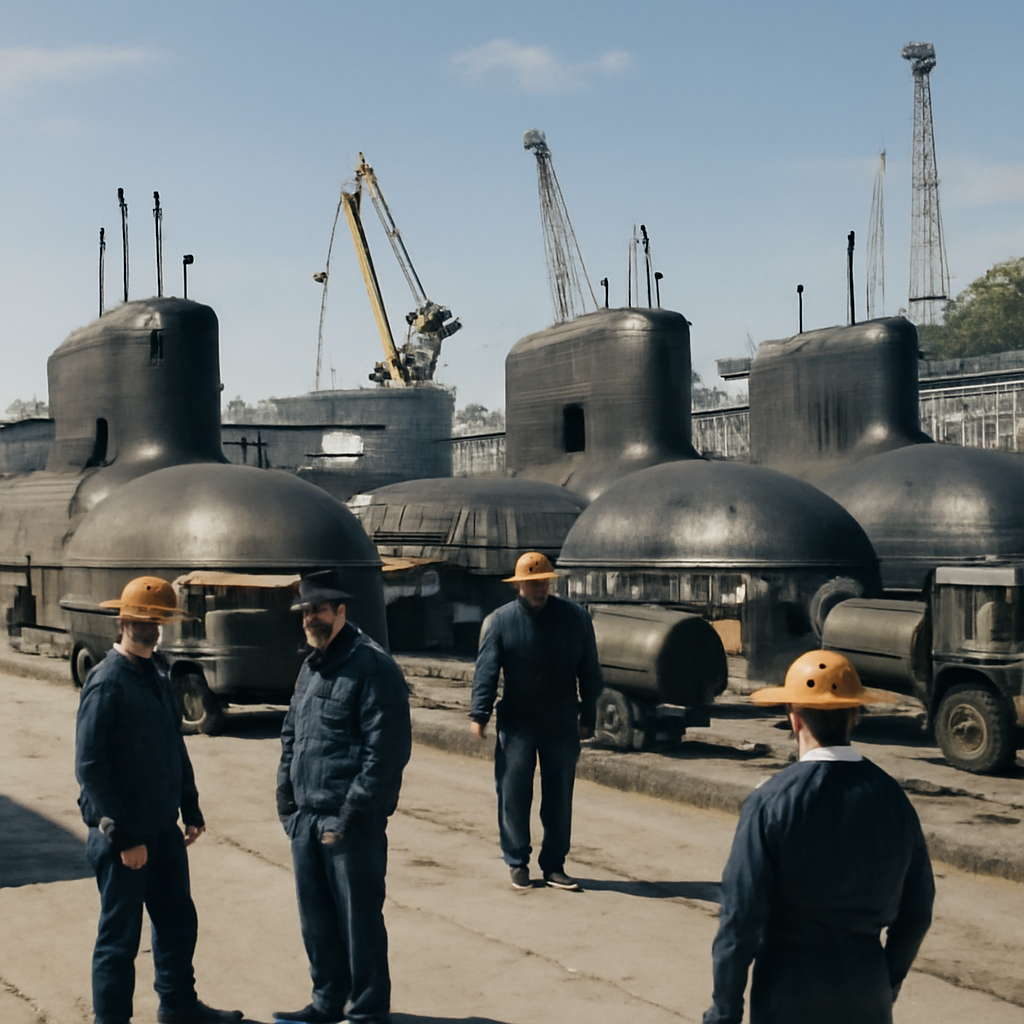
Between 2013 and March 2025 Russia provided 13 new submarines to its Pacific Fleet, eight of them nuclear-powered. The Pacific submarine force has been systematically replacing Soviet-era boats, producing a fleet that the source describes as rivaling China’s in size and sophistication. Russia’s naval modernisation in the Pacific has continued largely unhindered by its war in Ukraine.
Of roughly 25 submarines in the Pacific, 12 are nuclear powered; five of those are ballistic-missile submarines that “probably wouldn’t have a combat role in a Western Pacific war” because they carry part of Russia’s strategic nuclear deterrent. The remaining nuclear attack submarines are concentrated in a relatively small North Pacific theatre, a deployment pattern the source says maximises Russian potency in the Northwest Pacific.
China–Russia naval cooperation and incidents in the Sea of Japan
Joint exercises between Russia and China in the Sea of Japan have “increased dramatically in frequency, scale and aggression.” The two countries conducted joint naval exercises during which, in September 2024, the Japanese air force scrambled several fighters and fired flares at a Russian plane that had violated Japan’s northern airspace. In August 2025 Russia and China conducted their first joint submarine patrol in the Sea of Japan.
The source links these developments to broader strategic ties: China is Russia’s largest export market and “the main external state sponsor of Russia’s war in Ukraine,” while Russia’s advanced submarine capability has led China to seek Russian help in developing its own nuclear submarines.

Audit-ready is a season. It shouldn't be.
Evidence in spreadsheets, controls drifting between audits, frameworks multiplying on flat headcount. Nubivance runs continuous compliance on Rapid7 Cyber GRC - SOC 2, HIPAA, ISO 27001, PCI, CMMC.
End the scrambleHow Russian submarines could complicate Japan and South Korea’s response
The source argues a clear reason exists for Russia to act in a Taiwan contingency: Russia’s deepening dependence on China means it “could not afford to see China fail in an attempt at subjugating Taiwan.” If China invades Taiwan, Russia “may well act, particularly by complicating Japan’s attempts to come to Taiwan’s aid.”
Russian capabilities that could complicate regional responses include highly concentrated, quiet nuclear attack submarines capable of severing undersea cables linking Japan and South Korea — actions the source describes as “more difficult” for China’s currently noisier submarines. Advanced missile strike capabilities also matter: missiles launched from Russian-controlled parts of the Sea of Japan or the Sea of Okhotsk “would give the Japanese much less time to respond than those coming from closer to China.”
Implications for the United States’ Seventh Fleet and allied defence planning
Japan is home to the United States’ Seventh Fleet — described in the source as “the US’s largest forward-deployed fleet,” and one that would be crucial in responding to a Chinese attack on Taiwan. The source notes Moscow’s Pacific Fleet could be used to “tie up US forces,” a scenario envisioned in a German defence strategy document issued on 22 April that would complicate US deployments to Europe in the event of a simultaneous Russian invasion of the Baltic states.
That potential for strategic diversion — Russian submarine operations in the Northwest Pacific tying allied resources — is presented as a deliberate contribution Russia could make to a wider conflict dynamic, not merely an incidental byproduct of naval operations.
What this means for Australia, Japan, and the United States
- Australia: As its relationship with Japan “goes from strength to strength,” the source concludes that “Russian submarines need to become a factor in Australian defence planning.” Canberra is advised to factor in the plausible risk of Russian participation in a Western Pacific conflict and the specific maritime threats Russia could pose.
- Japan: Tokyo has cause for concern. Ongoing territorial friction with Russia over the Kuril Islands, repeated airspace incidents, and joint China–Russia naval activity in the Sea of Japan have already made “some in Tokyo nervous.” The prospect that undersea cables could be targeted, or that missile approaches from the north would shorten reaction times, directly affects Japan’s contingency planning.
- United States: The Seventh Fleet’s centrality to any Taiwan contingency would be complicated if Russian Pacific forces seek to tie up US assets. Allied planners must weigh the possibility that Moscow would act to protect a failing Chinese operation, thereby shaping the allocation of US naval and logistical resources in the region.
The central claim of the source is straightforward: Russia has both motive and means to influence a Western Pacific conflict through its modernised Pacific submarines. Whether Moscow’s European priorities ultimately take precedence is uncertain; what is clear from the facts presented is that Canberra, Tokyo and Washington face a calculable new variable — a concentrated, modern Russian nuclear-submarine presence in the Northwest Pacific that could complicate allied responses to a Taiwan contingency.