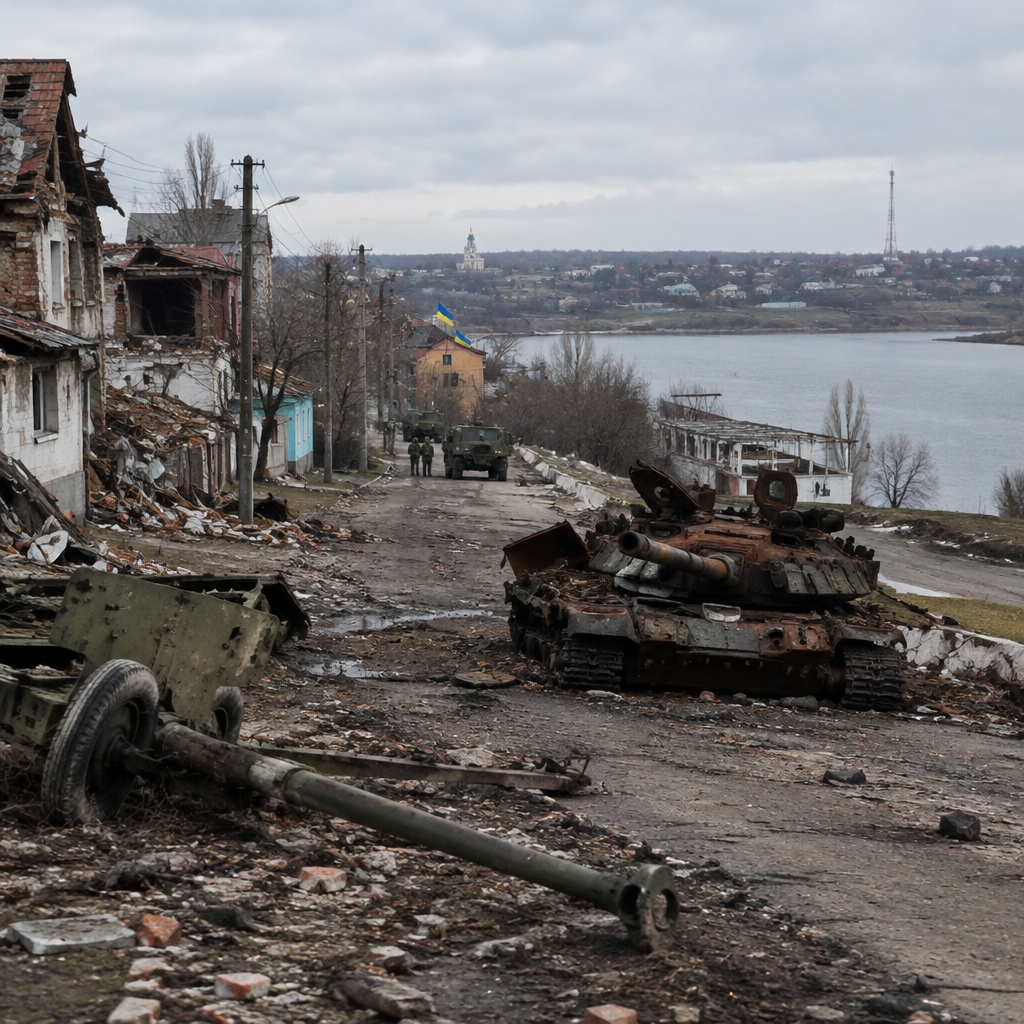
"It took us about a year to eliminate what they have now restored during the ceasefire," Oleksandr Prokudin told Ukrainian Pravda — a terse summation of Kyiv's dismay after a White House-brokered, localized truce in the riverside town of Oleshky.
Oleksandr Prokudin: Russian forces rebuilt positions and prepared to intensify strikes
Prokudin, the military governor of Kherson region, said Russian forces used the ceasefire to carry out personnel rotations, rebuild “completely destroyed positions,” and resupply with food, generators, and fuel. He charged that the occupiers moved drones, artillery and ammunition into Oleshky, and searched basements to set up hideouts for drone operators. Prokudin warned that an increase in enemy strikes should be expected and cited a figure for current activity: “the occupiers are launching approximately 700–800 drone attacks per day, deliberately terrorizing the civilian population of Kherson and the coastal communities,” and “They will 100% increase.”
The White House-mediated ceasefire brokered by First Lady Melania Trump
The localized ceasefire was announced by First Lady Melania Trump, who said the situation in Oleshky was “dire” and described the remaining population as primarily elderly residents “who urgently need medical attention, medicine, food, and clean water.” The First Lady and her representative said they “worked directly with Russian and Ukrainian leadership to define the terms of the localized ceasefire,” and characterized her involvement as “in her formal role as Exclusive Intermediary.” The operation began at 3 a.m. Kyiv time on Oct. 27 and ended late on Nov. 1, a period that Ukrainian human rights ombudsman Dmytro Lubinets called the longest such arrangement since February 2022.

Audit-ready is a season. It shouldn't be.
Evidence in spreadsheets, controls drifting between audits, frameworks multiplying on flat headcount. Nubivance runs continuous compliance on Rapid7 Cyber GRC - SOC 2, HIPAA, ISO 27001, PCI, CMMC.
End the scrambleHow the operation unfolded: demining, aid, surveillance and evacuations
According to Lubinets and reporting by Radio Free Europe/Radio Liberty, Russian forces began demining roads to Oleshky after the ceasefire took effect; that process continued through Oct. 29. Humanitarian supplies — food, medicine, drinking water, and specialized hospital equipment — were then delivered. Lubinets and his Russian counterpart Yana Lantratova, accompanied by teams and journalists from Ukraine, the U.S., and Russia, entered the occupied city to oversee aid distribution and assist residents seeking evacuation.
Residents were offered three options: remain in Oleshky and receive humanitarian assistance, leave for Ukrainian-controlled territory, or travel to Russia or territory under Russian control. Lubinets said that “all people who wanted to be evacuated from Oleshky to Ukraine are now in Ukraine,” and that he had “personally overseen the evacuation process and spoken with residents to establish whether their decisions were voluntary.” Footage and images circulated: evacuees wrapped in Ukrainian flags were shown stepping off a bus near Chernihiv on Oct. 31 after transit through Russia and Belarus.
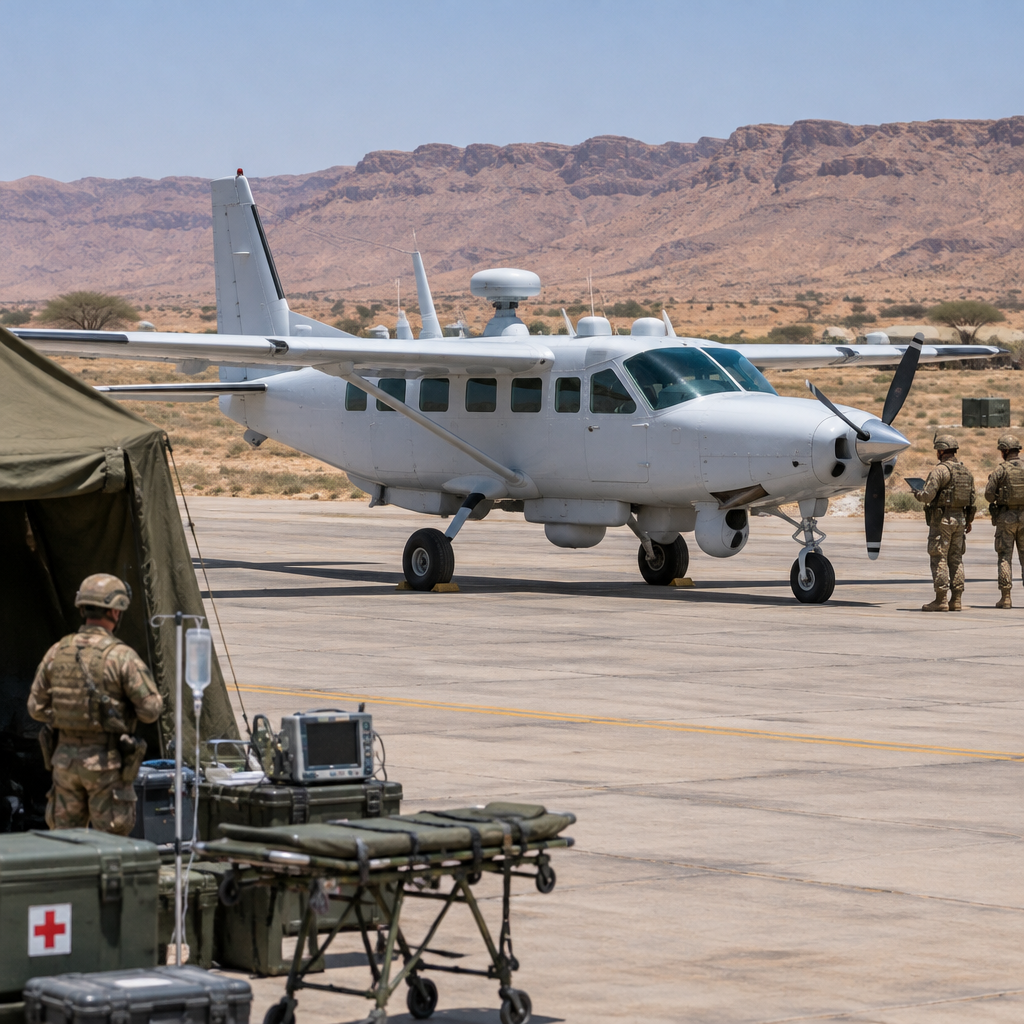
The Ukrainian delegation also “experimented with drone surveillance and direct communication between Ukrainian and Russian military representatives to monitor compliance,” Arakhamia said, a measure intended to verify localized ceasefires beyond competing intelligence claims.
Ukrainian military claims and President Zelensky’s response
Within days of the truce ending, Ukrainian military officials and the president expressed alarm. Yaroslav Moroz, head of the Unmanned Systems Department of the 34th Separate Marine Brigade of the Ukrainian Navy, told RFE/RL on Nov. 6 that Russia had brought more than 1,000 troops into the area, reoccupying positions from which they had been driven out and “effectively moving about 20 kilometers closer to the line of contact.” Moroz said Russian forces moved “a large quantity of equipment and ammunition into the Oleshky hospital, knowing that the Armed Forces of Ukraine would not attack the building, as local residents are receiving medical treatment there.”
On Nov. 8, President Volodymyr Zelensky posted on X: “Unfortunately, under the cover of a humanitarian operation in Oleshky, the Russian army carried out a major rotation of personnel and equipment on the left bank,” adding that additional occupation forces had been brought into Oleshky and the surrounding community and calling for the Armed Forces of Ukraine to present proposals for additional protection of lives in Kherson from Russian terror.
What this means for Kherson residents, Ukrainian forces, and negotiators
- Kherson residents: The town, once home to some 24,000 people before the invasion, had dwindled to fewer than 2,000, mostly senior citizens and children who could not leave, according to the White House. Residents who remained were given humanitarian aid or the chance to evacuate; Ukrainian officials now fear the rebuilt positions will be used to renew cross-river bombardment of Kherson City.
- Ukrainian forces and commanders: Military leaders report that Russian forces have reconstituted positions and massed troops during the pause, and they say they are preparing for possible new assaults. Claims include the use of protected civilian facilities to conceal materiel and operators, complicating targeting decisions.
- Negotiators and future humanitarian pauses: The ceasefire demonstrated technical approaches — demining, escorted aid delivery, drone surveillance and direct military communications — intended to verify compliance. But Ukrainian leaders’ subsequent complaints and claims about force movements raise questions about whether similar localized pauses can be negotiated and implemented without tactical exploitation.
Russia has not officially commented on the Ukrainian claims, and TWZ said it could not independently verify those assertions. After what Ukrainians claimed transpired following the ceasefire, the future of such endeavors is unclear — leaving residents, military planners and mediators to weigh the humanitarian gains against the risks of strategic exploitation.