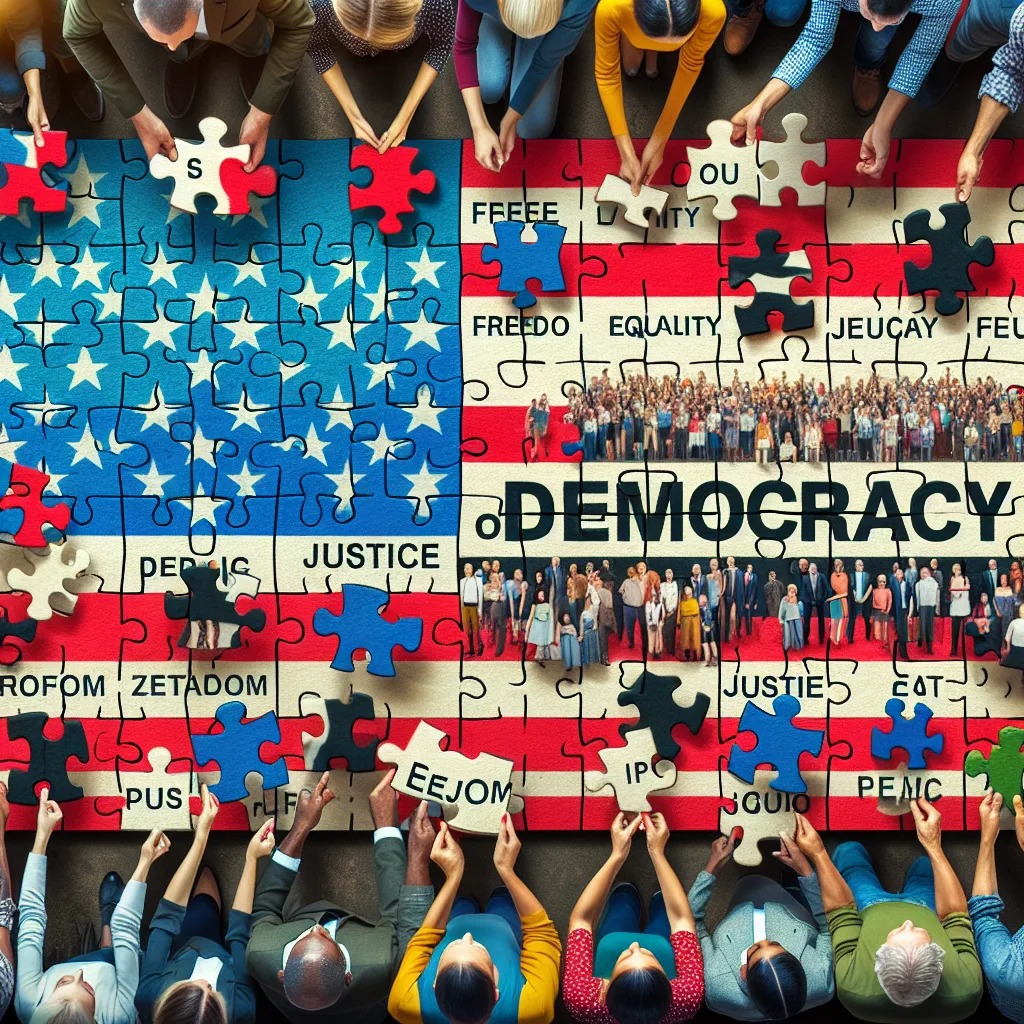
Imagine a world where humanity has been transported to an alien planet, stripped of the legacies of Earth’s political systems. In this clean slate, how would we choose to govern ourselves? Would we replicate the representative democracies that emerged from the Enlightenment, or would we forge a new path, informed by the technological and philosophical advancements of the 21st century? As we stand at a crossroads in governance, the question is not merely academic; it is a pressing challenge that demands our attention.
The foundations of modern representative democracy were laid in the 18th century, a time when communication was slow, travel was arduous, and information was scarce. The framers of the U.S. Constitution, for instance, designed a system that balanced the need for representation with the limitations of their era. They could not have envisioned the instantaneous communication and global interconnectedness that define our current age. Today, we find ourselves grappling with the limitations of these legacy systems, which often struggle to keep pace with the rapid changes in society, technology, and global dynamics.
As we navigate the complexities of contemporary governance, it is essential to understand the current landscape. In recent years, many democracies have faced significant challenges, including political polarization, declining public trust, and the rise of authoritarianism. The COVID-19 pandemic further exposed the vulnerabilities in our systems, highlighting the need for adaptability and resilience. In this context, the question of how to rethink democracy becomes not just theoretical but a matter of urgent necessity.
Currently, various movements and thinkers are advocating for a reimagining of democratic processes. From deliberative democracy, which emphasizes citizen engagement and consensus-building, to digital democracy, which leverages technology to enhance participation, there is a growing recognition that traditional models may no longer suffice. For instance, the use of online platforms for public consultations has gained traction, allowing for broader participation in decision-making processes. However, these innovations also raise concerns about security, misinformation, and the digital divide, which must be addressed to ensure equitable access.
Why does this matter? The implications of rethinking democracy extend far beyond political theory; they touch on the very fabric of society. A more inclusive and responsive governance model could enhance public trust, foster civic engagement, and ultimately lead to more effective policy outcomes. Conversely, failing to adapt could exacerbate existing divisions and undermine the legitimacy of democratic institutions. As we consider the future of governance, it is crucial to weigh the potential benefits against the risks of inaction.
Looking ahead, several trends are likely to shape the future of democratic governance. The rise of artificial intelligence and big data analytics could transform how governments engage with citizens, enabling more personalized and responsive services. However, this also raises questions about privacy and surveillance that must be addressed. Additionally, as climate change and global crises become increasingly pressing, there may be a shift toward more collaborative and transnational governance models that transcend traditional state boundaries.
As we ponder these possibilities, one must ask: what is at stake if we fail to rethink our democratic systems? The answer is profound. The health of our democracies, the trust of our citizens, and the very future of our societies depend on our ability to adapt and innovate. In this new era, we must not only ask how we govern but also who we are as a society. The challenge before us is not merely to preserve democracy but to ensure it thrives in a rapidly changing world.