Tag: public trust
165 articles

OPM Proposes Sweeping NDA Rule for Federal Employees
The Office of Personnel Management wants to shake up the way federal employees handle confidential information, proposing a new nondisclosure agreement rule that would require all employees to sign a pledge protecting internal agency details. If implemented, the rule could have far-reaching implications for whistleblowing and employee accountability.

Australia's Defence Strategy Lags in Information War Arena
Australia is losing ground in a different kind of battle – one of perception and understanding – where adversaries are manipulating what people believe to be true, eroding public trust and turning domestic audiences into a vulnerability in times of crisis. By shaping perceptions through information, our nation risks being left behind in the information war arena.

Data Breaches Underscore Growing Pains in Secure Storage
In today's digital age, the thing that keeps your personal and professional life safe can suddenly become its biggest vulnerability - and that's a growing concern that's on everyone's mind. As data breaches continue to make headlines, it's clear that data security is no longer just an IT issue, but a pressing matter that affects us all.

rewire democracy: Exclusive Best Reforms
Join Nathan E. Sanders and me in Cambridge on October 22 for talks at Harvard Kennedy School’s Ash Center and a book signing at Cambridge Public Library, then tune in online on October 23 for a virtual discussion with Data & Society as we unpack how algorithms, platforms, and data are reshaping democracy—and what practical steps can make civic systems more resilient.

social media surveillance: Shocking, Risky Overreach
Imagine a world where a joke or complaint could trigger visa revocation — that’s now a real risk as U.S. agencies turn automated social‑media scans into tools for immigration enforcement. The Brookings report warns this scale and machine‑driven scrutiny can misread context, chill speech, and impose life‑altering consequences without clear oversight.

Cyberattack Disrupts European Airports: Stunning Risk
When cyberattacks knocked critical systems offline at several European airports, flights were delayed, baggage and check‑in went manual, and security teams scrambled to contain the fallout. The disruption was a stark reminder that modern air travel depends as much on fragile networks as on runways — and those networks can ripple through safety, commerce and public confidence.
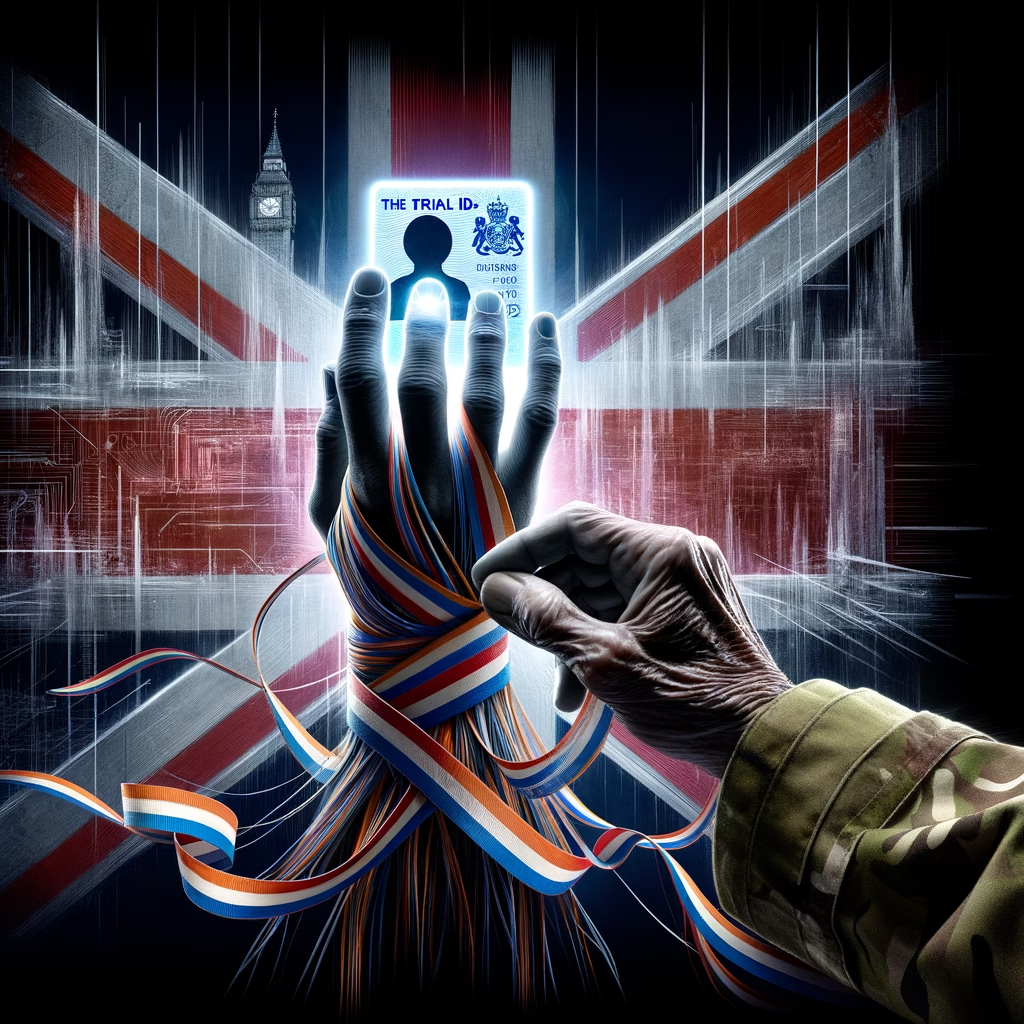
digital identity Must-Have UK Veterans Trial Boosts Trust
The UK is recruiting Armed Forces veterans to pilot a national digital ID — a practical and symbolic test of whether a secure, user-friendly system can win public trust or instead expose privacy and inclusion pitfalls.

100 trillion signals: Stunning Risk, Best Defense
Microsoft says its systems process over 100 trillion signals every day to spot threats — but AI-powered attackers are getting faster and craftier, so sheer volume alone won’t keep us safe. That reality means defenders must pair massive telemetry with smarter correlation, stronger identity protections and clearer policies to stay ahead.

58-hour delay: Stunning £14m fine exposes risky lapse
The ICO fined Capita £14m after a 58‑hour delay in reporting a 2023 breach that exposed 6.6 million records — a stark reminder that slow incident response can magnify harm and erode public trust.

Capita fined £14m: Shocking Risky Wake-up Call
When the company you trust with your data leaves the front door ajar, millions can pay the price — Capita was fined £14m after a 2023 breach exposed 6.6 million records, a sharp reminder that outsourcing data demands airtight security and clear accountability.

nationally significant cyber incidents: Stunning Dire Wave
The UK’s NCSC recorded a record 204 nationally significant cyber incidents — a staggering 130% jump — forcing a wake-up call about who gets hurt, what counts as “nationally significant,” and whether our defenses can hold against the next wave.

automated number plate recognition: Must-Have or Risky?
The Home Office is exploring a £60m market engagement to build a centralised app that taps the UK’s ANPR network—promising faster alerts and smarter investigations while sparking vital debates about privacy, oversight and security.

cyber incident: Explosive FEMA Cover-Up Risk
Leaked emails and logs now cast doubt on FEMA’s insistence that last month’s sweeping security firings weren’t cyber-related, raising urgent questions about hidden breaches, operational risk, and public trust. As investigators sift the evidence, people deserve clear, timely answers about whether critical disaster systems or personal data were exposed.

digital ID Must-Have or Risky? Exclusive Warning
The UK says its new digital ID will be optional — a welcome reassurance after a 2.76 million-signature petition — but critics warn voluntariness won’t mean much without strong legal safeguards, inclusive design and independent oversight. Whether it stays a genuine choice or becomes a de facto requirement will come down to implementation, privacy protections and how businesses adopt the system.
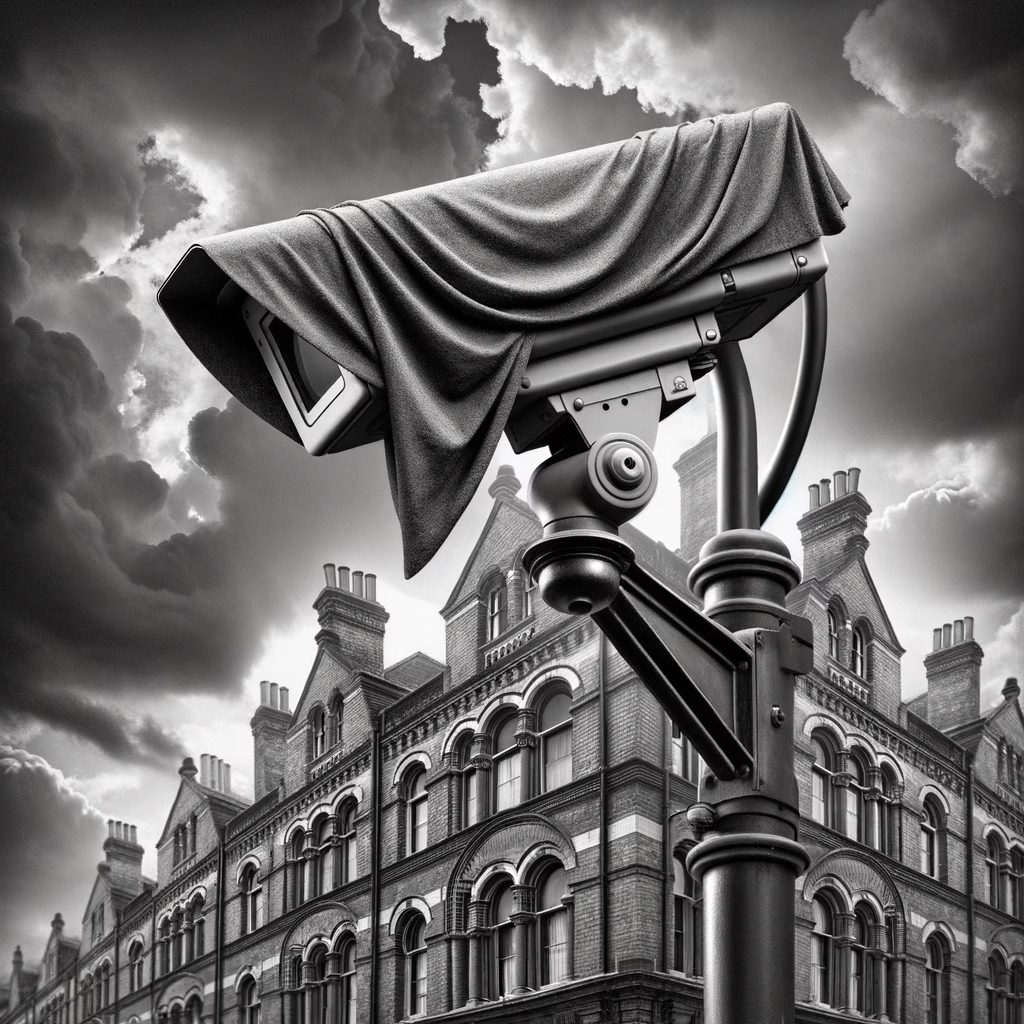
live facial recognition: Risky Must-Have for Safety
The government is encouraging police to try live facial recognition after the Met praised its Croydon deployment, but with courts and privacy watchdogs raising legal and bias concerns, ministers will publish guidance instead of forcing a nationwide roll‑out.

Elon Musks X: Stunning, Risky Government Exit Looms
A senior UK minister has warned the government may pull its presence from Elon Musk’s X amid concerns over violence and disinformation, forcing a rethink of how officials communicate and hold platforms to account. With the Online Safety Act in play, ministers must balance public trust against the risk of ceding the conversation to bad actors.

mandatory digital ID: Risky, Must-Have Debate
Can the UK roll out a mandatory digital ID while trust, politics and privacy norms are in flux — or will a rushed plan deepen exclusion and surveillance risks? This debate matters because the right mix of design, legal limits and public buy-in could make everyday life easier, but the wrong choices could erode rights and trust for years.

political attribution: Risky, Stunning Misstep
When bank apps, council sites and supermarket loyalty systems all hiccup, Chancellor Rachel Reeves pointed the finger at Moscow — but thin public evidence and sceptical security experts suggest the truth could be messier. The row highlights how rushed political blame can backfire and why the UK urgently needs clearer, evidence-based rules for naming cyber attackers.

Online Safety Act: Must-Have or Risky Weakness?
Charities warn Ofcom’s cautious enforcement of the Online Safety Act could leave vulnerable people exposed — will the regulator use its sweeping powers to bite or merely bark? Parliament is pushing for clearer escalation and faster remedies as charities, tech teams and platforms clash over whether enforcement will actually protect children and curb online harm.

New York Blood Center Must-Read: Critical Data Risk
About 194,000 people were affected when the New York Blood Center disclosed a breach exposing Social Security numbers, IDs, bank details and in some cases health information — a stark reminder that even trusted health organizations can become targets. If you were notified, enroll in offered monitoring, watch your accounts closely, and tighten passwords and fraud protections now.

retention incentive program: Stunning Risky Mismanagement
When watchdogs say CISA mismanaged a retention bonus program, it’s not just about wasted money — it’s about trust, talent gaps, and the agency’s ability to defend our networks. The OIG’s findings force a careful balance: tighten controls and accountability without hamstringing efforts to recruit and keep the cyber experts we need.

Rewiring Democracy: Must-See Tour Dates & Best Talks
Join the Rewiring Democracy tour this fall—four can’t-miss events in Cambridge, online, Strasbourg and Toronto where the author turns ideas into lively public debate through talks, signings and forums; check host pages for registration and updates.

agentic AI: Must-Have, Risky Tool for Government
Agentic AI can turbocharge government services—speeding claims, coordinating complex workflows, and scaling scarce expertise—while also raising urgent questions about accountability, bias, and trust. Policymakers must balance innovation with auditable design, human oversight, and clear redress so these powerful tools serve citizens rather than undermine them.

stream keys: Stunning Risky Exposure at Pentagon
A tiny, overlooked stream key left DoD livestreams dangerously open to hijack—proof that small credential slip‑ups can let adversaries impersonate official channels and spread confusion. The Pentagon says it’s fixed the issue, but stronger secrets hygiene and policy changes are still needed to stop a repeat.