"You can reasonably take the provocative stance that in the AI race, energy actually doesn't matter, the problem's so bad," Tori Shivanandan, president and chief operating officer at Radiant Nuclear, said Monday at Fortune’s Brainstorm Tech event in Aspen, Colo.
Radiant Nuclear: one-megawatt microreactors headed for Buckley Space Force Base
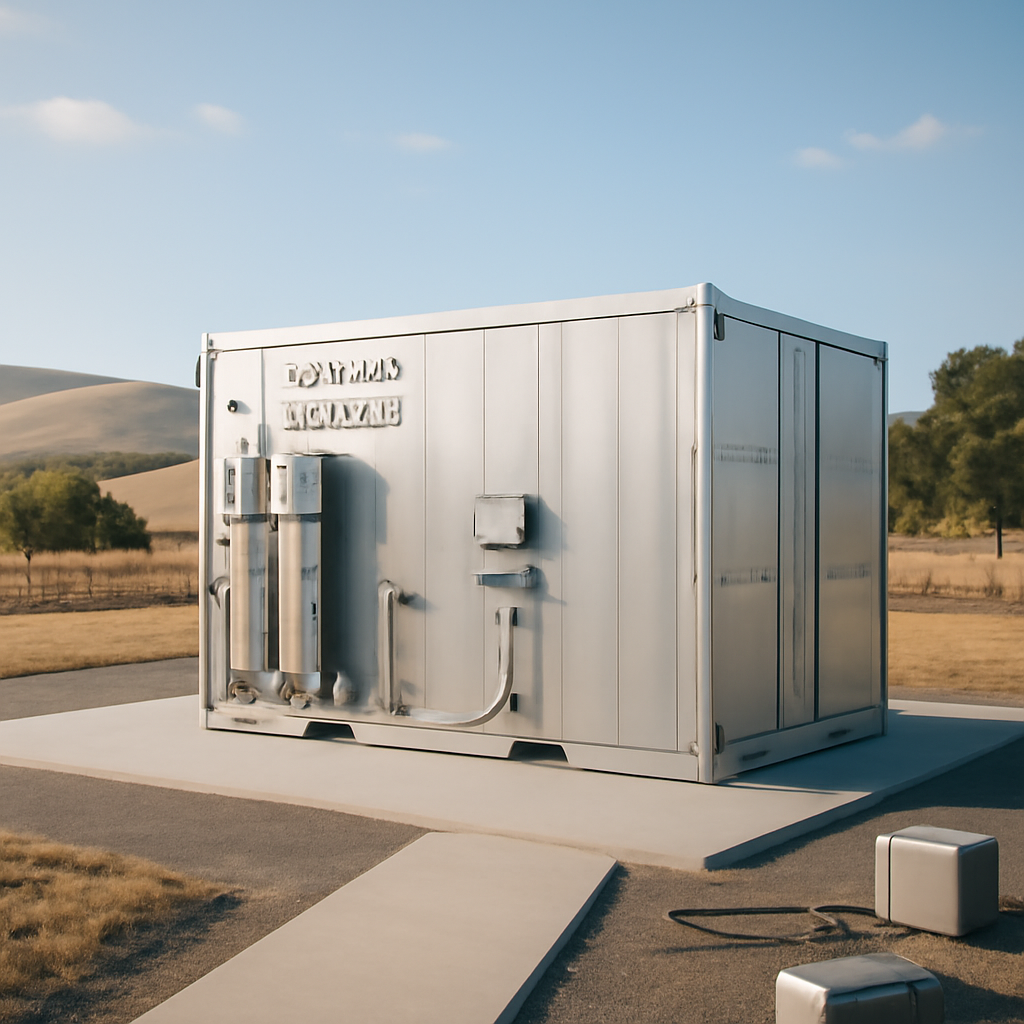
Radiant Nuclear has told audiences and reporters that it is preparing to place small nuclear reactors at U.S. military sites as a hedge against grid fragility. According to the company, it is "about 18 months away from delivering our first reactor to a U.S. military base," and plans to deploy at Buckley Space Force Base in Aurora, Colo. The company also said testing will begin this summer at the Idaho National Laboratory, Axios Denver reported.
Shivanandan framed the pitch around three failures in critical infrastructure—power generation, transmission, and system use—and argued that one-megawatt microreactors could address planning questions the Pentagon is asking now: "When the grid is under attack, where do we need to make sure that power is up and consistent? These are use cases for one megawatt micro reactors." Radiant presented the U.S. military as an important early customer because, the company said, failures at installations can have cascading consequences.
House Armed Services Committee draft: a civil reserve industrial base for commercial facilities
House lawmakers have inserted a provision into the draft defense policy bill that would create a "civil reserve industrial base" made up of commercial companies that could support the Pentagon during peacetime and contingency operations. The program would be housed under the Pentagon’s acquisition and sustainment shop and seek to enhance "the availability and responsiveness of sustainment and repair capabilities" for military operations.
Legislative language in the draft describes several concrete elements: the Pentagon would identify commercial facilities near areas of operation, including each combatant command, and facilities in allied and partner nations; companies would provide facilities and personnel; and there would be "arrangements to store, maintain, and manage replenishment parts and related equipment." A companion provision would push the Army to modernize its organic industrial base by adopting an updated resourcing model to reduce depot production costs and make them competitive with the private sector, and it would limit the Army Secretary from "decreasing workload at an Army depot by more than 10 percent" without congressional notice.

Audit-ready is a season. It shouldn't be.
Evidence in spreadsheets, controls drifting between audits, frameworks multiplying on flat headcount. Nubivance runs continuous compliance on Rapid7 Cyber GRC - SOC 2, HIPAA, ISO 27001, PCI, CMMC.
End the scrambleSaronic’s robot surface vessel rescues downed Apache crew in CENTCOM region
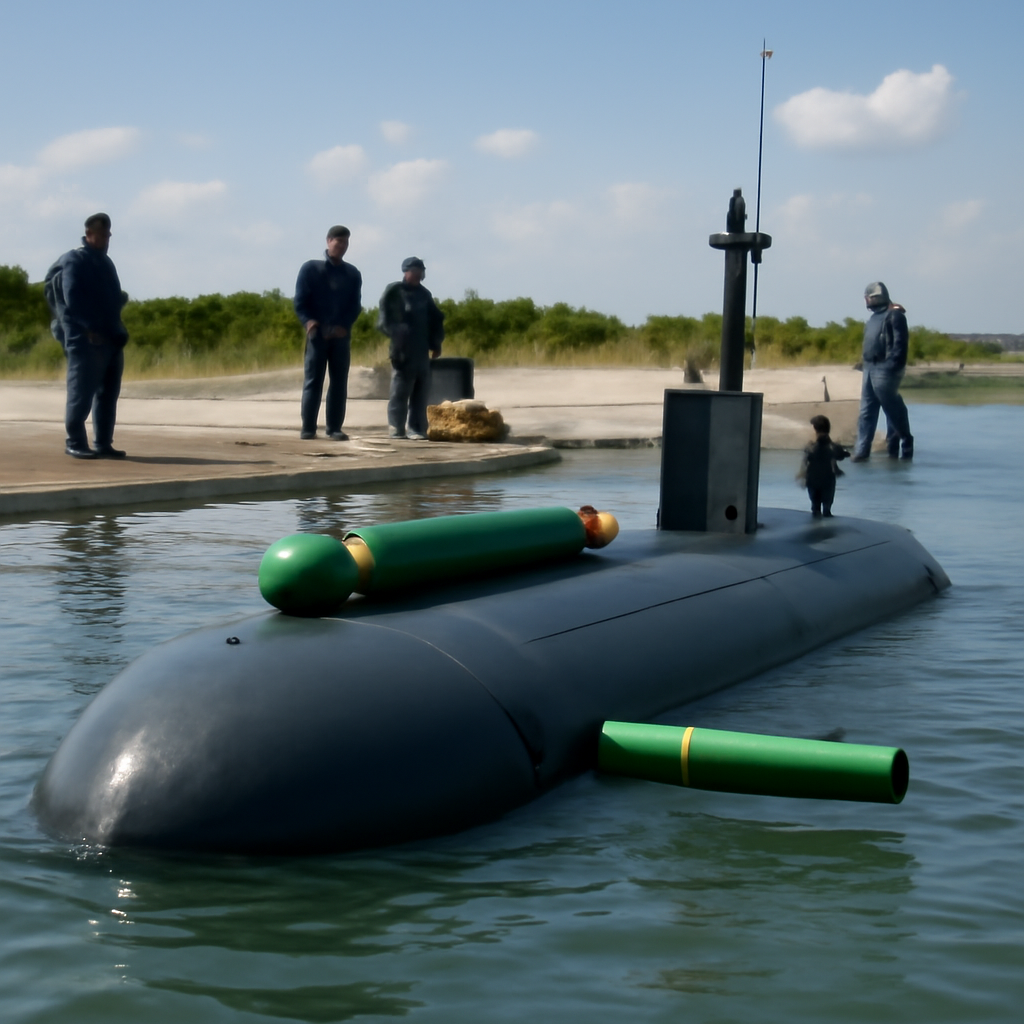
A 24-foot unmanned surface vessel built by Saronic was used to recover the crew of an Apache helicopter downed near the Strait of Hormuz. The Navy drone, which was sent to the CENTCOM region in March and is operated by Task Force 59, picked up crew members and moved them to a location where they were retrieved by helicopter, Defense One’s Thomas Novelly reports. The episode is a high-profile example—within the article’s reporting—of unmanned systems conducting lifesaving recovery work in a contested maritime environment.
Industrial moves, contracts, and corporate shifts: Raytheon, Space Force, banned Chinese firms, and Epirus hires
- Raytheon plans a $100 million expansion of its Portsmouth, R.I., facility that produces and tests Patriot missile subcomponents. Tom Laliberty, Raytheon’s land and air defense systems president, said the expansion will increase production, lower tier air and missile defense sensor testing, and help speed up deliveries.
- The Space Force awarded $437.7 million across two contracts to produce the first satellites for the Protected Tactical Satellite Communications – Global (PTS-G) program. According to a news release, the satellites will provide anti-jamming and other countermeasures to maintain connectivity in contested communications environments.
- The Pentagon released an updated list of banned Chinese companies; e-commerce conglomerate Alibaba is a new addition alongside Baidu and BYD. Alibaba called its inclusion "baseless" and said it will take "all available legal action" against attempts to misrepresent the company, according to CNBC’s Anniek Bao.
- Counterdrone firm Epirus expanded its leadership team, naming Mark Cuyler as chief operating officer (formerly of Saildrone) and Mark Horton as chief people officer (formerly of Magic AI).
How the Pentagon, commercial providers, and deployed forces will respond
- The Pentagon: Faces near-term decisions about which bases and functions merit on-site, reliable base-load power and whether to contract for microreactors as part of resilient infrastructure planning; the House draft bill signals congressional interest in enlarging peacetime surge capacity via commercial facilities.
- Commercial companies (civil reserve industrial base nominees, reactor vendors): Will be asked to provide facilities, personnel, and managed stockpiles or to partner with the Defense Department for resilience services; Radiant and others will move from demonstration and testing toward base-level deployments as testing at Idaho National Laboratory and a planned delivery timeline approach.
- Deployed personnel and bases: Stand to gain alternate power sources and unmanned rescue capabilities—illustrated by the Saronic robot surface vessel recovery—while also feeling the operational effects of congressional rules tying depot workloads and the pace of industrial modernization.
The pieces in this brief—an 18-month timetable for a first microreactor delivery, summer testing at Idaho National Laboratory, a congressional push to catalog and contract with nearby commercial facilities, and an unmanned surface vessel conducting a real-world rescue—arrive together as tangible steps toward hardening logistics, power, and rescue capabilities. Each step raises the same operational question the company exec quoted at Aspen posed bluntly: when the grid or other infrastructure fails, which nodes must stay on, and how will the Pentagon, its suppliers, and Congress align to keep them working?