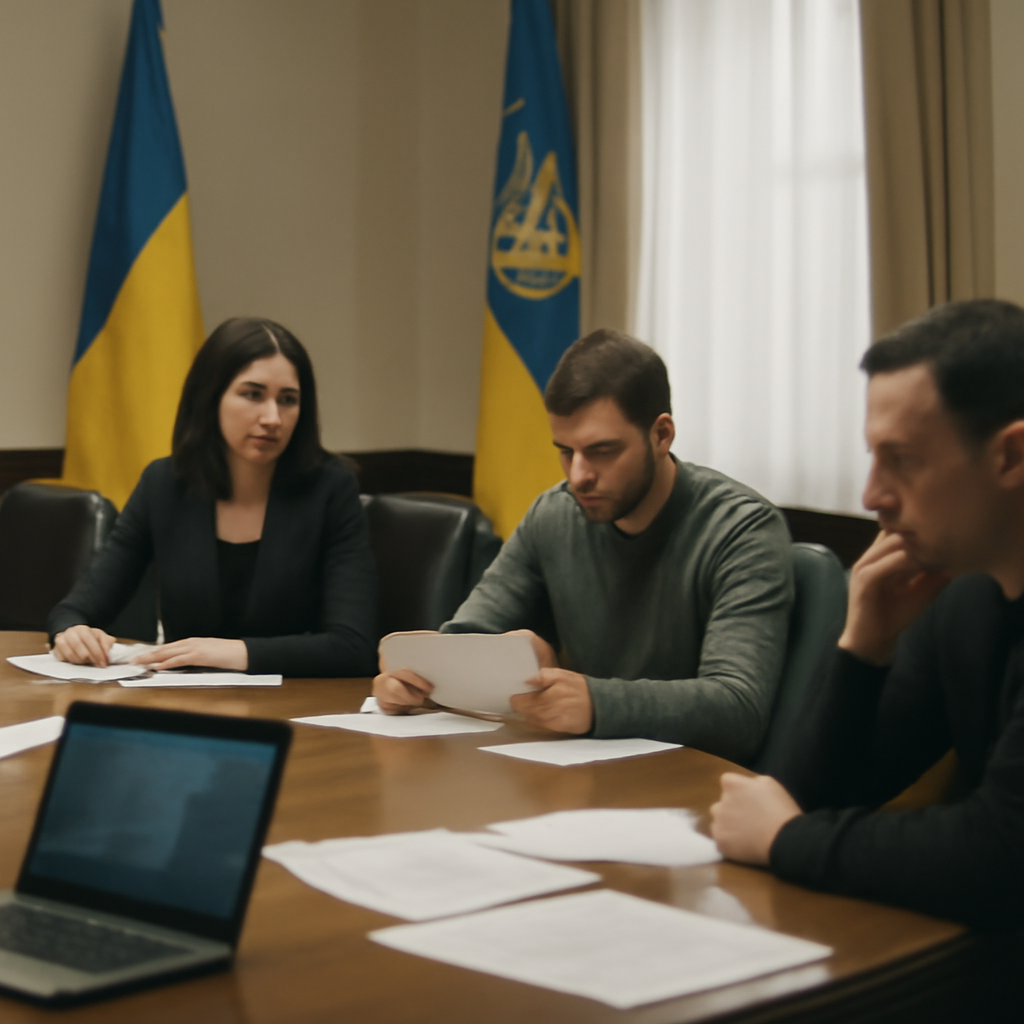
"I will not accept any position other than Minister of Defense. No other role carries the actual authority to combat procurement corruption," Mykhailo Fedorov said on Thursday, crystallizing a split that has rippled from Kyiv to the front lines.
Mykhailo Fedorov: the reformer who digitized a war effort
At 35, Fedorov became Ukraine’s youngest-ever defense minister after a long run as minister of digital transformation. The source describes him as a former software and media entrepreneur who, beginning in 2019, led the ministry to digital record-keeping, expanded broadband, and built ties with Western tech firms such as Microsoft. His work borrowed the Estonian e‑residency model, making government records more accessible and traceable — a capability the story credits with helping keep Western aid and military assistance flowing after Russia’s full-scale invasion in 2022.
During the war, Fedorov stood up programs and platforms including the Army of Drones procurement program and the Brave1 coordination platform, pushed government-profit caps to allow Ukrainian drone makers a 25 percent margin, secured Starlink access via Elon Musk and SpaceX, and promoted AI tools like Delta for drone coordination. In January, as defense minister, he proposed reforms ranging from financial incentives for enlistment and institutionalized foreign-volunteer recruitment to a strategic shift toward remote and roboticized warfare — moves he argued reduced human risk and altered battlefield trajectory.
Oleksandr Syrskyi and the pushback from the military
The clash rests partly on a competing vision and partly on the division of authority. The story profiles Gen. Oleksandr Syrskyi as a long-serving commander whose defense of Bakhmut earned him the nickname “The Butcher,” and who, as commander-in-chief in 2024, resisted Fedorov’s push to reallocate funds from conventional munitions and personnel toward robotics and drones. One former senior Ukrainian military official told the reporter that under Ukrainian law and NATO standards the minister exercises civilian oversight but “has no authority to conduct operations or plan military action.”
Not everyone quoted agreed the law is that rigid. Olena Tregub, a former government official turned anti-corruption activist, wrote that the minister is expected to ask hard questions and evaluate whether the military system is functioning effectively. Fedorov himself accused Syrskyi of preferring “backroom meetings” and “weav[ing] intrigues,” while critics suggested every leader has commercial and vested interests tied to the positions they hold — a line of argument that underpins the wider dispute over procurement and contracts.

Audit-ready is a season. It shouldn't be.
Evidence in spreadsheets, controls drifting between audits, frameworks multiplying on flat headcount. Nubivance runs continuous compliance on Rapid7 Cyber GRC - SOC 2, HIPAA, ISO 27001, PCI, CMMC.
End the scrambleThe president’s personnel shuffle: a rapid sequence of firings and appointments
On July 15, President Volodymyr Zelenskyy fired Fedorov, citing his feud with Syrskyi, and briefly offered the defense portfolio to Interior Minister Ihor Klymenko before appointing Maj. Gen. Yevhenii Khmara less than a day later. Zelenskyy spent the weekend meeting frontline commanders, and on the following Tuesday replaced Syrskyi with Maj. Gen. Mykhailo Drapatyi. Khmara and Drapatyi are described in the reporting as “highly respected, non-controversial selections.”
The process, however, sparked a political storm: street protests began within hours of Fedorov’s dismissal and continued for a tenth day, at least one senior military official resigned in solidarity, and a Tuesday poll showed 72 percent of the country disapproved of the forced removal. Public perceptions of Fedorov’s trustworthiness reportedly rose from 35 percent to 65 percent in days, while the president’s trust score moved from 54 to 59 percent.
Street protests, corruption narratives, and democratic signaling
Public reaction has tied the personnel fight to broader anxieties about corruption and Ukraine’s future. Tregub warned protesters “aren’t marching to save Fedorov” but “because they fear losing the hope that Ukraine can do better.” The story links that sentiment to a long history in which opaque deals and off‑books transactions weakened institutions — a problem many see as central to Ukraine’s European ambitions and to the conditions under which Western assistance is provided.
Fedorov's defenders point to his transparency measures and his July press briefing in which he said MoD departments had been staffed by figures tied to private companies: “We once investigated a direct contract with a massive 200% to 300% profit margin linked to a well-known individual living outside Ukraine.” The protests are occurring under martial law and amid an existential war, yet the article highlights that demonstrators have not been met with the same harsh repression seen in some other capitals — a fact the reporting interprets as evidence of a democracy under strain but able to endure public dissent.
What this means for technologists, Western aid donors, and the armed forces
- Technologists and defense‑tech companies: Firms tied to the Army of Drones, Brave1, Starlink, and AI tools like Delta will watch procurement rules and profit-cap enforcement closely. Fedorov’s policies to allow a 25 percent margin and to seed startups with grants created an ecosystem now attracting Western investment; its future depends on who controls procurement and who can certify transparency.
- Western aid donors and policymakers: The story ties continued Western assistance to perceptions of anti‑corruption. Donors will likely monitor procurement practices and public trust metrics — the reported surge in confidence for Fedorov and the 72 percent disapproval of his removal are immediate indicators they will not ignore.
- The Ukrainian armed forces and commanders: The conflict over operational authority and resource allocation — whether toward conventional forces or remote, robotic systems — will shape force structure and battlefield risk. The reported mobilization challenge is characterized not primarily as a manpower shortfall but as a trust problem, complicating already difficult recruitment and retention dynamics.
The split between Fedorov and the military command is not merely personnel drama: it is a contest over how Ukraine fights, who profits from its defense spending, and whether reforms built amid wartime exigencies survive ordinary politics. As one former official put it, the contest looks like “Game of Thrones.” How Kyiv resolves it will shape both the prosecution of the war and the broader project of building the accountable institutions Fedorov has championed.