Why the Coast Guard launched this request
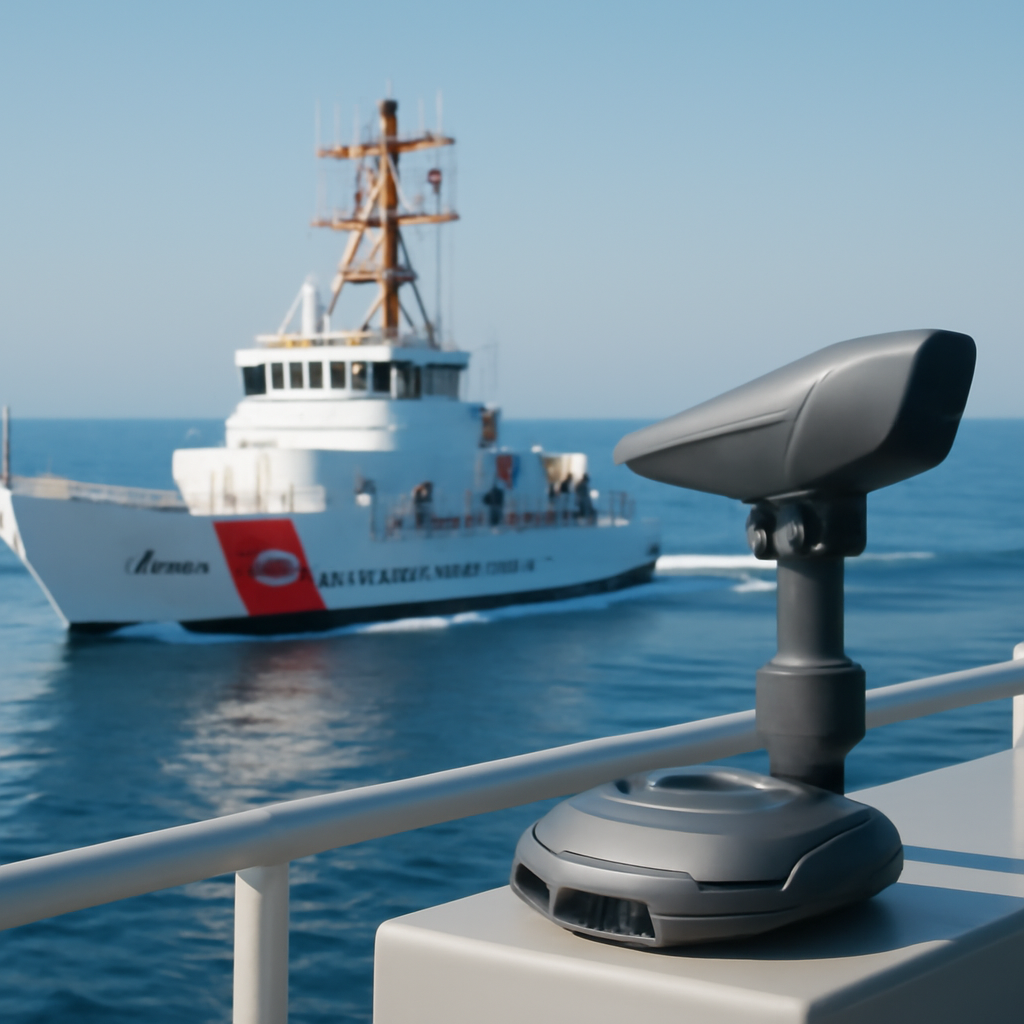
The Coast Guard Futures Development and Integration (FD&I) Directorate has opened a focused search for systems that do more than detect uncrewed underwater vehicles (UUVs): it wants ways to defeat them. The RFS stresses that “defeat technologies are an essential piece in the kill chain, as detection is only the first step to stopping the threat,” and limits consideration to systems with an effector or direct mitigating capability. Submissions that lack defeat capabilities will not be considered.
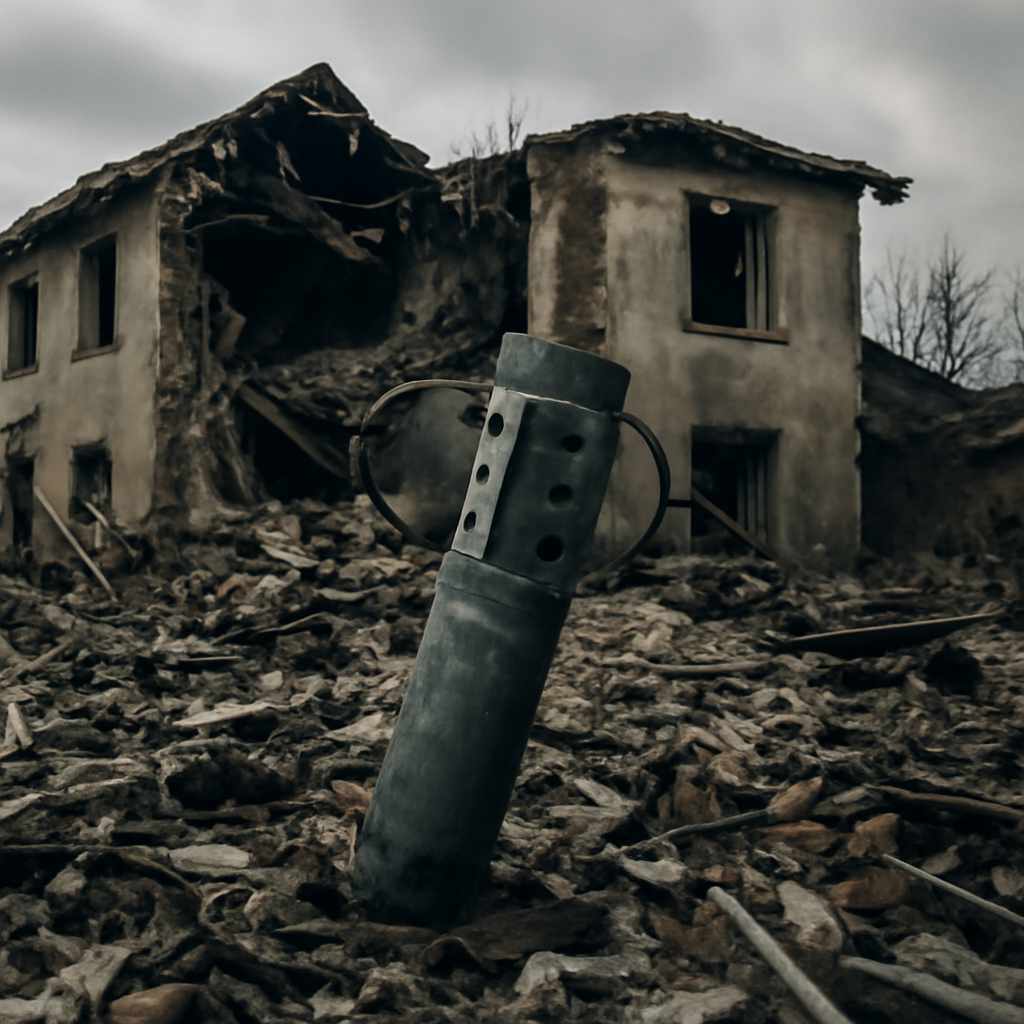
Combat examples that shaped urgency
The RFS cites a string of incidents and claims demonstrating UUVs’ growing use as weapons. In December, Ukraine’s state security service (SBU) said it used its Sub Sea Baby UUV to navigate into Novorossiysk harbor and detonate a warhead next to an Improved Kilo class diesel-electric submarine; the extent of the damage remains unclear. The source published a satellite image and a video of the event.
In the Red Sea in February 2024, U.S. Central Command (CENTCOM) posted that “CENTCOM successfully conducted five self-defense strikes against three mobile anti-ship cruise missiles, one unmanned underwater vessel (UUV), and one unmanned surface vessel (USV)”—a notation that the UUV was the first observed Houthi employment of such a device since attacks began in October 2023. The RFS also cites a reported 2021 attempt by Hamas to use a small autonomous underwater drone against Israeli naval assets; the device was destroyed by an Israeli Navy vessel while still close to shore, and an IDF aircraft then struck the launch operatives, according to the Times of Israel as quoted in the RFS.

This site is the portfolio.
OSINTSights runs on Cloudflare Workers, D1, R2, and Vectorize, with an AI pipeline on Hetzner ARM. Nubivance designed, built, and operates it. We do the same for clients.
See what we buildExisting detection and experimental defeat approaches
The Coast Guard frames the problem as twofold: broad-area early warning and the inner-layer challenge of harbor and coastal defense where UUVs are most dangerous. The piece recalls America’s Cold War-era Sound Surveillance System (SOSUS) and the Integrated Undersea Surveillance System (IUSS) as historical examples of fixed, costly undersea surveillance networks designed for large submarines rather than small autonomous vehicles.
Industry alternatives are already being fielded. The article highlights Anduril’s Seabed Sentry, a modular undersea sensor network, demonstrated with Ultra Maritime’s Sea Spear and exercised during the Navy’s Lanternfish event. Separately, Naval Surface Warfare Center Panama City and Unmanned Undersea Vehicle Group (UUVGRU) One ran a multi-national harbor protection demonstration during BALTOPS 2026 that showcased three emerging technologies: an expeditionary air curtain, an artificial kelp UUV net, and seawater neutralization charges. NSWC described the air curtain as “a rapidly deployable underwater system” that aerates water to affect UUV depth sensors, acoustics, buoyancy and propulsion; Javi Handal, a senior electrical engineer with NSWC Panama City, said, “We are testing the air curtain to see how it disrupts and hinders UUV sensors. It is a quick, expeditionary solution because it can be deployed easily.”
What the Coast Guard is asking industry to provide
The RFS requests systems with a Technology Readiness Level (TRL) of 5 or higher—defined by the Pentagon as components “integrated with reasonably realistic supporting elements so it can be tested in a simulated environment”—and prefers technologies that have been tested and demonstrated in operational settings. The Coast Guard is seeking “sensor platforms, kinetic solutions, and integrated response solutions” suitable for Ports, Waterways & Coastal Security operations and adaptable to different ports and existing detection systems. Respondents were given two weeks from the RFS posting to submit proposals.
What this means for technologists, port operators, and the U.S. maritime services
- Technologists and vendors: The Coast Guard is signaling demand for integrated, field-tested effectors—not just sensors. Companies with deployable systems that can be procured now and that demonstrate TRL >= 5 are the target audience.
- Ports and critical infrastructure operators: The RFS aims to augment existing port security with defeat capabilities that are scalable and compatible with current detection layers; facilities should expect to see experiments and demonstrations focused on rapid, expeditionary countermeasures.
- The U.S. Navy and maritime defenders: Exercises such as Lanternfish and BALTOPS show multi-service experimentation with both detection networks and active defeat measures (air curtains, nets, neutralization charges), reinforcing a layered approach that pairs early warning with inner-harbor kill options.
The Coast Guard’s RFS is emphatic: detection alone is insufficient. With incidents ranging from a claimed strike in Novorossiysk to CENTCOM’s reported defensive shots in the Red Sea, and experimental defeat measures being tested in exercises, the service wants practical, field-proven ways to neutralize underwater autonomous threats. Interested parties have a narrow window to respond; the RFS restricts consideration to systems that can actually “kill” or directly mitigate UUVs in port and harbor settings, leaving unanswered how quickly procurements and deployments will follow if solutions are offered.