"increase the flight rate of its reusable Neutron rocket beyond first launch to meet growing commercial and national security demand for access to space."
Three $150 million loans from the Office of Strategic Capital
The Defense Department’s Office of Strategic Capital announced three separate loans of $150 million each in late October and early November 2026, directing a total of $450 million to U.S. space companies. The recipients were Rocket Lab, Stoke Space, and space‑monitoring firm LeoLabs. The Pentagon framed the awards as measures to boost both launch capacity and space situational awareness.
All three loans are conditional: they require DoD due diligence on the recipients’ finances and also require a matching investment of company capital, the announcement said. The office, created in 2022 under the Office of the Secretary of Defense for Research and Engineering, was authorized by Congress in the FY24 National Defense Authorization Act to run a pilot investment program through FY28.
Rocket Lab: pushing Neutron beyond first launch
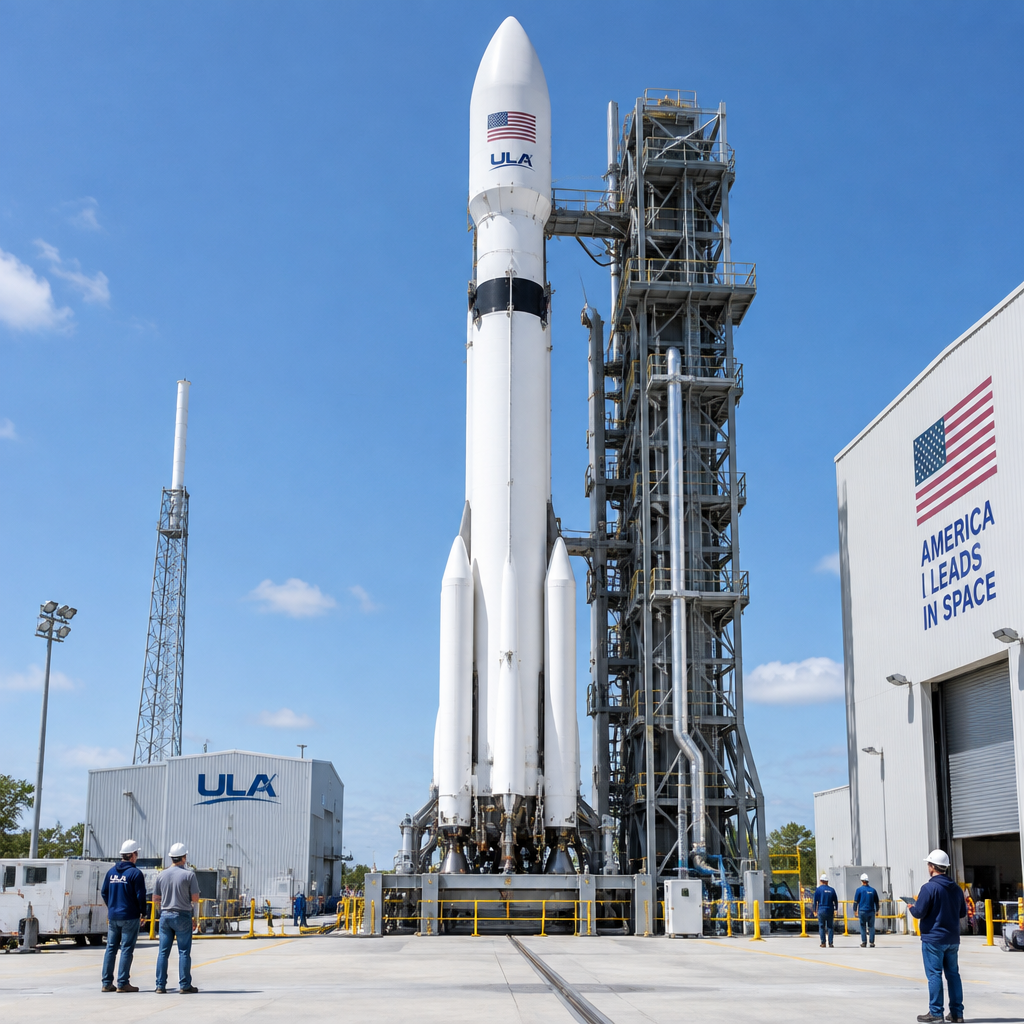
On Monday the Pentagon announced a $150 million loan to Rocket Lab to help the company "increase the flight rate of its reusable Neutron rocket beyond first launch to meet growing commercial and national security demand for access to space." Rocket Lab had previously delayed Neutron’s first launch from late 2026 into 2027; the firm had earlier pushed that initial target from 2024 to late 2025 and then to a later date, according to the timeline in the announcement.
Rocket Lab was added to the Space Force’s pool of potential launch providers in March 2025 under the National Security Space Launch (NSSL) Phase 3 Lane 1 program, which covers launches to easier-to-reach orbits and lower‑mass payloads.

Audit-ready is a season. It shouldn't be.
Evidence in spreadsheets, controls drifting between audits, frameworks multiplying on flat headcount. Nubivance runs continuous compliance on Rapid7 Cyber GRC - SOC 2, HIPAA, ISO 27001, PCI, CMMC.
End the scrambleStoke Space: a second Cape Canaveral pad for Nova
On Oct. 26 the Office of Strategic Capital awarded Stoke Space a $150 million loan to help construct a second launch pad at Cape Canaveral Space Force Station in Florida for its planned Nova reusable rocket. Stoke originally targeted a 2025 Nova launch but is now planning a first flight in March 2027.
Like Rocket Lab, Stoke was added to the Space Force’s NSSL Phase 3 Lane 1 pool in March 2025. The two launch‑focused loans reflect Pentagon concern about medium‑term launch capacity: an Oct. 29 report by Quilty Space cited in the announcements found a likely shortfall of at least 150 launches between now and 2030, including military missions, and noted special pressure after 2028 when SpaceX will stop flying commercial payloads on Falcon 9.
LeoLabs: Scout mobile radar and domestic manufacturing
On Nov. 4 the Pentagon announced a $150 million loan to LeoLabs to "accelerate the deployment of critical radar infrastructure and advanced decision science software," specifically facilitating deployment of the company’s new Scout mobile radar. A Nov. 5 LeoLabs announcement tied the award to plans to expand domestic radar manufacturing capacity, aiming to complete "two large-scale manufacturing facilities by 2028."
The award signals DoD interest not only in launch capacity but also in improving space monitoring and decision science tools—capabilities the department cites as critical to tracking a growing congested orbital environment.
How the Space Force, Congress, and procurement leaders are likely to respond
- Space Force: As the service managing NSSL lanes, the Space Force will watch whether Rocket Lab and Stoke convert pilot‑stage inclusion into operational cadence. The loans are designed to accelerate flight rate and pad capacity, two variables the service needs to schedule manifesting and mission assurance for Phase 3 Lane 1 launches.
- Congress: The Office of Strategic Capital operates under recent authorizations and appropriations. For FY26 Congress appropriated $97.8 million for the capital assistance pilot program—designed to subsidize up to $4.4 billion in loans, loan guarantees, and technical assistance—and provided $2 million through the defense‑wide RDT&E account. The office’s FY27 budget request, per a September CRS summary, sought additional discretionary and mandatory funding that would substantially expand the pilot program.
- Procurement leaders and launch planners: The loans address a clear scheduling risk. The Quilty Space estimate of a 150‑launch shortfall through 2030 and the scheduled post‑2028 change in commercial Falcon 9 availability are explicit pressure points the loans aim to mitigate by boosting reusable launch cadence and physical pad throughput.
Timing, other year‑end activity, and the conditional nature of the awards
Industry sources told Breaking Defense that the recent run of announcements reflected an internal deadline: the Pentagon "needed to finalize loans by the end of the fiscal year" and thus had been rolling them out on a regular cadence since—an observation that helps explain multiple clustered loan announcements in late October and early November. DoD loan announcements also included non‑space items in the same time frame, such as a "loan commitment of up to $450 million" to startup drone maker Neros announced Nov. 2 and a $75 million loan to Halo Industries announced Nov. 5 for scaling Silicon Carbide semiconductor wafer production.
The Office of Strategic Capital first posted $984 million in direct loan funding availability on a rolling basis in September 2024 and listed 34 dual‑use technology categories for potential investment, three of which were space specific: "space launch; spacecraft; and space‑enabled services and equipment." The office’s authorities and appropriations—paired with conditional loan terms that demand matching company capital—mean that the awards begin a process; they do not by themselves guarantee quicker launches or faster radar manufacturing.
Whether the conditional financing and required matching capital can be deployed quickly enough to materially close the shortfall ahead of 2028–2030 remains the central question the announcements leave in plain view.