"The most consequential warning signal will not be another Russian battlefield innovation. It will be the point at which Russia no longer needs the people who invented it," wrote Roger N. McDermott, crystallizing the analytical shift NATO must make when evaluating Moscow's post-Ukraine military trajectory.
From battlefield innovation to institutional reproducibility
Much of NATO’s attention has naturally tracked what Moscow learned in Ukraine: new uses of unmanned systems, electronic warfare, reconnaissance‑strike integration, command‑post survivability, air defense, assault operations and logistics. McDermott argues that this focus is necessary but incomplete. What matters for future threat assessment is not simply whether Russians have innovated, but whether those innovations survive the loss of the original practitioners, scale across formations and become routine components of force generation.
That distinction reframes NATO’s requirements. Traditional indicators — orders of battle, equipment inventories and production rates — remain essential because they show what Russia possesses. But they are less effective at revealing what Moscow can repeatedly generate. Measuring reproducibility, McDermott writes, requires assessing whether newly formed or rotated units can recreate operational effects without exceptional support networks derived from the original innovators.
Unmanned Systems Forces as a test case
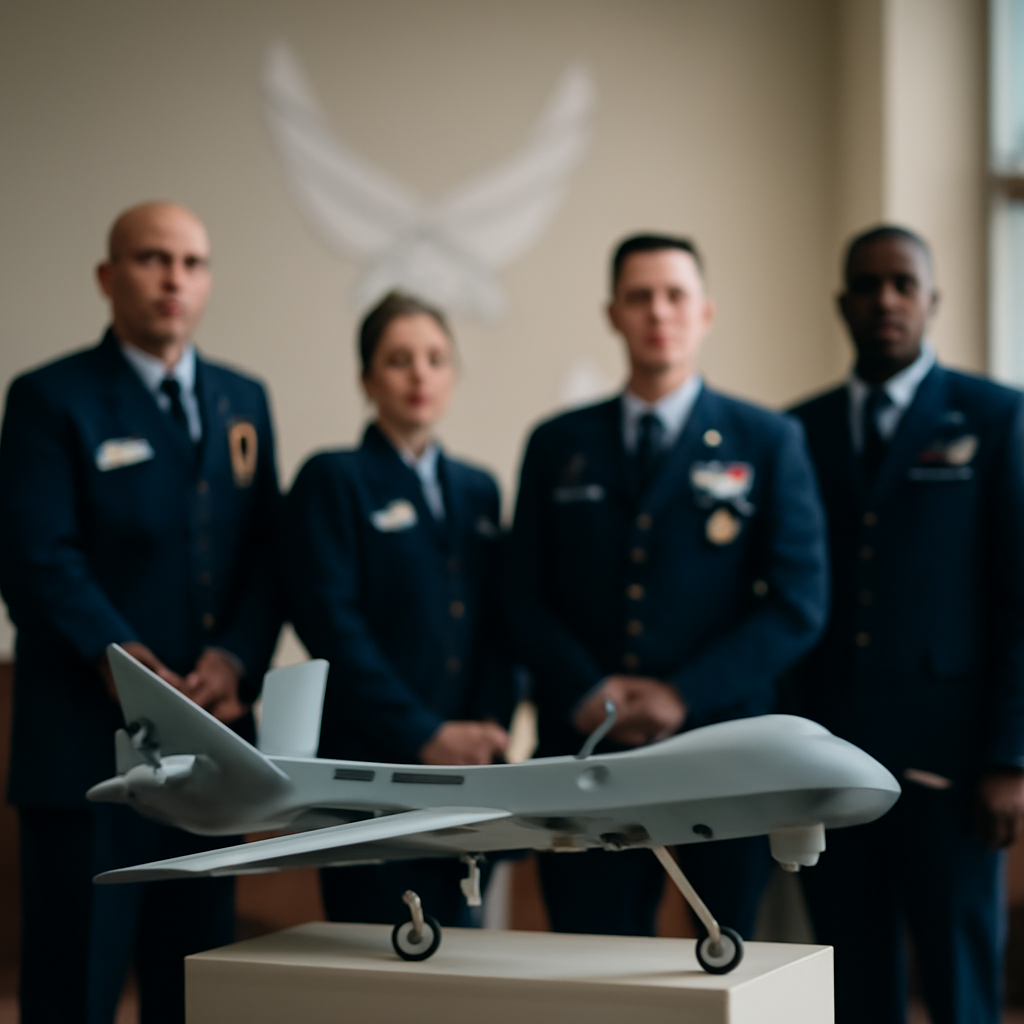
McDermott uses Russian unmanned systems to illustrate the difference. Drone warfare in Ukraine initially grew through an uneven mix of military units, volunteers, commercial manufacturers and specialists. The critical development, he notes, is not the arrival of another variant or higher operator counts but the building of permanent structures: command arrangements, specialist education, training centers, repair and supply systems, military‑scientific support, and mechanisms for generating complete units.
In July 2026 the Russian Defense Ministry said more than 8,000 specialists had been trained for its Unmanned Systems Forces during the first half of the year. The ministry added that training was "moving beyond individual specialists toward collective preparation of formed units on their assigned equipment." For NATO intelligence, McDermott warns, the 8,000 figure is less important than whether a newly generated unmanned‑systems unit can deploy, integrate with other arms, maintain equipment, replace casualties and continue to generate operational effects absent an exceptional external network.

The cyber insurance questionnaire just landed. Now what?
SOC 2, HIPAA, insurance renewals - someone has to own security strategy. Nubivance provides fractional CISO leadership without the full-time salary.
Get a security leadInstitutional indicators to watch
McDermott lists several indicators that often appear inside institutions before they show up in inventories. Those include changes in military‑school curricula; new specialties and qualification systems; instructor assignments and battlefield placements; expansion of training centers; revised collective‑training standards; methodological publications; maintenance arrangements; new command relationships; and, importantly, the performance of newly generated or rotated formations.
He emphasizes the contrast between obvious indicators and subtle ones: "A new missile is obvious intelligence. A revised curriculum is not." Yet the latter may provide earlier warning that a battlefield practice is becoming a durable component of Russian military power.
Exercise design and the calculus of targeting
McDermott argues that NATO’s exercises and operational planning must incorporate the reproducibility question. If a reconnaissance‑strike process depends on a small group of highly experienced specialists, destroying that group could yield a substantial operational effect. If, however, the process has been institutionalized — with trained replacements, standardized technical procedures, rehearsed alternative command relationships and supporting logistics — a strike may at best cause temporary disruption.
Consequently, NATO must ask not only whether it can break a Russian military system but how quickly Russia can restore an adequate version. After a command post is destroyed, are alternative headquarters prepared to assume its functions? After a drone detachment is suppressed, how rapidly can replacement operators and equipment be introduced? When specialist personnel are lost, does the replacement force inherit their competence through an institution or must it relearn the problem from first principles? The answers change the value assigned to tactical successes and the assumptions built into exercises and campaigns.
What this means for NATO, intelligence analysts, and planners
- NATO: Shift planning and exercises to include force‑generation metrics — not just attrition of systems but the resilience of institutional processes that regenerate capabilities.
- Intelligence analysts: Prioritize collection on military education, training centers, doctrinal and methodological publications, instructor placement and unit rotation performance as early indicators of durable capability.
- Military planners: Treat targeting and disruption strategies differently depending on whether a capability is brittle (dependent on a few people or elite formations) or reproducible (embedded in training, logistics and command structures).
McDermott does not claim institutionalization is inevitable. Lessons can become obsolete, scaling may dilute competence, and elite formations can create a false impression of force‑wide transformation. But he presses a clear challenge: NATO should stop treating "Russia has adapted" as a useful end point and start treating reproducibility as the decisive test of whether an adaptation becomes a sustainable military capability.
Link to the original story: https://breakingdefense.com/2026/09/nato-is-measuring-russian-adaptation-the-wrong-way/