What is at stake is how militaries preserve freedom of action when autonomous systems and their countermeasures saturate the battlespace — and that matters not just for crews and platforms but for industrial bases, supply chains and software arsenals.
Freedom of action: protection’s original purpose
The article reasserts a simple but often-overlooked point: military protection has never existed merely to keep soldiers alive or platforms intact. Its enduring purpose is to preserve freedom of action — the ability of a force to manoeuvre, fight and impose its will despite enemy action. Historically, armour, fortifications, missile defences, electronic warfare and deception were judged by their ability to sustain that freedom of action rather than by raw survivability alone.
Autonomous systems and the counter‑drone ecosystem
Autonomous systems have become ubiquitous, performing reconnaissance, strike, logistics, deception and electronic warfare. At the same time, a counter‑drone ecosystem has emerged that includes electronic attack, directed‑energy weapons, kinetic interceptors and increasingly autonomous drone‑on‑drone combat. The battlefield is becoming saturated not only with autonomous systems but with autonomous systems hunting one another in an accelerating cycle of adaptation.

The cyber insurance questionnaire just landed. Now what?
SOC 2, HIPAA, insurance renewals - someone has to own security strategy. Nubivance provides fractional CISO leadership without the full-time salary.
Get a security leadProtection versus regeneration: a new operational calculus
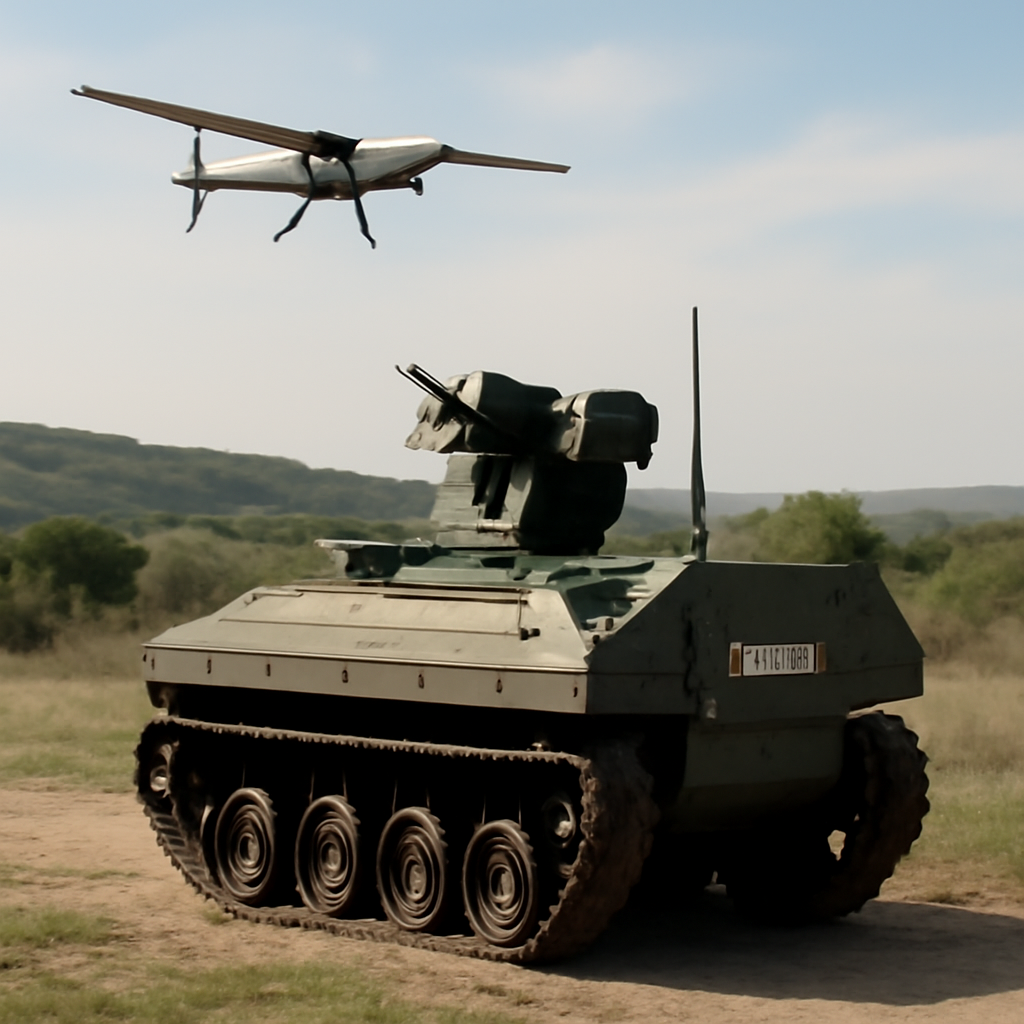
Once the human operator is removed, protection shifts from a moral imperative to a design trade‑off. The article illustrates the tension with a concrete example: an autonomous ground vehicle built to breach an obstacle. Additional armour may increase survival odds but also adds weight, consumes power, reduces payload and raises production costs — every kilogram devoted to armour is a kilogram unavailable for batteries, sensors, communications or mission equipment. The metric therefore changes from platform survivability to the probability of mission success.
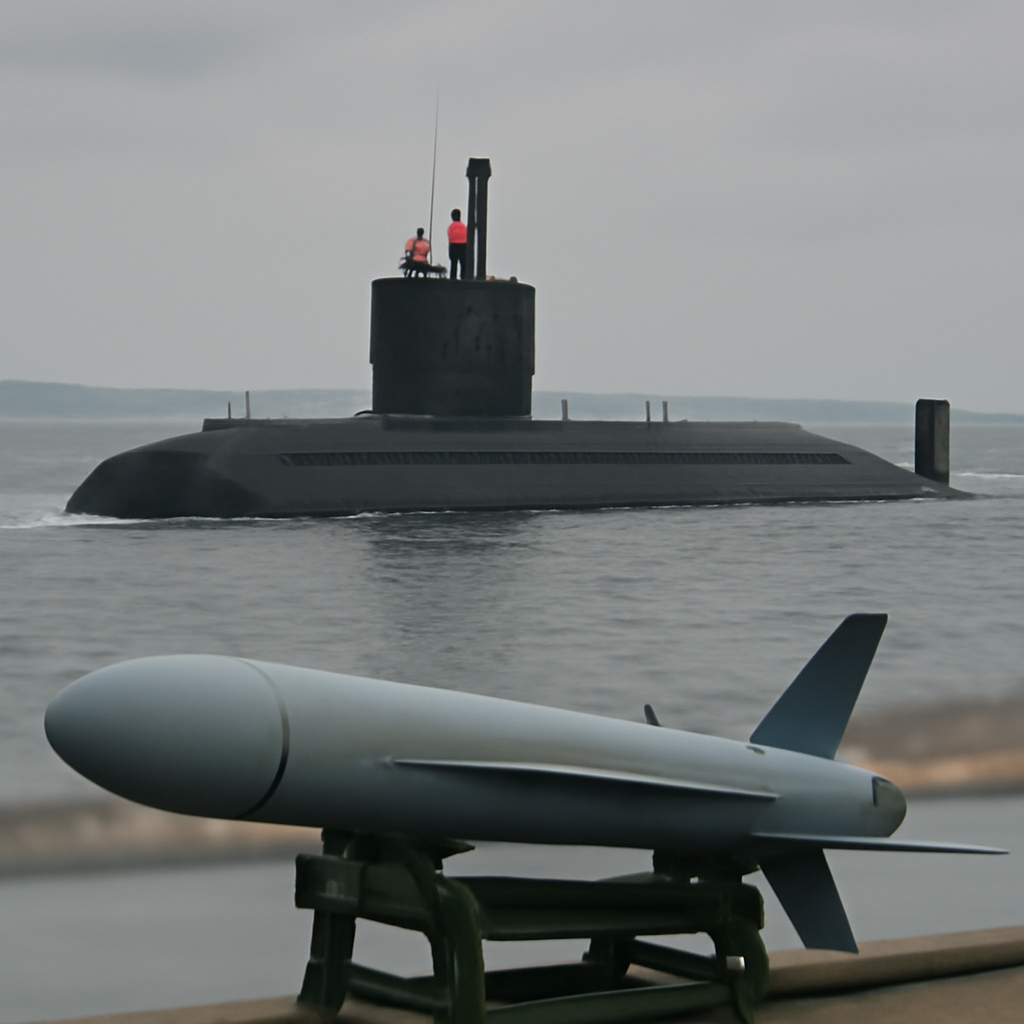
Mission duration sharpens that calculus. A reconnaissance drone expected to survive a single sortie requires a different balance of protection and replaceability than an autonomous logistics vehicle meant to sustain a brigade for weeks or an undersea system intended to operate for months. The appropriate mix of protection and replaceability depends on platform value and the time needed to regenerate capability.
Regeneration, industry and supply chains as forms of protection
The article argues that regeneration should be treated alongside protection, deception, electronic warfare, dispersion and redundancy as alternative means to preserve freedom of action. Rapid industrial regeneration — through production, repair, modular replacement and software reconstitution — becomes a strategic lever. If protection is temporary because each defensive measure invites a countermeasure, then investing in affordability, production capacity, distributed manufacturing, resilient supply chains, logistics networks and software development can preserve combat power by restoring capability faster than it is lost.
What this means for commanders, procurement leaders, and technologists
- Commanders: Expect to combine concealment, deception, electronic warfare, dispersion and rapid regeneration rather than rely solely on making every platform harder to destroy; success may come to forces that restore capability and adapt tactics faster than they minimise losses.
- Procurement leaders: Balance survivability improvements against weight, power, cost and production capacity; selective protection and modularity may yield greater sustained combat power than maximal armour on every platform.
- Technologists and software teams: Prioritise modular replacement, software reconstitution and adaptability; defensive measures that are rapidly countered demand investments in resilience and fast iteration as much as in hardening individual systems.
The preservation of freedom of action remains the objective, but the means are changing. Armour and hardening are still tools, but they are no longer the default answer for every autonomous platform. In the drone age, forces may increasingly preserve combat power by combining selective protection with regeneration, adaptation and industrial resilience — a shift the article says could become one of the defining force‑design challenges of autonomous warfare.
https://www.aspistrategist.org.au/the-drone-age-demands-a-new-theory-of-military-protection/