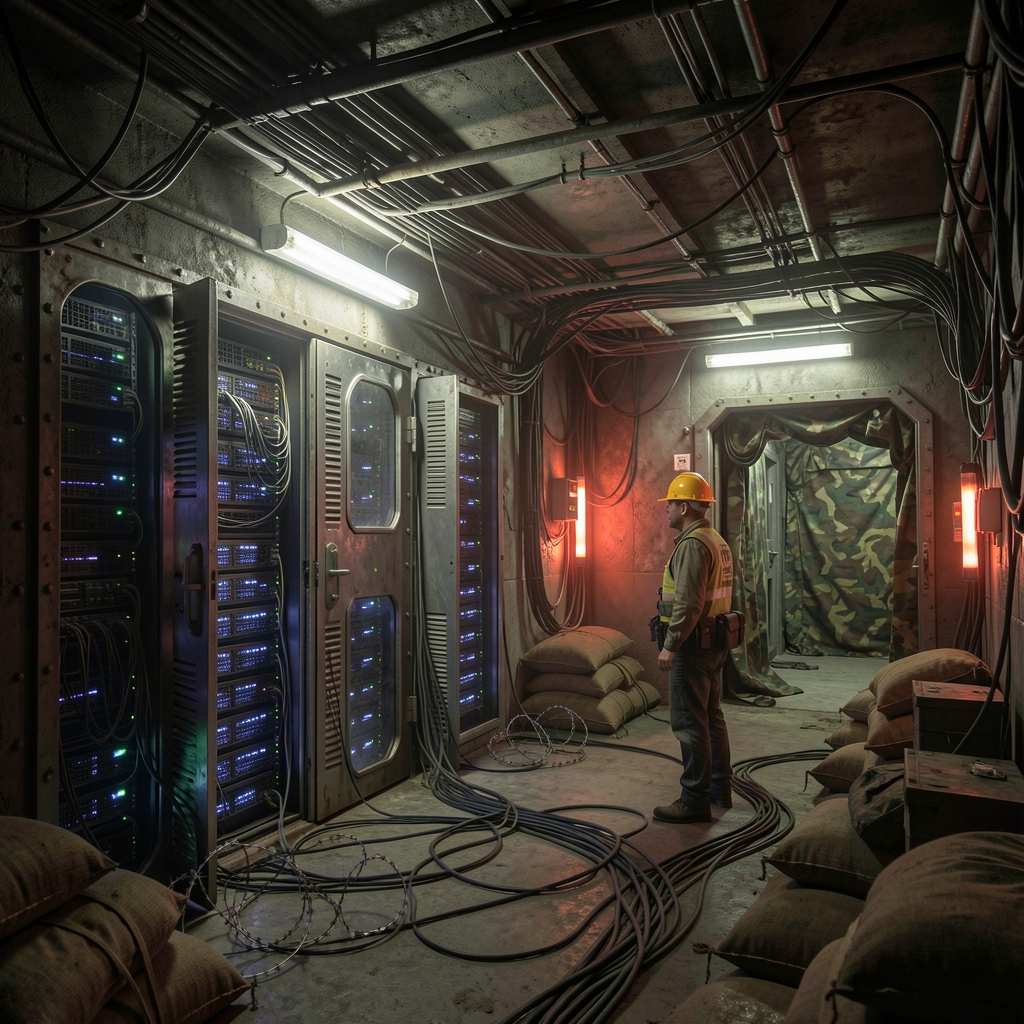
If data centers can be damaged by war, how do you protect the clouds they feed? That is the practical dilemma Microsoft’s president, Brad Smith, says the company now faces after a recent round of regional strikes put “bit barns” — the physical farms that house computing and storage gear — squarely in the line of fire.
What Microsoft said
In an interview, President Brad Smith told an interviewer that Microsoft is reconsidering how it designs and builds datacenters in conflict-prone regions. The company is reevaluating its approach after Iran began targeting Middle Eastern “bit barns” in retaliation for U.S. military operations, according to the reporting.
Background and current situation
The reported sequence is straightforward: military actions prompted retaliatory strikes against data-center facilities, and those strikes in turn have led Microsoft to reassess physical design and deployment choices for infrastructure located in or near areas of armed conflict. The shorthand term used in the reporting — “bit barns” — emphasizes the physical, place-based nature of what many users think of as an abstract cloud.

This site is the portfolio.
OSINTSights runs on Cloudflare Workers, D1, R2, and Vectorize, with an AI pipeline on Hetzner ARM. Nubivance designed, built, and operates it. We do the same for clients.
See what we buildWhy this matters
When cloud capacity and data storage sit inside conflict zones, the risks shift from purely technical failures to geopolitical and kinetic threats. Microsoft’s stated reevaluation signals that at least one major provider sees the physical security of datacenters as part of its operational calculus in circumstances of active military conflict. For customers, policymakers, and technologists, that changes planning assumptions about continuity, risk exposure, and where critical services should live.
Stakeholder perspectives and possible considerations
- Technologists: A design rethink could prompt consideration of hardened facilities, geographic dispersion, or new redundancy models — although the company’s public comments describe a reevaluation rather than specific measures.
- Policymakers: The prospect that data infrastructure becomes a target raises questions about protections, jurisdictional responsibilities, and how military actions intersect with critical civilian infrastructure.
- Users and customers: Organizations that rely on cloud-hosted services may need to reassess resilience plans and ask providers about physical risk mitigation and contingency options.
- Adversaries and regional actors: The targeting of “bit barns” demonstrates that data infrastructure can be incorporated into broader strategic responses, changing the set of assets that could be seen as legitimate or attractive targets.
Microsoft’s public statement, as reported, does not enumerate the specific architectural changes it will pursue or a timeline for any shifts. What it does do is make explicit that datacenter siting and design are now being reviewed through a security lens shaped by recent regional hostilities.
If the cloud must be sheltered from the battles it enables — or from the political fights that surround those battles — providers, customers, and governments will all face uncomfortable trade-offs between availability, cost, sovereignty, and security. Will the industry build more “bit bunkers,” move capacity away from hot spots, or change the rules of engagement around infrastructure protection? For now, Microsoft’s reconsideration raises the question more forcefully than it answers it.



