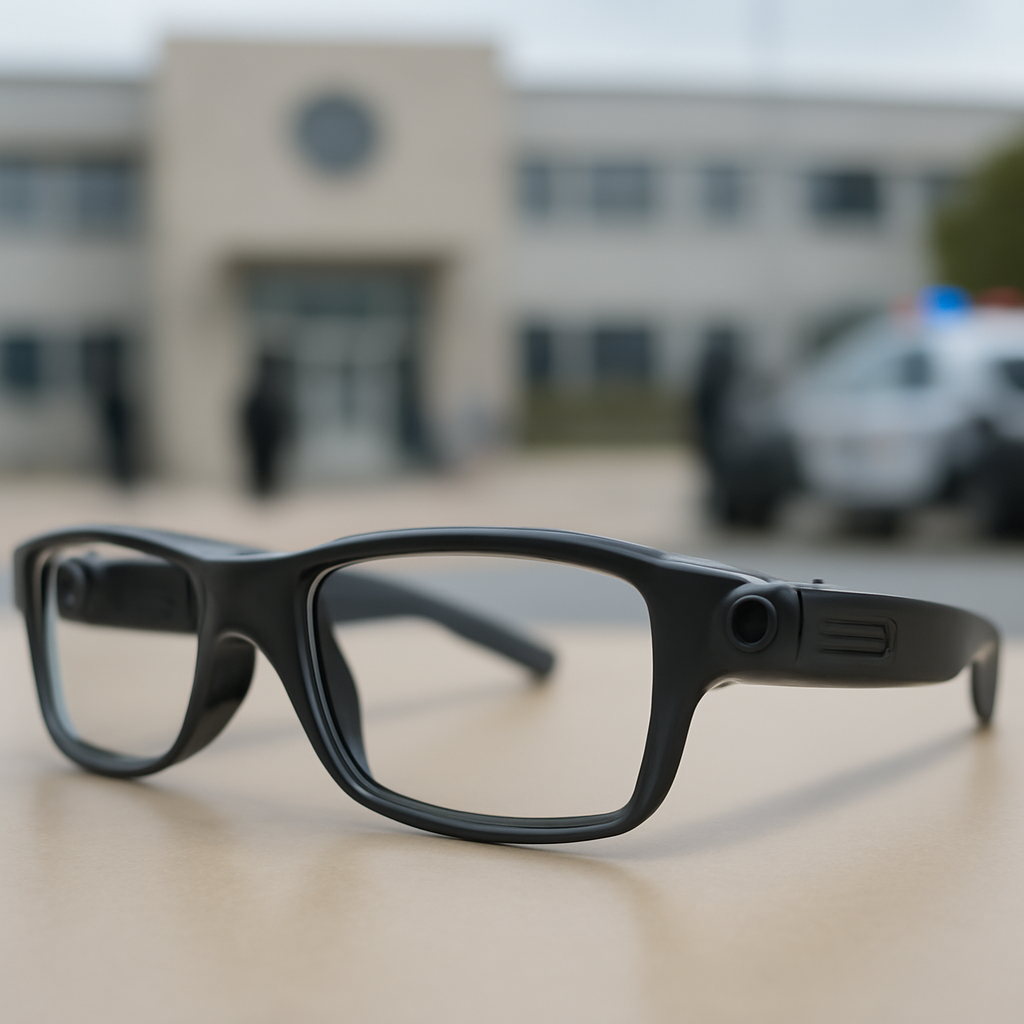
ICE wants to deploy eyeglasses with facial recognition that can identify people in real time.
ICE's eyeglasses with real-time facial recognition
The report identifies a concrete request: Immigration and Customs Enforcement (ICE) seeks to deploy eyeglasses equipped with facial‑recognition capability that can identify people in real time. That single sentence anchors the story. It describes both the platform — eyeglasses — and the technical intent — live, on‑the‑move identification of individuals.
Meta prototyping the feature with a Pentagon supplier
Equally specific is the second fact the report supplies: Meta is prototyping that feature in collaboration with a Pentagon supplier. The phrasing links a major technology company’s prototype work directly to a supplier that serves the Department of Defense, and it places the prototype work squarely in the same technical space as ICE’s stated interest.

The cyber insurance questionnaire just landed. Now what?
SOC 2, HIPAA, insurance renewals - someone has to own security strategy. Nubivance provides fractional CISO leadership without the full-time salary.
Get a security leadPolice and military as named potential users
The framing provided names police and military as the categories of users for the tested technology. The headline and reporting together locate this work in a law‑enforcement and defense context rather than in consumer or purely commercial product lines. The combination of ICE’s deployment interest and Meta’s prototyping with a Pentagon supplier ties the technical capability — real‑time facial identification via eyeglasses — to both domestic enforcement and armed‑forces settings.
What this means for ICE, Meta, and the Pentagon supplier
- ICE: The agency’s stated aim is deployment of glasses that can identify people in real time, meaning ICE is seeking to move a wearable facial‑recognition capability toward operational use.
- Meta: The company is engaged at the prototype stage on that capability, and is doing so in partnership with a supplier that sells to the Pentagon.
- Pentagon supplier: As a defense contractor, the supplier is connected to the military procurement ecosystem and is the bridge between Meta’s prototype work and defense customers named in the reporting.
Operational and oversight questions the facts raise
Even with minimal reporting, two clear facts together invite scrutiny: one agency wants to deploy a wearable, real‑time identification capability, and a major technology firm is prototyping that capability with a supplier to the Pentagon. Those facts naturally prompt questions about procurement pathways, test plans and use cases, and which organizations will make deployment decisions. The report does not supply answers; it simply establishes that the technical capability is being pursued by specific actors.
How police, the military, and the general public are positioned by these facts
- Police: Named in the reporting as potential users, police forces are identified by association with the technology being tested for law‑enforcement contexts; the pairing of a wearable, real‑time identifier with police use is what the report signals.
- The military: Through the connection to a Pentagon supplier, military clients are implicated as a likely audience for the prototype work Meta is advancing.
- The general public: The report’s core facts — a desire by ICE to deploy live, wearable facial identification, and Meta’s prototyping with a Pentagon supplier — place citizens in the broad cone of impact without detailing where, when, or how the technology would be used.
The record supplied here is brief but precise: ICE seeks eyeglasses that can identify people in real time, and Meta is prototyping that capability with a Pentagon supplier. Those linked facts are straightforward and consequential because they join a specific operational request to a specific development effort. What remains unreported are many procedural and contextual details — procurement schedules, test protocols, legal reviews, or specific deployments — but the two named facts together mark an intersection of a government enforcement requirement and private‑sector prototyping tied into defense contracting.
For now, the most immediate, verifiable takeaway is simple: a wearable, real‑time facial‑recognition capability is both desired by an enforcement agency and under prototype development with a defense‑connected supplier. That conjunction is what should guide follow‑on questions from procurement officials, oversight bodies, and citizens who wish to know how and where such technology will be tested and used.