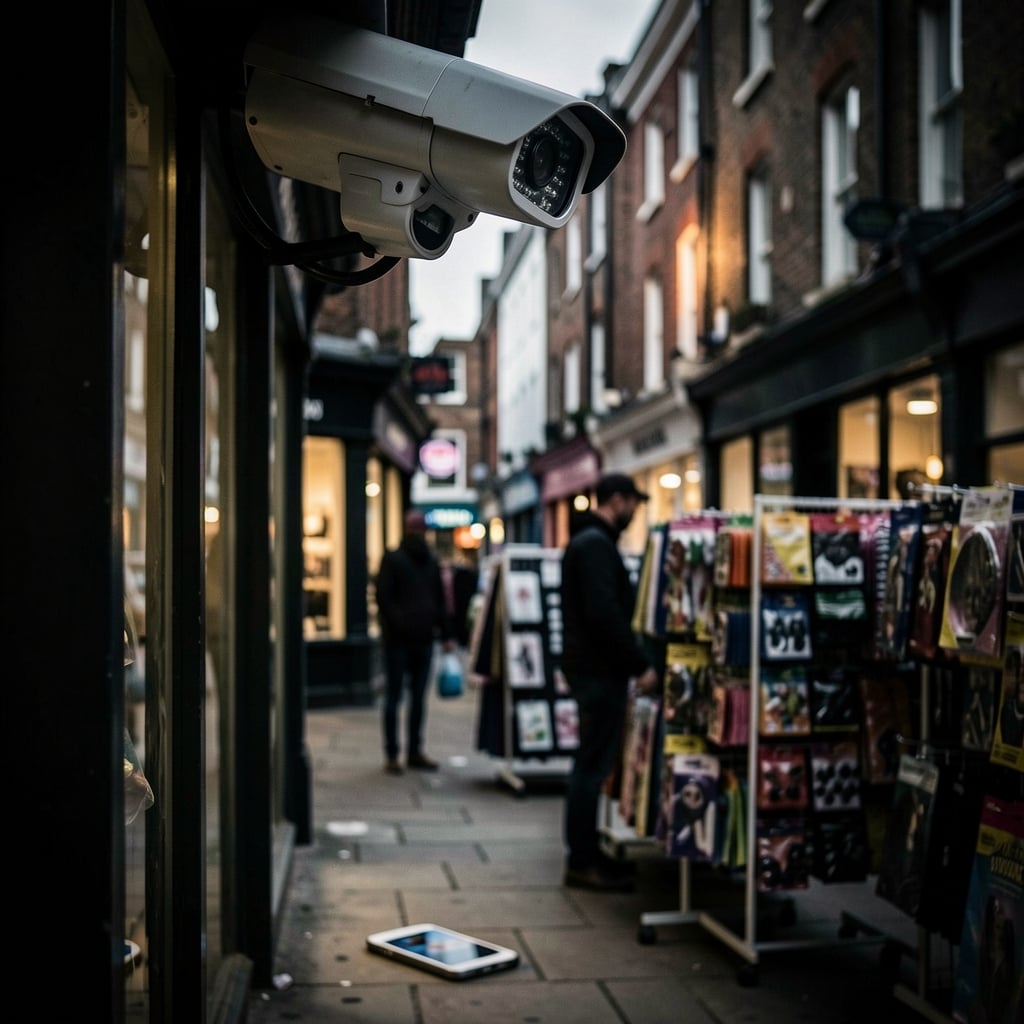
Can London's police curb a "pervasive" shoplifting problem without turning the city into a live-surveillance zone? The Metropolitan Police are trialing a new retail technology intended to help reduce shop theft — and, according to reporting, it "doesn't rely on live facial recognition (LFR)." At the same time, the report offered a caution: "No facial recognition privacy intrusions either! Well, maybe a little."
What we know about the trial
Reporting indicates that the Metropolitan Police are testing a retail-focused technology platform aimed at tackling what the article described as London's "pervasive shoplifting problem." The account emphasizes that the system does not depend on live facial recognition, while also signalling ambiguity about the extent of any privacy intrusion.
Background and the narrow factual record
The publicly available account is sparse on technical and operational detail. The two explicit factual points in the report are (1) the Met is trialing a retail technology to address shoplifting and (2) the technology, as reported, "doesn't rely on live facial recognition (LFR)," alongside an acknowledgement that privacy intrusion may not be entirely absent. Beyond those statements the source does not provide vendors' names, deployment scale, locations, legal authorizations, or technical specifications.

Audit-ready is a season. It shouldn't be.
Evidence in spreadsheets, controls drifting between audits, frameworks multiplying on flat headcount. Nubivance runs continuous compliance on Rapid7 Cyber GRC - SOC 2, HIPAA, ISO 27001, PCI, CMMC.
End the scrambleWhy this matters
On its face, the trial raises several core tensions that flow from the limited facts the report supplies. First, a tool intended to reduce shoplifting addresses a visible public-safety concern the article labels "pervasive." Second, the explicit denial of live facial recognition is notable because it signals an attempt to avoid one of the most contentious surveillance modalities. Third, the qualifier — "Well, maybe a little" — implies there may be trade-offs or alternative detection techniques that still implicate privacy.
Stakeholder perspectives to watch
- Technologists: The report's silence about architecture and data handling leaves open questions about what "not using LFR" actually means in practice — for example, whether other biometric, behavioural, or pattern-recognition methods are in play.
- Policymakers and regulators: The description suggests policymakers will need to scrutinize any trial for legal compliance and oversight if broader deployment is proposed, particularly given the ambiguous note about privacy intrusion.
- Retailers and users: Retailers may welcome new tools to reduce loss, while customers and civil-rights advocates are likely to demand clarity on what data is collected, how long it is retained, and who can access it.
- Adversaries and adaptors: Any new detection method may change adversary behaviour; the report does not address how the trial will measure effectiveness or adapt to evasion.
The publicly available report offers a snapshot rather than a full picture: a police trial aimed at a clear problem, a stated absence of live facial recognition, and a hint that privacy might still be affected. The critical questions left unanswered are practical and principal — how the system works, how privacy is defined and protected, and whether the benefits will justify the risks. Will a technology that purports to avoid LFR deliver safer stores without eroding privacy, or will a "maybe a little" loophole become the wedge for broader surveillance?