On August 6th, China News Service dropped a new PR video on YouTube praising an artillery brigade — a polished production with smoke trails and “heroic silhouettes against sunset.” The attention is notable because the unit shown carries a 80-year institutional memory: the same lineage that first brought Katyusha rockets into the PLA in 1950s-era form is now the PLA’s first operator of the PHL‑191 long‑range multiple‑launch rocket system.
How a wartime infantry unit became the PLA’s rocket tradition
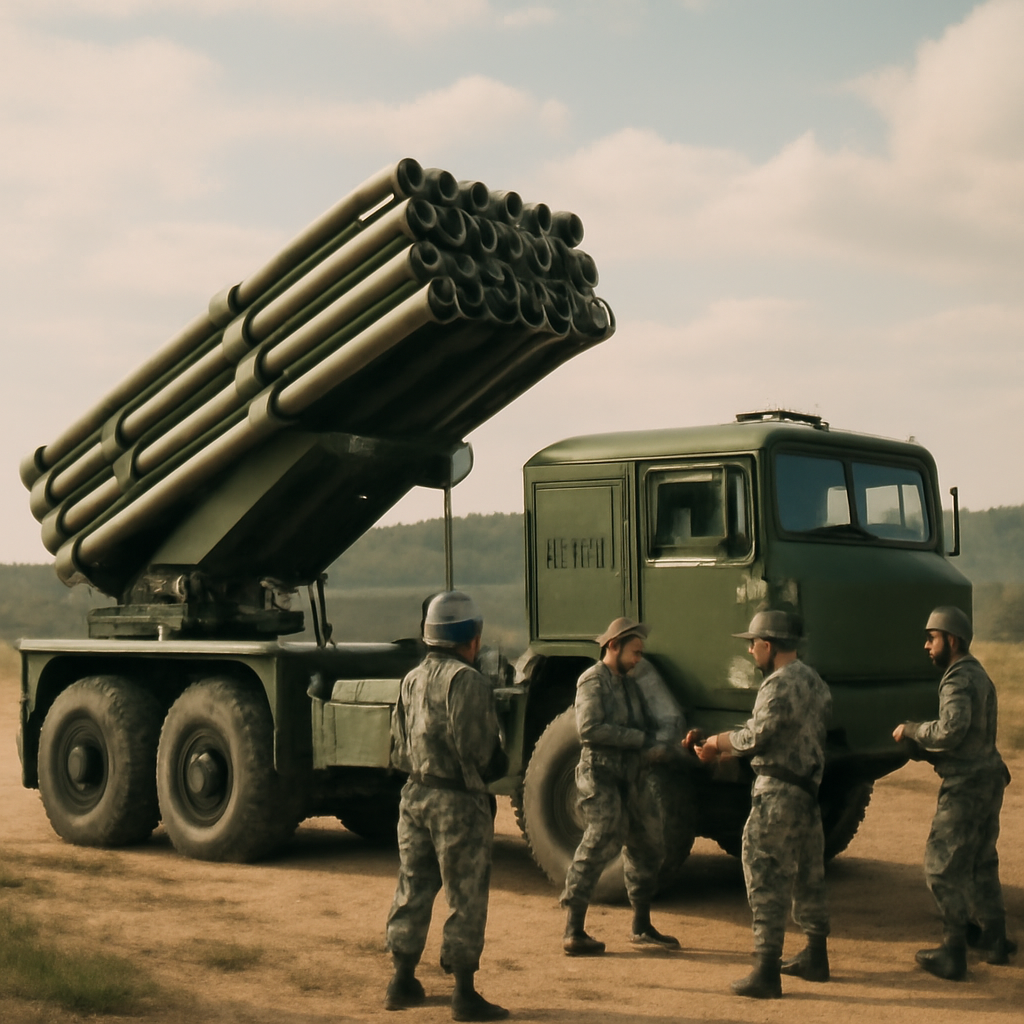
The unit’s lineage begins in September 1945, formed in the Shanxi‑Chahar‑Hebei Military Region as the 8th Brigade. It expanded into the 12th Division, 11th Column of the Northeast Field Army during the civil war and then converted from infantry into the 21st Artillery Division. Its three infantry regiments expanded into five artillery regiments, and the division became the first PLA field unit issued BM‑13 Katyusha rocket launchers.
The division entered Korea in 1952, returned to China in October 1953, and was reorganized in February 1955 under the PLA’s Soviet‑style restructuring. The formation followed the classic Soviet artillery model — heavy guns, howitzers, anti‑tank artillery — and, crucially for its reputation, Katyusha rocket launchers. The Katyusha regiment assigned to the 11th was the first rocket artillery ever issued to a PLA field unit; that initial distinction established the unit’s long‑running prestige within the force.
1985 downsizing, the 40th Group Army, and first PHL‑03 adopters
During the 1985 PLA downsizing the 11th Artillery Division was reorganized and absorbed into the 40th Group Army, becoming that formation’s key artillery asset in the Shenyang Military Region. When the PLA first fielded the modern heavy MLRS PHL‑03 (300mm), the 40th Group Army’s artillery brigade was the first unit to receive it — a continuation of the unit’s pattern of being “first in line” for new rockets.

Audit-ready is a season. It shouldn't be.
Evidence in spreadsheets, controls drifting between audits, frameworks multiplying on flat headcount. Nubivance runs continuous compliance on Rapid7 Cyber GRC - SOC 2, HIPAA, ISO 27001, PCI, CMMC.
End the scramble2015–2017 reforms and the 79th Artillery Brigade
The 2015–2017 structural overhaul replaced seven Military Regions with five Theater Commands and renumbered the PLA’s 18 group armies into 13 (71–83). The 40th Group Army did not survive that transition: its personnel and equipment were folded into the 79th Group Army, part of the Northern Theater Command.
The artillery brigade that inherited the 40th’s lineage did not lose its historic role. It is now the 79th Artillery Brigade, 79th Group Army, Northern Theater Command — and the brigade retained its institutional habit of being the first recipient of new long‑range rocket systems.
PHL‑191 capability: range, guidance, modularity, and cost
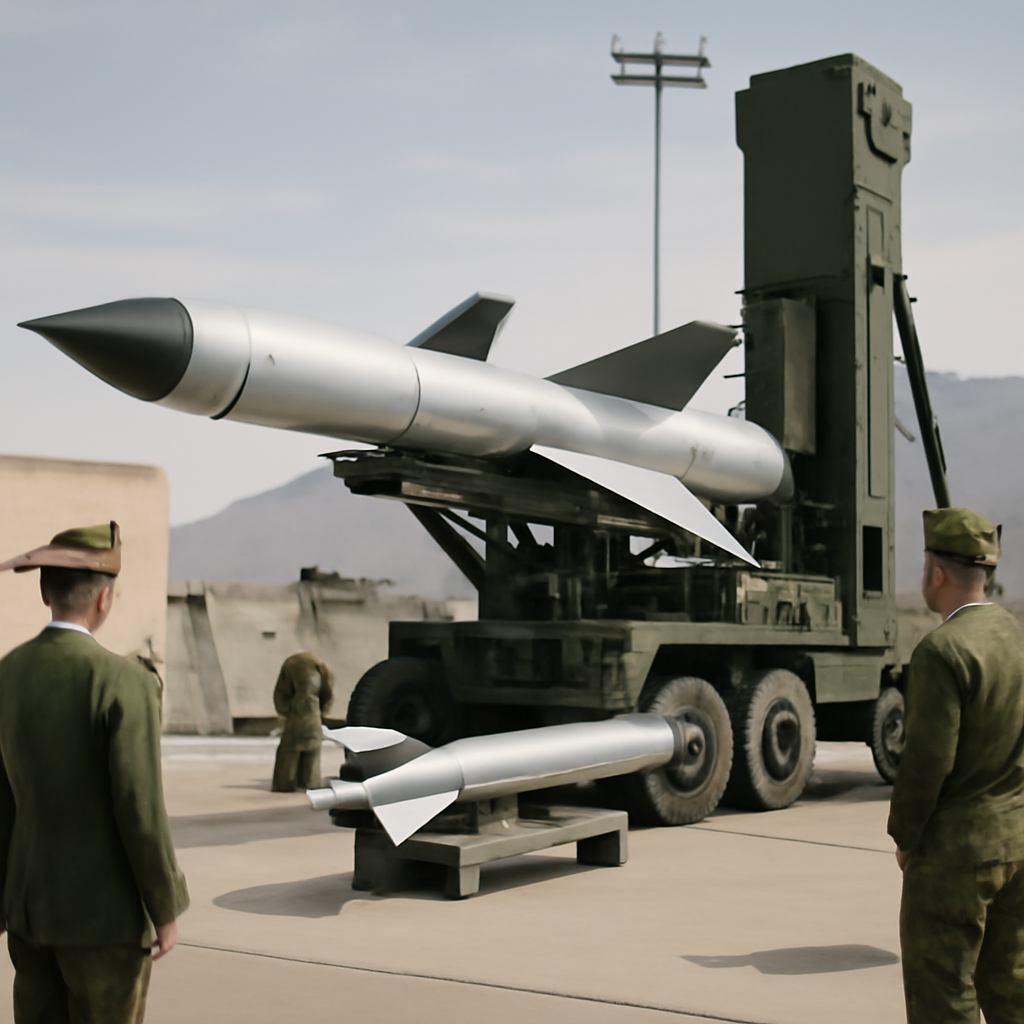
The most recent chapter is the confirmation that the 79th Artillery Brigade is the PLA’s first operator of the PHL‑191, the modular long‑range MLRS that replaces the PHL‑03. The PHL‑191’s 370mm rockets — the domestic version of the export Fire Dragon 280 / BRE‑6 — have a range of 300 km.
- By comparison, earlier PHL‑03 rockets reached roughly 130 km and later PHL‑03 rockets about 150 km.
- The PHL‑191 uses inertial guidance plus BeiDou satellite correction.
- It employs modular pods that allow swap‑out of calibers and warheads.
- The system is described as using cheaper rockets than equivalent‑range missiles and having mass‑production potential.
Those attributes combine to produce a long‑range, high‑volume, low‑cost fires system — terminology the account links directly to the PLA’s concept of a “Special Military Operation.”
How Taiwan, the 79th Artillery Brigade, and Northern Theater Command planners respond
Taiwan: The account stresses the range difference as a key consideration for Taiwan. A PHL‑03 had to be sited at the narrowest point of the Taiwan Strait (Pingtan) to reach Taiwan’s western coastline and could not reach inland targets from most of Fujian’s coast. The PHL‑191’s 300 km reach “absolutely can” hit inland targets from the mainland coastline.
The 79th Artillery Brigade: The brigade is confirmed as the PLA’s first operator of the PHL‑191, continuing the unit family’s historical role as the PLA’s premiere rocket formation — the same unit family that once fired the first Katyusha in PLA history.
Northern Theater Command planners: The transition to a 300 km, modular, mass‑producible MLRS provides a long‑range, high‑volume fires capability that the source links directly to operations doctrine and basing considerations along the Fujian coast and Taiwan Strait.
The arc is clear in the source’s account: from the first Katyushas to PHL‑03 to PHL‑191, the PLA has kept faith with a single unit family as its rocket artillery testbed and flag carrier — summarized in the line, “Give the new rockets to the old rocket guys.”