5,600 miles per hour — that is the speed Lockheed Martin’s new, smaller interceptor is being pitched to stop, and it is exactly the sort of short‑range ballistic threat that has sharpened demand for more Patriot‑class interceptors.
What the ACE missile is
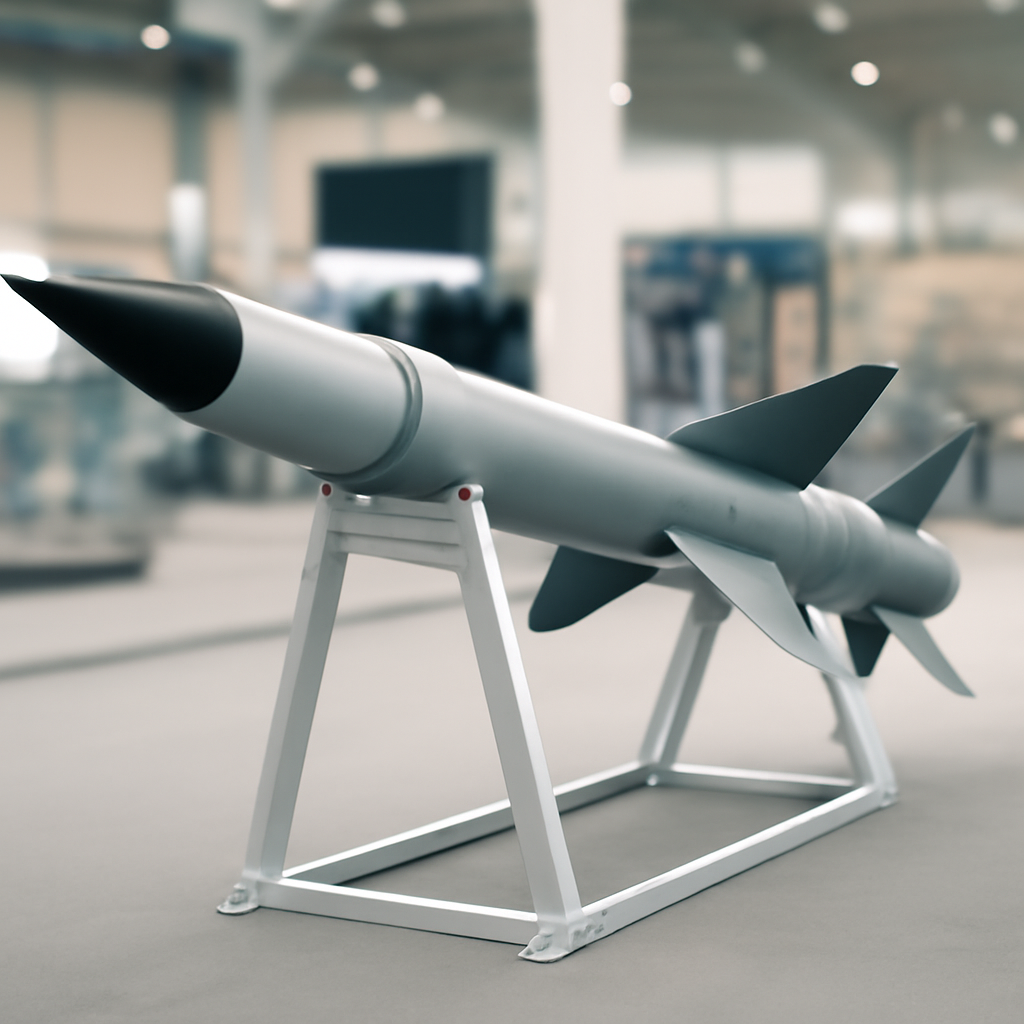
Lockheed Martin unveiled the Adapted Capability Effector, or ACE, at the Farnborough International Airshow as a smaller, lower‑cost interceptor built to work with existing PAC‑3 infrastructure. According to the company announcement and remarks by Lockheed Martin Missiles and Fire Control president Tim Cahil, ACE would use the PAC‑3’s launcher and its command‑and‑control software while replacing the PAC‑3’s rocket motor, radar, and “electronic brain” with less expensive alternatives.
Cahil acknowledged limits: the ACE “lacks some of the features to counter the most advanced missiles,” and he cautioned that the missile is not “designed to go after drones.” Instead, the missile is being positioned for the kind of lower‑tech short‑range ballistic missiles used in recent attacks by Iran and Russia.
Technical trade‑offs and intended targets
Lockheed’s pitch is explicit about trade‑offs. By using cheaper sensors, propulsion and guidance components rather than the PAC‑3’s higher‑end seeker and electronics, ACE aims to drive down unit cost at the price of reduced capability against the most sophisticated threats. A missile defense analyst cited in the announcement suggested the seeker is among the chief cost drivers and bottlenecks for current PAC‑3 missiles—implying that simpler seekers and supporting subsystems could materially lower price and manufacturing friction.
Lockheed frames that trade as acceptable for intercepting weapons such as an Iskander‑M traveling at roughly 5,600 miles per hour—short‑range ballistic missiles that recent strikes have shown to be lethal and disruptive but not necessarily the highest‑end threats the PAC‑3 family was designed to defeat.

This site is the portfolio.
OSINTSights runs on Cloudflare Workers, D1, R2, and Vectorize, with an AI pipeline on Hetzner ARM. Nubivance designed, built, and operates it. We do the same for clients.
See what we buildSupply shortfall that prompted the pitch
The company presented ACE against a backdrop of acute demand. The story the source assembles traces recent attrition in PAC‑3 stocks: last July, the White House had said U.S. aid to Ukraine had drawn on Pentagon Patriot inventories; that claim “turned out not to be true at the time,” the source says, but “became so after President Trump launched his war on Iran in February.” By April, the Center for Strategic and International Studies wrote that “the United States had used up about half of its supply.”
When Ukraine ran out of PAC‑3 interceptors this month, the source reports, Russia increased short‑range attacks—illustrating how a supply‑and‑demand gap can quickly translate into battlefield consequences and drive allied interest in additional interceptors, including lower‑cost alternatives.
Lockheed’s market pitch and partners
Lockheed is marketing ACE to at least some of “the 18 countries that already have compatible PAC‑3 launchers,” according to the company statement. The firm envisions “joint development and production with European partners,” and Tim Cahil suggested a possible production entry in 2028—or potentially earlier if governments are ready to fund the program and collaborate on industrial worksharing.
The announcement also notes that so far other firms and startups have not delivered a viable substitute for short‑range missile interceptors; the closest European alternative, the French‑Italian SAMP/T, “is not as effective,” Ukrainian officials have said—leaving a gap that Lockheed now seeks to fill with a lower‑cost complement to the PAC‑3 family.
How Ukraine, PAC‑3 operators, and European partners are likely to respond
- Ukraine: Kyiv faces a direct operational risk from depleted PAC‑3 stocks; a lower‑cost ACE could offer an expedient way to restore some short‑range ballistic defense capability that domestic counter‑drone and startup efforts cannot substitute, according to the source.
- PAC‑3 operators (the 18 compatible countries): Nations with existing launchers may view ACE as a way to expand interceptor inventories quickly without replacing launch hardware or command‑and‑control systems, but they must weigh lower capability versus higher volume.
- European partners and industry: Lockheed is explicitly courting joint development and production. European governments deciding whether to invest will determine how quickly the program could advance ahead of the company’s 2028 production estimate.
Tom Karako, director of the Missile Defense Project at CSIS, summed up the dilemma: “The United States and its allies, the entire PAC‑3 community needs as many PAC‑3s as industry collectively can produce. But we're also going to need alternatives, and not everything needs the most exquisite capability. And so this is why the low‑cost interceptor competition is important and urgent.”
The ACE proposal therefore lands as a pragmatic answer to a visible shortfall: cheaper interceptors that plug into existing PAC‑3 infrastructure could increase the volume of available shots against short‑range threats. Whether governments will choose speed and quantity over the highest‑end performance—and whether joint production arrangements will accelerate a sub‑2028 timeline—remains the decisive practical question.