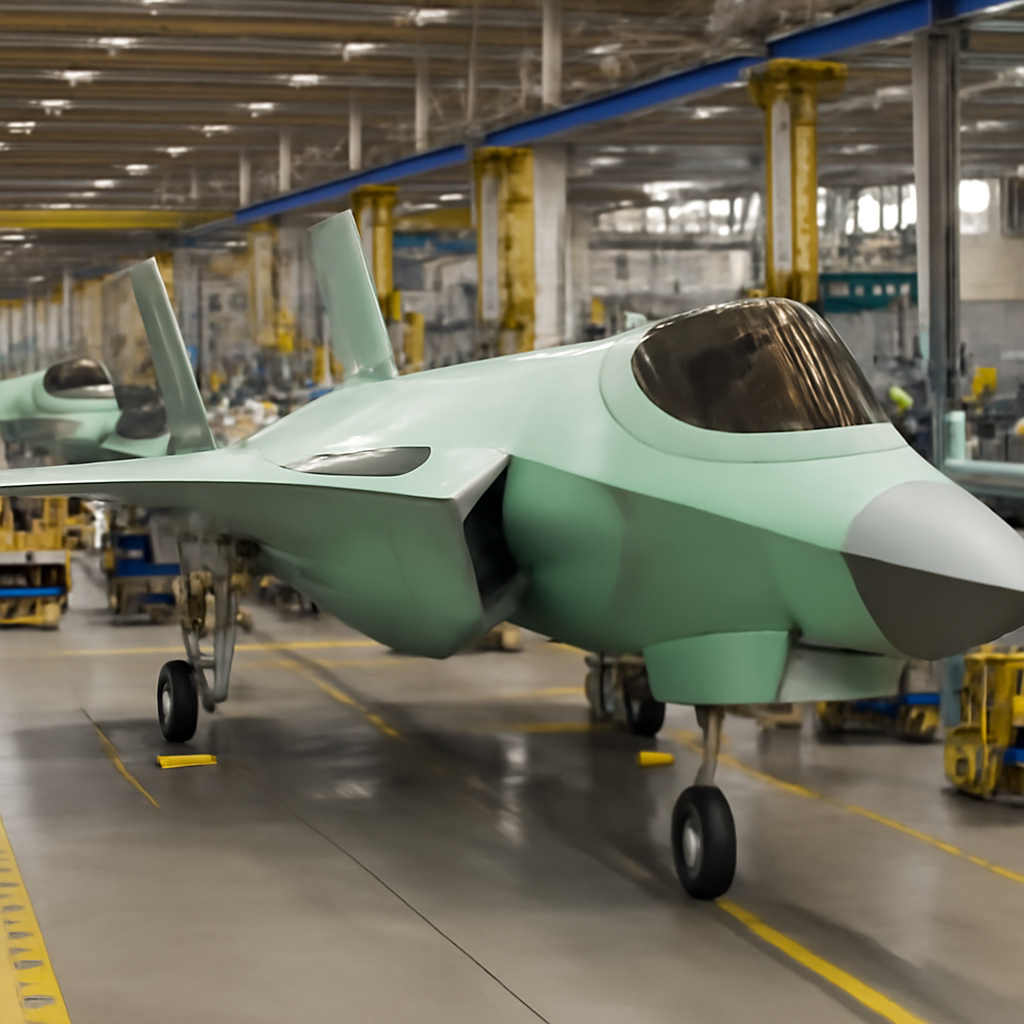
"shows the combat-proven F-35 program moving into full-rate production, resuming high-volume development deliveries and growing globally," Lockheed Martin said in response to the Pentagon's acquisition report.
Cost increases across the F-35A, F-35B, and F-35C
A spokesperson for the F-35 Joint Program Office (JPO) confirmed to Breaking Defense that average flyaway prices for the three F-35 variants climbed for production lots 18 and 19. The conventional takeoff and landing F-35A rose to $92 million, up from $82.5 million in the prior contracts spanning 2023–2026 — an 11.5 percent increase. The short takeoff/vertical landing F-35B increased to $121.4 million from $109 million, an 11.4 percent rise. The carrier-capable F-35C climbed to $110.8 million, up from $102.1 million, an 8.5 percent gain.
The JPO uses the flyaway metric, which measures when a jet has all equipment needed for delivery. That flyaway cost includes government-furnished equipment outside Lockheed Martin’s prime contract, such as the F135 engine produced by RTX subsidiary Pratt & Whitney and other vendor-supplied systems.
Inflation, supply chains, and rising rates as stated drivers
The Pentagon has attributed upward pressure on lot 18 prices to inflation, rising raw-materials costs and supply chain issues. Officials told Breaking Defense these factors drove the increase for lot 18 and helped shape the pricing seen across lots 18 and 19. The report also links rising rates to a contractual dispute that prompted Switzerland to trim its planned F-35 purchase.
Lockheed Martin, when asked to comment on the new flyaway figures, referred back to its prior statement about the modernized selected acquisition report (MSAR): the program, it said, is moving into full-rate production, resuming high-volume deliveries and expanding globally, while shifting its effort toward modernization, improving fleet readiness and controlling long-term sustainment and integration costs.

Audit-ready is a season. It shouldn't be.
Evidence in spreadsheets, controls drifting between audits, frameworks multiplying on flat headcount. Nubivance runs continuous compliance on Rapid7 Cyber GRC - SOC 2, HIPAA, ISO 27001, PCI, CMMC.
End the scrambleModernization programs: engines, cooling, Block 4, and Technology Refresh 3
The MSAR details multiple upgrade paths that are feeding into program costs. One set of upgrades is intended to enhance the jet’s engine; another aims to deliver a new power and thermal management system to address cooling challenges. Block 4 — a larger modernization program — is explicitly described in the MSAR as over budget and years behind schedule. The computing backbone for Block 4, known as Technology Refresh 3 (TR3), has not been certified for combat. Pentagon officials say jets delivered over the past two years have been relegated to training because TR3 is not combat-certified.
The report notes that some supplier-delivered capabilities have been delayed: Northrop Grumman supplies the aircraft’s upgraded radar, and delays have forced the Pentagon to accept some new aircraft without the nose-mounted sensor. The MSAR does not assign a precise dollar amount to how those supplier issues contributed to the overall price increases.
International customers, procurement plans, and lifecycle numbers
Twenty customers globally, including the United States, are on contract for the F-35, and international buyers can impose differing requirements and costs. The MSAR notes that most foreign purchases are for the F-35A, with some nations procuring the F-35B; only the United States operates the F-35C.
The Pentagon plans to acquire 148 aircraft in lot 18 and 148 more in lot 19, for a combined 296 aircraft. The MSAR projects that buying costs will rise by more than $50 billion across the program’s lifespan because of upgrades, shifting buy profiles and a surge in spare parts intended to raise lackluster readiness rates. Still, the document shows total lifecycle costs dipping beneath $2 trillion after having surpassed that figure in 2024.
What this means for the Pentagon, Lockheed Martin, and international customers
- Pentagon and procurement leaders: The MSAR signals higher near-term acquisition bills and a planned surge in spare parts to address readiness. The service and program office will face pressure to reconcile higher buying costs with the goal of improving fleet readiness and completing delayed modernization efforts such as Block 4 and TR3.
- Lockheed Martin and suppliers (Pratt & Whitney, Northrop Grumman): Lockheed is characterizing the program as transitioning to high-rate production and shifted focus to modernization and sustainment — messaging intended to frame the price increases as part of a different phase of work. Suppliers remain central to pending capability deliveries, and supplier delays (radar, engines and thermal-management integration) are materially implicated in program cost and schedule outcomes.
- International customers (including Switzerland): Differing national requirements add cost variability; the MSAR and subsequent reporting show that rising rates and program costs can have direct procurement consequences, as Bern trimmed its buy after a rate-related dispute.
The MSAR lays out a program at an inflection point: nominal flyaway prices are rising noticeably in lots 18 and 19 even as Lockheed and the JPO stress that, when adjusted for inflation, some cost elements remain consistent or below inflation. The immediate arithmetic is clear — 296 aircraft are budgeted across two lots while buying costs rise by tens of billions — but the pressing operational question recorded in the report is not: when will Technology Refresh 3 be certified for combat, and how quickly can modernization delays be closed so delivered jets move from training status into fully mission-capable fleets?