“We must make it easier for capable companies to contribute at every level of the mission. Industry has identified access to classified environments as a major barrier, and the Secure Space Network directly addresses that challenge by opening the door to classified work for more companies,” James R. Mismash, Deputy Assistant Secretary of War for Industrial Base Growth and Director of the Office of Small Business Programs, said in a release.
What the Secure Space Network aims to provide
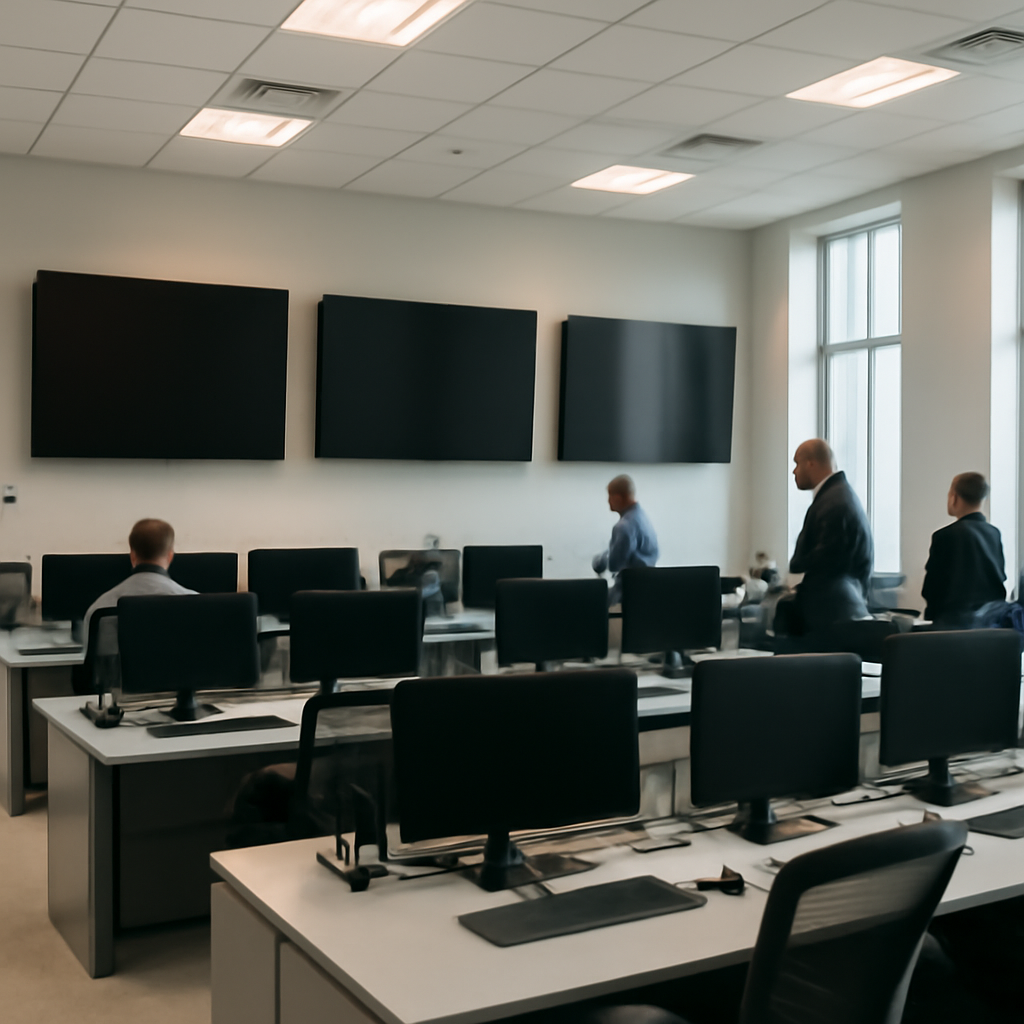
The Department of Defense announced a new initiative called the Secure Space Network to expand contractor access to classified work by designing and deploying about 50 Sensitive Compartmented Information Facilities (SCIFs) across the country. The stated intent is to lower the barrier for more companies — particularly smaller firms that lack in-house accredited spaces — to contribute to Pentagon contracts that require access to classified environments.
How a SCIF is defined and what it protects against
Formally, a SCIF “can be any ‘area, room, group of rooms, buildings, or installation certified and accredited as meeting Director of National Intelligence security standards for the processing, storage, and/or discussion of sensitive compartmented information (SCI),’” according to the National Institute of Standards and Technology, the release noted. These rooms are reported to be built to defeat physical forced entry, audio eavesdropping and electronic spying, among other threats.

Audit-ready is a season. It shouldn't be.
Evidence in spreadsheets, controls drifting between audits, frameworks multiplying on flat headcount. Nubivance runs continuous compliance on Rapid7 Cyber GRC - SOC 2, HIPAA, ISO 27001, PCI, CMMC.
End the scramblePlacement strategy: military installations, APEX Accelerators, and mission-relevant sites
The effort will be led by the Office of the Under Secretary of Defense for Acquisition and Sustainment’s Office of Industrial Base Growth. The release said the facilities can be placed at military installations, industry-focused locations such as APEX Accelerators, as well as other “mission-relevant” locations. That mix of sites is intended to give contractors more geographic and operational options for conducting classified work.
Production model: repeatability and surge capacity
The Pentagon’s release described the initial production phase as a way to create “a repeatable capability that can expand secure facilities as requirements grow.” In addition, the intent is to build scalable production capacity to “surge” capability for rapidly increasing these accredited security workspaces when demand rises. In plain terms offered by the release, the program is designed both to standardize how these SCIFs are produced and to permit faster expansion when program needs accelerate.
What this means for small businesses, the Office of Industrial Base Growth, and Congress
- Small businesses and contractors: For firms that currently find SCIF access costly or impractical, the Secure Space Network is presented as a way to “open the door to classified work for more companies.” That could shorten the path for firms to bid on and perform classified tasks tied to defense contracts if they can use an accredited space within the network.
- The Office of Industrial Base Growth: The office leading the effort will be responsible for designing the repeatable capability and scalable production model the release describes. The office’s role includes coordinating placement at the range of locations the release specifies and managing the accreditation process tied to Director of National Intelligence standards.
- Congress: The release explicitly cited “support from Congress” as part of the program’s backing. That support is framed as a factor that will help strengthen the supplier base and accelerate delivery of capabilities to warfighters at greater scale, according to the release’s language.
The release frames the Secure Space Network as a practical, supply-chain–oriented response to a concrete problem: accredited classified space is expensive and unevenly distributed, and industry has identified access to those spaces as a barrier to participation in defense work. Pentagon officials say the program is meant to strengthen the supplier base and help “deliver the capabilities our warfighters need faster and at greater scale,” language lifted from James R. Mismash’s statement.
At the same time, the department’s release is sparing on specifics. It did not provide the size of each SCIF, the program’s budget, or a timeline for deployment — details the public announcement “eschewed,” according to the release. Those unanswered particulars will determine how quickly and widely the Secure Space Network can affect contractor access to classified work.
For now, the initiative sets a clear objective and a visible lead office: create roughly 50 accredited spaces, make their production repeatable, and enable a surge capacity to scale them up as needs grow. The next concrete steps to watch — whether a published schedule, accreditation milestones, cost estimates, or the locations selected for initial deployments — were not included in the release.